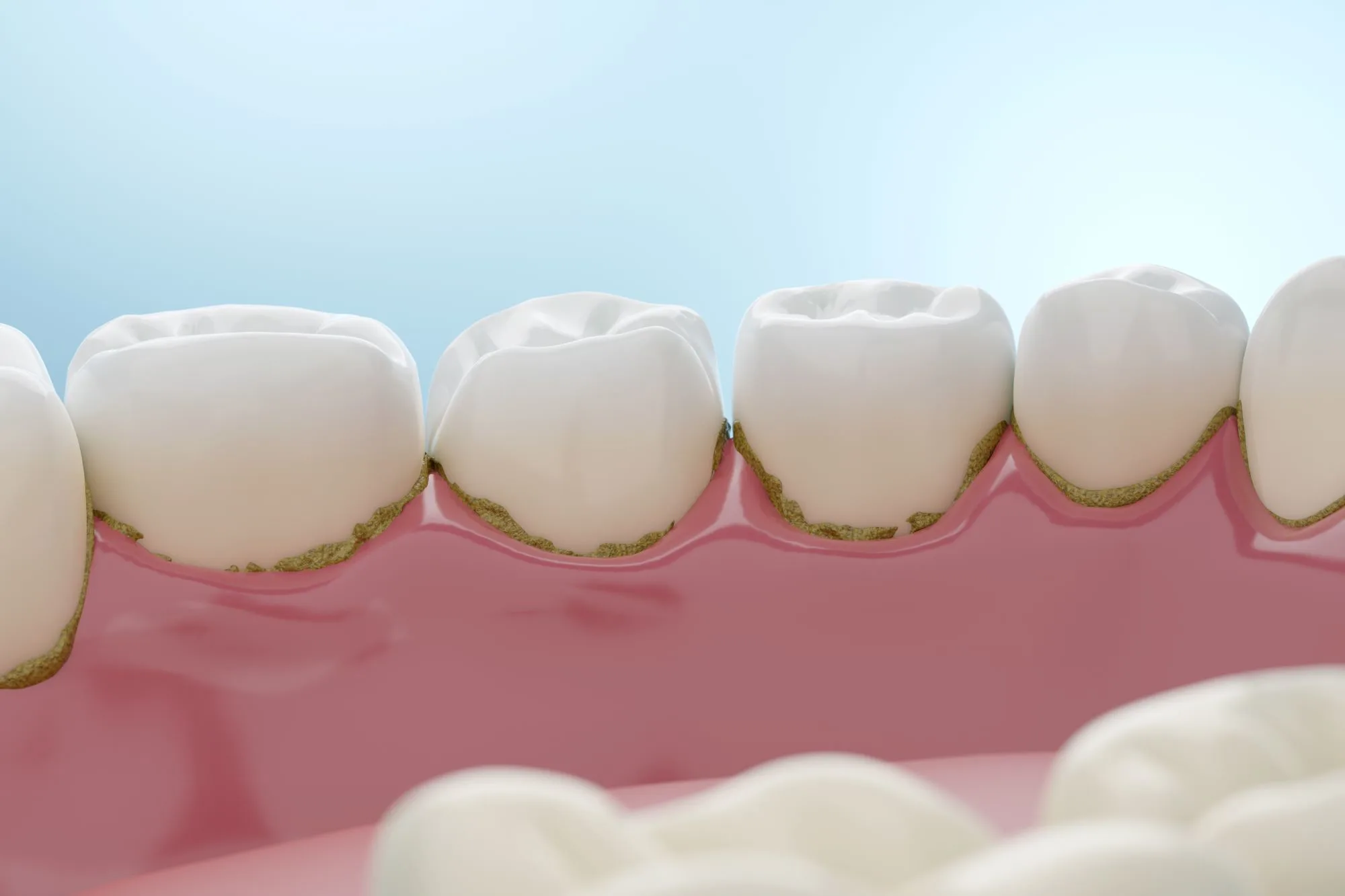
Bad breath, also known as halitosis, is often associated with eating pungent foods or forgetting to brush your teeth. However, in many cases, the buildup of dental plaque and tartar is actually the primary cause of persistent bad breath.
So, does tartar cause bad breath?
The answer is yes, but not because tartar itself produces an odor. Instead, tartar provides an ideal surface for bacteria to thrive. These bacteria produce sulfur compounds that are responsible for unpleasant breath.
If your bad breath does not improve despite brushing your teeth regularly, it may indicate plaque buildup, tartar accumulation, or gum disease that requires examination by a dentist.
Why Can Tartar Cause Bad Breath?
Tartar (dental calculus) forms when dental plaque that is not properly removed hardens due to minerals naturally present in saliva.
Its rough surface allows new plaque to accumulate more easily and makes it impossible to remove with regular toothbrushing alone.
This rough surface becomes an ideal environment for bacteria to grow and break down proteins from food debris, dead cells, and oral fluids. During this process, bacteria produce volatile sulfur compounds (VSCs), sulfur-containing gases that are the primary cause of bad breath.
The most common VSCs include:
Hydrogen sulfide
Methyl mercaptan
Dimethyl sulfide
The more tartar that accumulates, the greater the number of bacteria producing these odor-causing sulfur compounds.
The Relationship Between Plaque, Tartar, and Odor-Causing Bacteria
Bad breath caused by oral health problems usually does not develop suddenly. Instead, it occurs through a gradual process.
The process can be illustrated as follows:
Food debris → Dental plaque → Tartar → Bacterial buildup → Gum inflammation → Bad breath (halitosis)
Dental Plaque
Dental plaque is a soft, sticky biofilm that forms every day from food debris, bacteria, and saliva on the surface of the teeth.
Tartar (Dental Calculus)
If plaque is not thoroughly removed through proper brushing, it begins to harden or mineralize within 24–48 hours, forming hard deposits known as tartar.
Bacterial Buildup
Because the surface of tartar is rough and cannot be removed with a regular toothbrush, new plaque accumulates more easily. As a result, colonies of anaerobic bacteria—known for producing sulfur gases that cause bad breath—continue to increase, triggering gum inflammation (gingivitis) and eventually leading to halitosis.
Why Isn't Brushing Alone Enough?
Many people wonder why their breath still doesn't feel fresh even though they brush their teeth regularly.
The answer is that a toothbrush can only remove soft plaque.
Once plaque hardens into tartar, it remains firmly attached to the tooth surface, causing:
New plaque to continue forming
Bacteria to keep multiplying
Bad breath to persist
The risk of gum disease to increase
This is why professional tartar removal (teeth scaling) is an essential part of maintaining good oral health.
Bad Breath Caused by Gum Inflammation
Tartar does not only serve as a breeding ground for bacteria—it can also trigger gingivitis (gum inflammation).
Inflamed gums are typically characterized by:
Redness
Bleeding while brushing
Swelling
Tenderness or pain
When this occurs, the number of bacteria below the gumline increases, resulting in higher production of volatile sulfur compounds (VSCs).
If gingivitis is left untreated, it can progress to periodontitis, a more severe form of gum disease that damages the tissues supporting the teeth while making bad breath even worse.
Signs That Your Bad Breath May Be Caused by Dental Problems
Not all cases of bad breath are caused by tartar. However, the following signs may indicate that the source is within the oral cavity:
Bad breath does not improve after brushing your teeth
Noticeable tartar buildup
Gums that bleed easily
Red or swollen gums
A bitter taste or unpleasant sensation in the mouth
Breath that feels especially unpleasant upon waking up
Teeth that begin to feel loose
On the other hand, if your mouth is healthy but bad breath persists, your dentist may evaluate other possible causes, such as dry mouth, ear, nose, and throat (ENT) infections, acid reflux, or certain medical conditions.
Why Is Teeth Scaling an Effective Solution for Bad Breath?
Because tartar cannot be removed by brushing alone, the most effective solution is professional teeth scaling.
During the procedure, your dentist removes tartar both above and below the gumline, significantly reducing the number of bacteria responsible for bad breath.
The benefits of teeth scaling include:
Removing tartar buildup
Reducing plaque and harmful bacteria
Supporting the healing of inflamed gums
Lowering the risk of periodontal disease
Helping eliminate bad breath caused by plaque accumulation
Signs That Bad Breath Is Caused by Dental and Gum Problems
Not every case of bad breath is caused by tartar. However, the following signs often indicate that the underlying cause originates in the mouth:
Bad breath persists even after brushing
Gums bleed frequently
Significant tartar buildup around the gumline
Red or swollen gums
Unpleasant breath, especially upon waking
A bitter or unpleasant taste in the mouth
Loose teeth in more advanced cases
Conversely, if your oral cavity is healthy but bad breath continues, your dentist may consider other possible causes, including ENT disorders, dry mouth (xerostomia), acid reflux, or certain systemic conditions.
Why Should Tartar Be Removed Professionally?
Because tartar has already hardened, the only effective way to remove it is through professional teeth scaling performed by a dentist.
The goals of scaling are to:
Remove tartar above and below the gumline
Reduce the number of odor-causing bacteria
Promote the healing of inflamed gums
Prevent periodontal disease from progressing
For many patients, bad breath caused by plaque and tartar buildup improves significantly once the underlying cause has been removed, provided good oral hygiene is maintained.
Does Teeth Scaling Immediately Eliminate Bad Breath?
For many patients, yes.
If plaque, tartar, and gum disease are the primary causes of bad breath, breathing usually becomes noticeably fresher once the gums have healed after scaling.
However, if bad breath persists after the procedure, your dentist will evaluate other possible causes, such as:
A heavily coated tongue
Tooth decay (cavities)
Oral infections
Dry mouth (xerostomia)
Respiratory tract diseases
Certain digestive disorders (although these are less commonly the primary cause of chronic halitosis)
Therefore, a comprehensive dental examination remains the most appropriate step in identifying the underlying cause.
Home Care After Teeth Scaling
After teeth scaling, maintaining good oral hygiene is essential to prevent tartar from building up again too quickly.
The following steps are recommended:
Brush Your Teeth Twice a Day
Use a fluoride toothpaste and brush your teeth properly for approximately two minutes.
Clean Between Your Teeth
Dental floss and interdental brushes help remove plaque from areas that a regular toothbrush cannot reach.
Clean Your Tongue
Most of the bacteria responsible for bad breath also reside on the surface of the tongue, especially toward the back. Cleaning your tongue regularly can help reduce the production of volatile sulfur compounds (VSCs).
Stay Hydrated
Drinking enough water helps maintain healthy saliva production, which naturally cleanses the oral cavity.
Attend Regular Dental Checkups
Your dentist will recommend an appropriate recall interval based on the condition of your teeth and gums. Patients at a higher risk of periodontal disease generally require more frequent dental visits than those with healthy periodontal tissues.
When Should You Visit Onyx Dental Center?
Schedule a dental examination as soon as possible if you experience:
Bad breath that does not improve despite maintaining good oral hygiene
Bleeding gums while brushing your teeth
Visible tartar buildup
Loose teeth
Swollen or painful gums
Bad breath accompanied by an unpleasant taste in the mouth
At Onyx Dental Center, your dentist will perform a comprehensive examination to determine whether your bad breath is caused by plaque, tartar, gum disease, tooth decay, or other underlying conditions.
For individuals with busy lifestyles in Karawaci, Gading Serpong, Kelapa Dua, Tangerang, and the greater Jakarta metropolitan area (Jabodetabek), routine dental checkups at Onyx Dental Center can help prevent oral health problems from progressing into more serious conditions.
Conclusion
Does tartar cause bad breath? Yes.
Although tartar itself does not directly produce an unpleasant odor, its rough surface provides an ideal environment for bacteria that produce sulfur compounds, ultimately leading to halitosis.
Because tartar cannot be removed through brushing alone, professional teeth scaling is an essential step in eliminating the source of bacterial buildup while maintaining healthy gums.
If you experience persistent bad breath, especially when accompanied by bleeding gums or visible tartar buildup, do not hesitate to consult a dentist at Onyx Dental Center Karawaci. A thorough examination will help identify the underlying cause and ensure you receive the most appropriate treatment.
Baca Juga
References
Alzoman H. (2021). The association between periodontal diseases and halitosis among Saudi patients. The Saudi Dental Journal, 33(1), 34–38. https://doi.org/10.1016/j.sdentj.2020.02.005
Choi, O. S. (2020). A study of halitosis concentration variations before and after oral prophylaxis using the BB Checker. International Journal of Clinical Preventive Dentistry, 16(3), 111–118. https://doi.org/10.15236/ijcpd.2020.16.3.111
Li, Z., Li, J., Fu, R., Liu, J., Wen, X., & Zhang, L. (2023). Halitosis: etiology, prevention, and the role of microbiota. Clinical Oral Investigations, 27(11), 6383–6393. https://doi.org/10.1007/s00784-023-05292-9