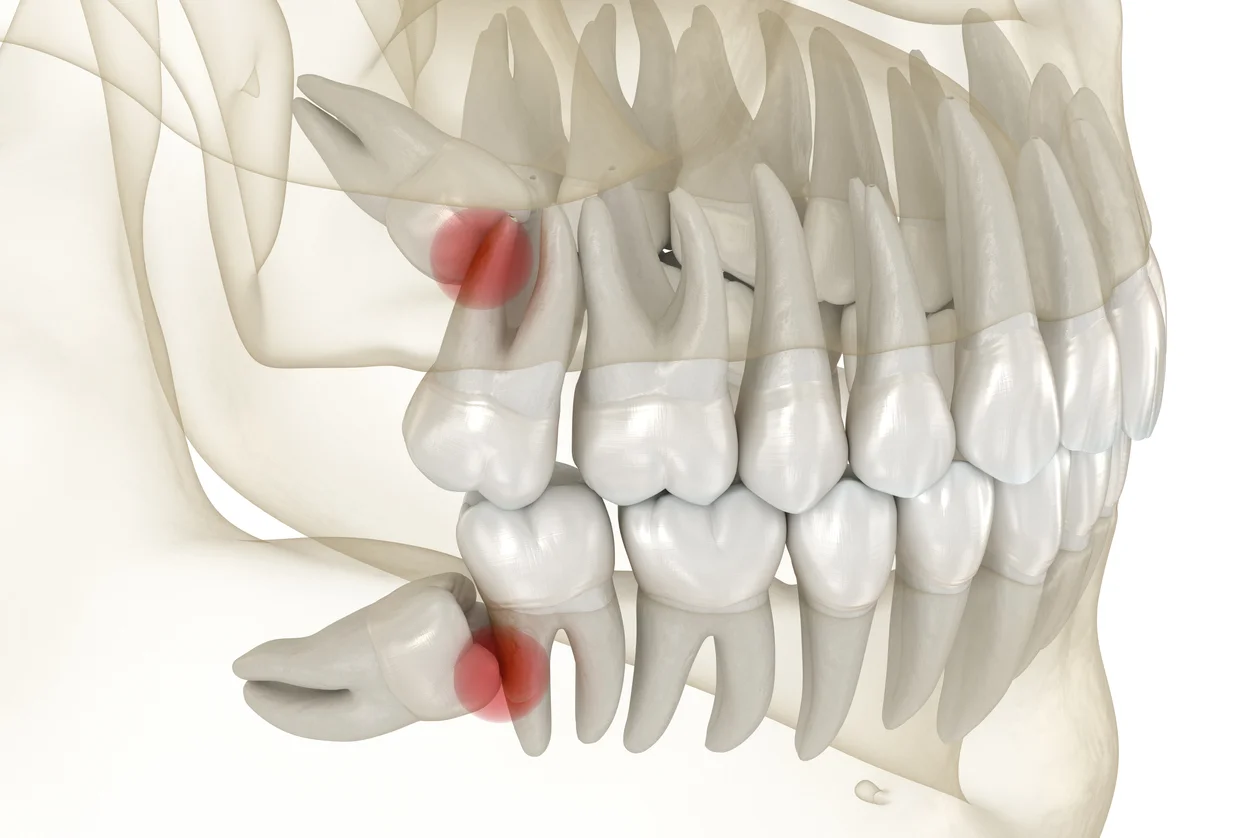
What Is an Impacted Wisdom Tooth? When Molars Run Out of Space
Wisdom teeth, or third molars, are the last teeth to erupt, typically between the ages of 17 and 25. Because they are located at the very back of the jaw, there is often insufficient space for them to grow properly.
As a result, wisdom teeth may:
Grow at an angle toward the front or side
Erupt only partially and remain covered by gum tissue
Remain completely trapped within the jawbone
This condition is known as tooth impaction. An impacted wisdom tooth is not merely a matter of tooth position—it can become a source of infection, persistent pain, and even damage to neighboring teeth if left untreated.
Warning Signs to Watch For: Pain to Swollen Gums at the Back
Not all wisdom teeth cause immediate symptoms. However, the following signs are often early indicators of a problem:
Pain at the back of the jaw
Swollen or frequently inflamed gums in the back area
Discomfort when opening the mouth
Bad breath or an unpleasant taste
Pain radiating to the ear or head
Difficulty cleaning the very back teeth
In certain cases, inflammation of the gums may recur because food debris easily becomes trapped around a partially erupted wisdom tooth.
Why Odontectomy Is Often the Best Solution
When a wisdom tooth grows at an angle or is trapped within the gums or bone, a standard tooth extraction is often insufficient. In such cases, odontectomy becomes the safest and most controlled option.
Odontectomy is a minor surgical procedure designed to remove impacted wisdom teeth using specialized techniques and careful planning.
If an impacted tooth is left untreated, potential risks include:
Recurrent gum infections
Decay or damage to the adjacent tooth
Persistent swelling and pain
Discomfort while eating and speaking
For this reason, odontectomy serves as a preventive measure to avoid long-term complications.
Does Wisdom Tooth Removal Hurt? The Facts Behind Odontectomy
One of the most common questions is:
“Does tooth extraction hurt?”
In reality, odontectomy is performed under local anesthesia, meaning the treated area will be completely numb during the procedure. Patients do not feel pain while the tooth is being removed.
Any post-procedure discomfort is usually temporary and can be effectively managed with prescribed medication and proper aftercare.
Recovery After Odontectomy: Returning to Daily Activities Comfortably
Recovery time varies from patient to patient but is generally gradual and relatively short. Post-procedure recommendations typically include:
Getting adequate rest during the first 24 hours
Avoiding hard, hot, or spicy foods temporarily
Applying cold compresses to the outside of the cheek if needed
Maintaining oral hygiene according to the dentist’s instructions
Taking medications as prescribed
With proper care, most patients are able to resume light daily activities within a few days.
Conclusion
Wisdom teeth that grow sideways or become impacted should not be taken lightly. Symptoms such as pain, swelling at the back of the gums, and recurrent infections are clear signs that professional treatment is needed.
Through a safe and well-planned odontectomy procedure, problematic wisdom teeth can be removed comfortably while preventing future complications.
At Onyx Dental Center, every procedure is carried out with a comprehensive approach, prioritizing safety, comfort, and overall quality of life.
If you frequently experience pain at the back of your jaw, early consultation is the best step toward protecting your dental health.
References
Ahmed, N., Rehman, A., Ahmad, M. T., Hassaan, M., Razaq, M., & Anwarullah. (2024). Techniques and innovations for wisdom tooth extractions. Journal of Population Therapeutics and Clinical Pharmacology, 31(2), 2409–2417. https://doi.org/10.53555/jptcp.v31i2.4640
Institute for Quality and Efficiency in Health Care. (2006–). Wisdom teeth: Learn more – Should you have your wisdom teeth removed? In InformedHealth.org. Updated September 5, 2023.https://www.ncbi.nlm.nih.gov/books/NBK279590/