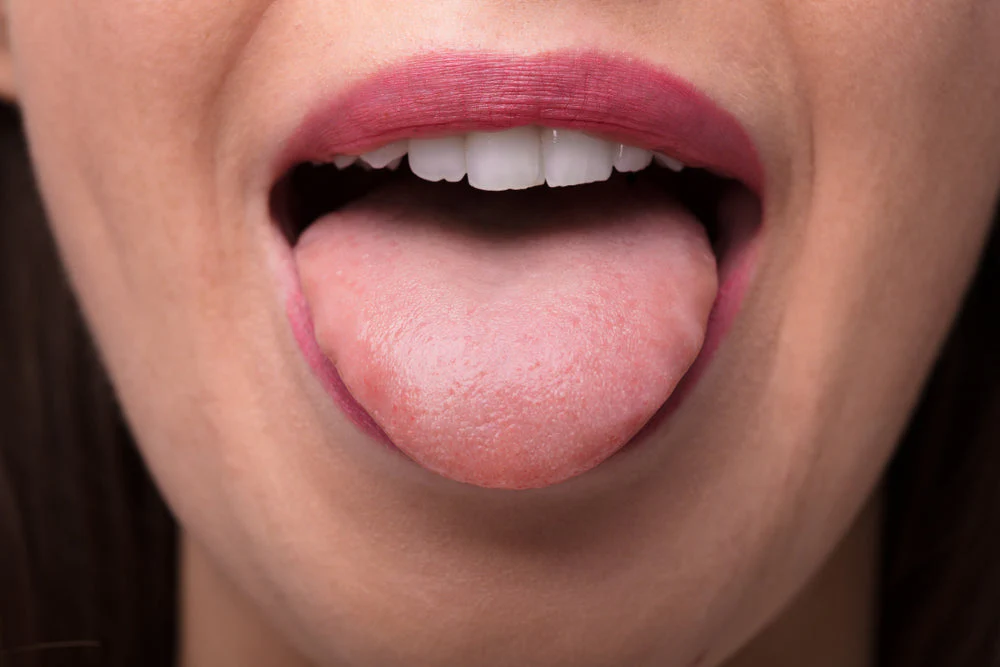
Why Does the Tongue Appear White?
White tongue occurs when the papillae, the small projections on the surface of the tongue, become enlarged or inflamed. This allows dead cells, food debris, and bacteria to accumulate more easily, making the tongue appear white, yellowish, or thickly coated.
In many cases, white tongue is temporary and harmless, especially when related to oral hygiene or a temporary decline in overall health. However, if the white coating persists or is accompanied by other symptoms, it may indicate an underlying oral health issue that requires further evaluation.
Common and Generally Harmless Causes of White Tongue
Some of the most common and typically harmless causes include:
Poor Oral Hygiene
Infrequent brushing of the teeth and tongue allows plaque, bacteria, and food debris to accumulate on the tongue’s surface. This is the most common cause of white tongue.
Dehydration or Dry Mouth
Insufficient fluid intake, frequent mouth breathing, or reduced saliva production can make the tongue appear dry and whitish.
Smoking and Alcohol Consumption
Chemicals in tobacco and alcohol can irritate tongue tissue and disrupt the normal bacterial balance in the mouth.
Soft, Low-Fiber Diet
A lack of fruits and vegetables reduces the natural cleansing action of the tongue during chewing.
Fever or General Illness
When the immune system is weakened, temporary changes in tongue color may occur and usually improve as the body recovers.
Medical Conditions That Require Attention
If white tongue does not improve despite good oral hygiene, it may be associated with the following conditions:
Oral Thrush (Oral Candidiasis)
A fungal infection caused by Candida that results in thick white patches on the tongue. These patches may bleed when scraped and are sometimes accompanied by discomfort. It commonly affects older adults, long-term antibiotic users, or individuals with weakened immune systems.
Leukoplakia
Characterized by thick white patches on the tongue or inner cheeks that cannot be removed by rubbing. It is often caused by chronic irritation, such as smoking or repeated friction from sharp tooth edges.
Most cases are benign, but regular monitoring is recommended as some may develop into precancerous lesions.Oral Lichen Planus
An autoimmune condition presenting as lace-like white patches on the tongue or cheeks, sometimes accompanied by soreness or red gums.
Geographic Tongue
The tongue appears map-like with red areas surrounded by white borders. This condition is harmless and may come and go.
Certain Systemic Diseases
In rare cases, white tongue may be associated with anemia, immune disorders, certain sexually transmitted infections, or other serious conditions. Persistent white patches should therefore be evaluated.
Symptoms That May Accompany White Tongue
White tongue may be associated with:
A dry or sticky sensation in the mouth
Bad breath
Discomfort or soreness
A burning sensation
Changes in taste
White patches that are difficult to remove
How to Clean and Manage Mild White Tongue
For mild cases, the following steps are often effective:
Gently brushing the teeth and tongue daily
Using a tongue scraper if needed
Maintaining adequate hydration
Quitting smoking and limiting alcohol intake
Eating a balanced, fiber-rich diet
Attending routine dental check-ups every six months
Medical Treatment for White Tongue
When white tongue is caused by an underlying medical condition, a dentist may recommend:
Antifungal medication for oral thrush
Further evaluation and biopsy if leukoplakia is suspected
Referral to a medical specialist if a systemic condition is identified
Preventing White Tongue from Returning
Maintain thorough oral hygiene
Attend regular dental examinations
Avoid habits that irritate oral tissues
Seek professional evaluation if white patches persist
Conclusion
White tongue is a common condition that is often related to oral hygiene or temporary changes in the body. In most cases, it improves with simple care and consistent oral health habits.
However, if white tongue persists, becomes painful, or is accompanied by changes in the oral tissues, professional evaluation is recommended. Early assessment helps identify the cause and prevent potential complications.
Learn more about Onyx Dental Center Treatments:
Proper consultation is always the first step toward determining the most suitable solution for your individual needs.
Reference
The New England Journal of Medicine. (2021). Image challenge (NEJMicm2032955). https://doi.org/10.1056/NEJMicm2032955
Van Gils, L. M., Slot, D. E., Van der Sluijs, E., Hennequin-Hoenderdos, N. L., & Van der Weijden, G. A. (2019). Tongue coating in relationship to gender, plaque, gingivitis and tongue cleaning behaviour in systemically healthy young adults. International Journal of Dental Hygiene, 17(4), 388–397. https://doi.org/10.1111/idh.12400