What Is Pulpitis?
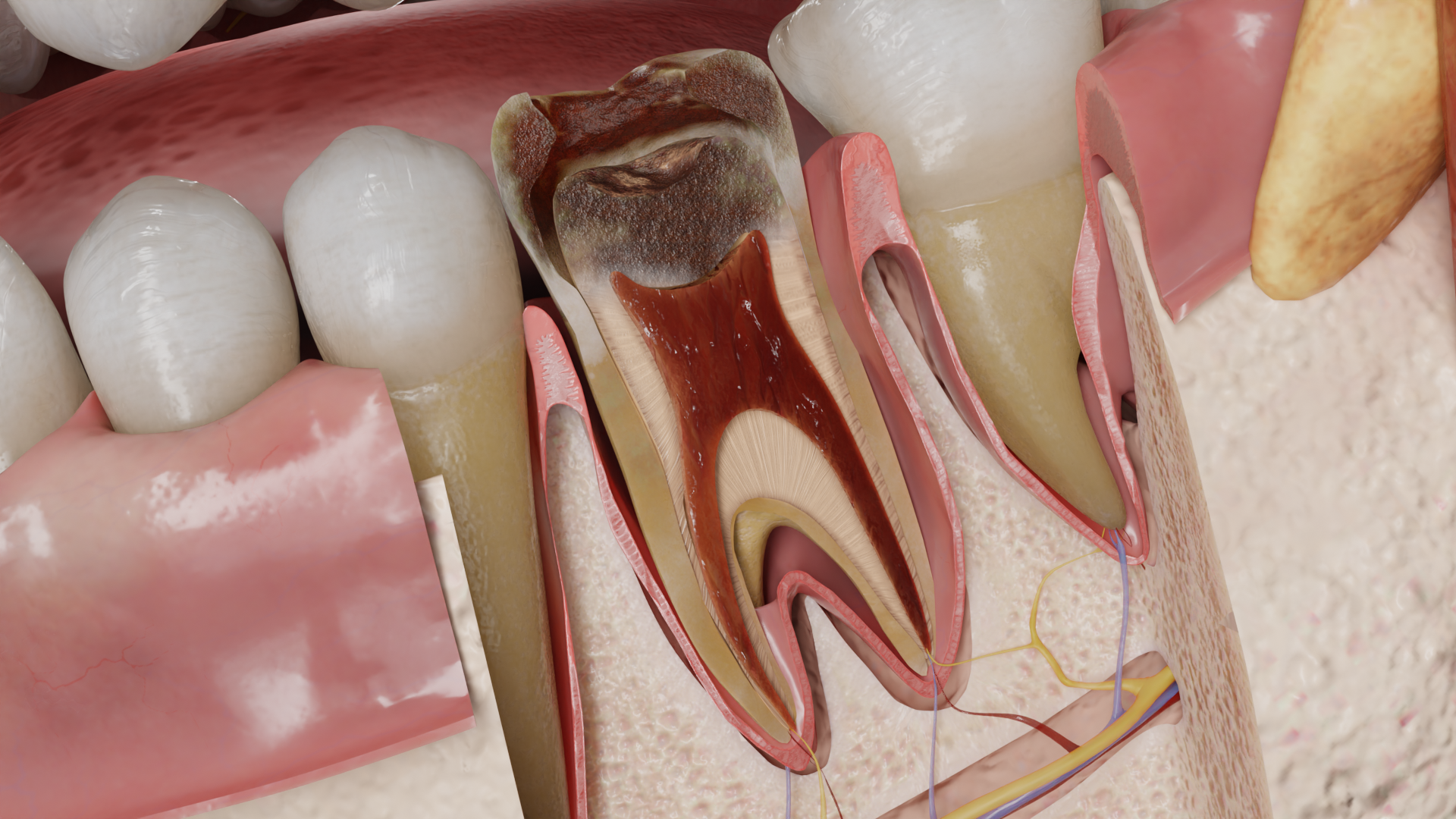
Pulpitis is inflammation of the dental pulp, the soft tissue inside the tooth that contains nerves, blood vessels, and connective tissue. The pulp plays an important role in keeping the tooth alive and responsive to stimuli such as heat, cold, and pressure.
When the pulp becomes irritated or infected, it can cause symptoms ranging from mild sensitivity to sharp pain and throbbing toothaches that interfere with daily activities.
Dental pulpitis most commonly occurs due to untreated tooth decay. However, it may also be triggered by dental trauma, tooth cracks, or repeated dental procedures on the same tooth.
Understanding Dental Pulp Anatomy
Each tooth consists of several main layers:
Tooth Layer | Function |
Enamel | The outermost and hardest protective layer of the tooth |
Dentin | The layer beneath enamel that is more sensitive |
Pulp | The innermost part containing nerves and blood vessels |
When a dental infection reaches the dentin and approaches the pulp, bacteria can spread further and trigger inflammation within the tooth nerve tissue.
Reversible vs Irreversible Pulpitis
In general, pulpitis is divided into two main types: reversible pulpitis and irreversible pulpitis.
Comparison Between Reversible and Irreversible Pulpitis
Reversible Pulpitis | Irreversible Pulpitis |
Mild inflammation | Severe pulp inflammation |
Pain is usually brief | Pain may last for a long time |
Sensitivity triggered by cold or sweet foods | Spontaneous or throbbing pain |
Pain disappears once the stimulus is removed | Pain persists even without stimulation |
Pulp tissue can still recover | Pulp tissue cannot heal |
Usually treated with a filling | Often requires Root Canal Treatment (RCT) |
In reversible pulpitis, the source of irritation can still be eliminated, allowing the pulp to recover. In irreversible pulpitis, the inflammation is too advanced, and root canal treatment is often required to preserve the tooth.
Causes of Pulpitis
Untreated Tooth Decay
The most common cause of pulpitis is dental caries or cavities.
As decay progresses deeper into the tooth, bacteria can reach the dentin and eventually irritate the pulp. The longer it is left untreated, the greater the risk of pulp inflammation and nerve infection.
Dental Trauma
Strong impacts from falls, accidents, or habits such as teeth grinding (bruxism) can irritate the pulp, even if the tooth appears intact externally.
Repeated Dental Procedures
Repeated dental treatments on the same tooth may irritate the pulp, especially when only a thin layer of healthy tooth structure remains.
Additionally, tooth cracks or leaking old fillings may allow bacteria to enter the pulp chamber.
Symptoms of Pulpitis to Watch For
Symptoms of pulpitis vary depending on severity.
Common complaints include:
Sensitivity to cold or hot drinks
Pain when eating sweet foods
Throbbing toothache
Spontaneous pain without a clear trigger
Pain when biting
Pain radiating to the jaw or head
Difficulty sleeping due to tooth pain
In irreversible pulpitis, pain often becomes worse at night and may persist long after the trigger is removed.
However, not all cases cause severe pain. In some situations, the pulp may gradually die without obvious symptoms.
How Dentists Diagnose Pulpitis
Diagnosing pulpitis is not based solely on the patient’s pain symptoms.
Dentists typically perform:
Clinical examination
Evaluation of cavities or tooth cracks
Cold or heat sensitivity tests
Percussion testing (tapping the tooth)
Dental radiographs (X-rays)
At Onyx Dental Center, examinations using a dental microscope help dentists visualize tooth structures in greater detail, including small cracks or hidden cavities that may not be visible to the naked eye.
An accurate diagnosis is essential to determine whether the pulp can still be preserved or if root canal treatment is necessary.
Treatment Options
Dental Filling (Reversible Pulpitis)
If the inflammation is still mild and the pulp has not suffered permanent damage, treatment may include:
Removing decayed tooth structure
Eliminating the source of irritation
Restoring the tooth with a filling
In deep cavities, protective pulp materials may also be placed to help preserve pulp vitality.
Root Canal Treatment / RCT (Irreversible Pulpitis)
In irreversible pulpitis, the infected pulp tissue generally cannot recover.
Root canal treatment is performed to:
Remove infected pulp tissue
Clean the root canal system
Disinfect the inside of the tooth
Seal the canal to prevent reinfection
RCT is performed to preserve the natural tooth and avoid extraction.
With modern techniques and local anesthesia, root canal treatment today is typically much more comfortable than many patients expect.
What Happens If Pulpitis Is Left Untreated?
Untreated pulpitis can progress into:
Pulp necrosis (death of the tooth nerve)
Dental abscess
Swelling extending to the face
Infection around the tooth root
Tooth loss requiring extraction
In some cases, the infection may spread into surrounding tissues and cause serious complications.
This is why persistent or worsening tooth pain should never be ignored. If you experience symptoms of pulpitis, seek dental care as soon as possible.
Conclusion
Pulpitis is inflammation of the dental pulp or tooth nerve, most commonly caused by untreated cavities. Symptoms may range from mild sensitivity to severe pain that disrupts daily life.
Reversible pulpitis may still heal with proper fillings, while irreversible pulpitis usually requires root canal treatment to preserve the tooth.
The earlier the condition is treated, the greater the chance of saving the tooth structure and preventing more serious complications.
References
Karrar, R. N., Craig, S. G., Duncan, H. F., Abushouk, S. A., Elfiel, S. Y., Lundy, F. T., Clarke, M., El-Karim, I. A., & Reliability Assessment Group (2025). Clinical validation of a proposed diagnostic classification for pulpitis. International endodontic journal, 58(8), 1158–1171. https://doi.org/10.1111/iej.14254
Walsh, D., Quigley, R., Ekperuoh, A., & Duncan, H. F. (2025). Objectively Diagnosing Pulpitis: Opportunities and Methodological Challenges in the Development of Point-of-Care Assays. International journal of molecular sciences, 27(1), 355. https://doi.org/10.3390/ijms27010355