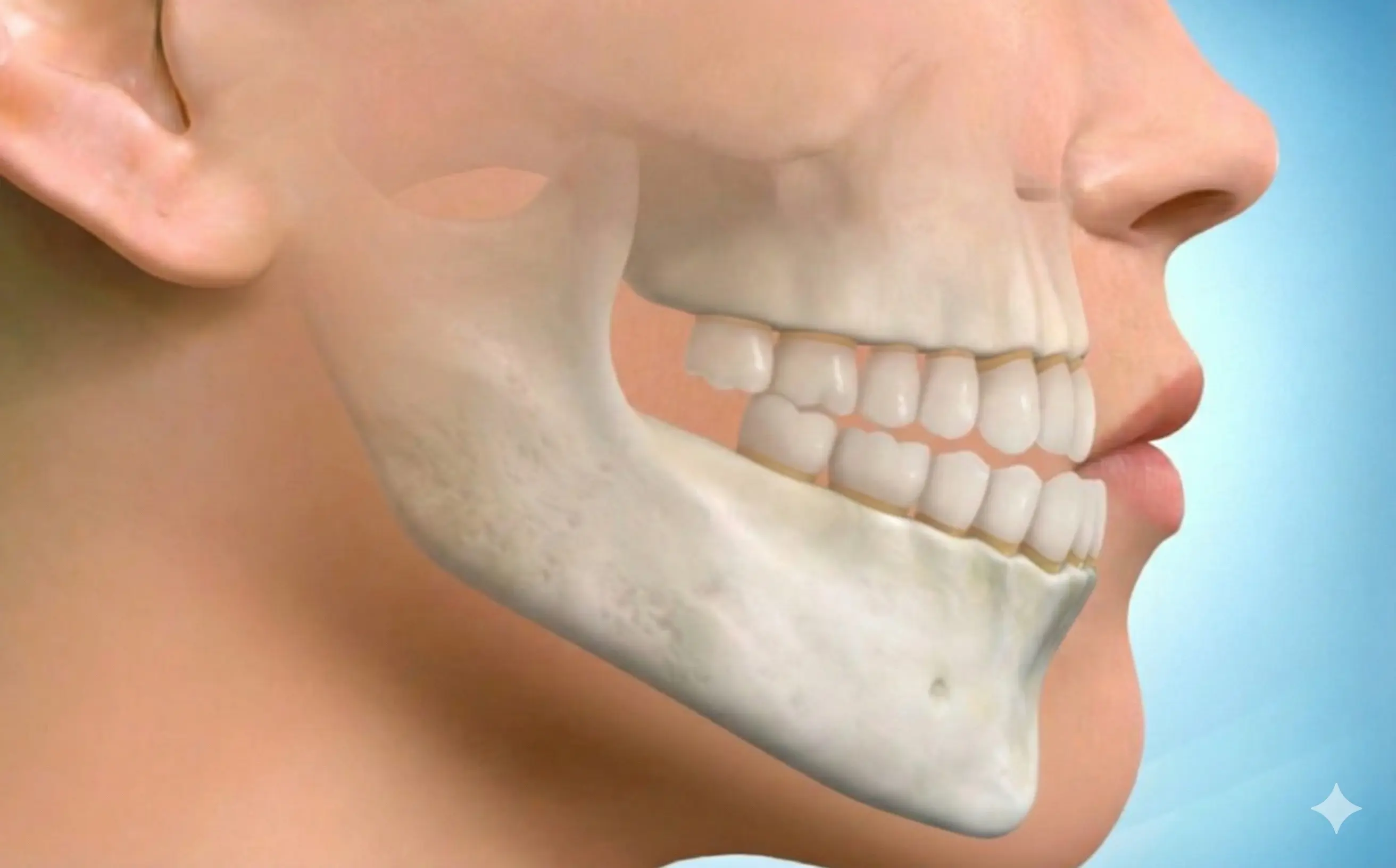
What Is an Underbite?
An underbite is a condition in which the lower jaw is positioned further forward than the upper jaw, causing the lower teeth to close in front of the upper teeth when the mouth is closed. In everyday terms, this condition is often referred to as a protruding lower jaw.
In some individuals, an underbite appears mild and does not immediately cause noticeable discomfort. However, in certain cases, it may affect chewing function, speech articulation, and overall facial balance if left unaddressed. For this reason, an underbite is considered a form of bite imbalance that requires proper clinical evaluation.
Is an Underbite Harmful?
An underbite is not merely an aesthetic concern or an issue of tooth alignment. When left untreated, it may lead to long-term consequences for dental and jaw health, including:
Accelerated tooth wear due to uneven bite contact
Jaw pain or muscle fatigue during chewing
Increased risk of temporomandibular joint (TMJ) disorders
Difficulty biting or chewing certain foods
Excessive stress on the front teeth and surrounding gum tissue
In some cases, changes in facial proportions caused by a protruding lower jaw can also affect confidence when smiling or speaking.
Causes of an Underbite
The causes of an underbite vary from person to person and are often a combination of several factors, such as:
Genetic factors, where jaw shape and position are inherited within families
Imbalanced jaw growth, in which the lower jaw develops more dominantly than the upper jaw
Childhood habits, including thumb sucking, improper tongue posture
Early tooth loss, which can influence the eruption pattern of permanent teeth and jaw relationships
Understanding the underlying cause is essential in determining the most appropriate and effective solution for a protruding lower jaw.
Can an Underbite Be Corrected?
The good news is that an underbite can be corrected through approaches tailored to the patient’s age, severity of the condition, and dental and jaw structure.
Common treatment options include:
Orthodontic treatment, such as modern braces or clear aligners (e.g., Invisalign), for mild to moderate cases
Early, phased intervention during growth periods to help guide jaw development more optimally
Comprehensive treatment planning, in certain cases that require correction of both tooth position and jaw relationships
There is no single solution suitable for every underbite. Each treatment plan must be personalized based on thorough clinical examination and detailed analysis.
Underbite Treatment at Onyx Dental Center
At Onyx Dental Center, underbite treatment is never approached in a standardized or rushed manner. Every patient undergoes a comprehensive evaluation to understand the condition of the teeth, jaw structure, and bite pattern in detail.
This approach includes:
In-depth analysis of dental and jaw structures
Transparent and measurable treatment planning
A balanced consideration of bite function, gum and dental health, and facial aesthetics
With this philosophy, solutions for a protruding lower jaw focus not only on improving appearance, but also on long-term comfort and oral health.
Conclusion
An underbite, or protruding lower jaw, is more than a facial aesthetic concern. It is closely related to bite function, jaw comfort, and long-term dental health. With accurate diagnosis and appropriate treatment planning, an underbite can be corrected gradually and safely.
At Onyx Dental Center, we believe that an ideal smile is one that is balanced in function, health, and aesthetics. An initial consultation is an essential first step in understanding your dental condition and determining the most suitable treatment solution based on your individual needs and character.
Learn more about Onyx Dental Center Treatments:
Proper consultation is always the first step toward determining the most suitable solution for your individual needs.
References
Mandibular prognathism case report: Surgery followed by orthodontic treatment. (2025). Journal of the American Dental Association. https://doi.org/10.1016/S0020-6539(25)04849-X
Zabarjad, R. (2015). Overview on the anatomical and clinical aspects of mandibular prognathism. International Journal of Clinical and Developmental Anatomy, 1(3), 64–69.https://doi.org/10.11648/j.ijcda.20150103.12