

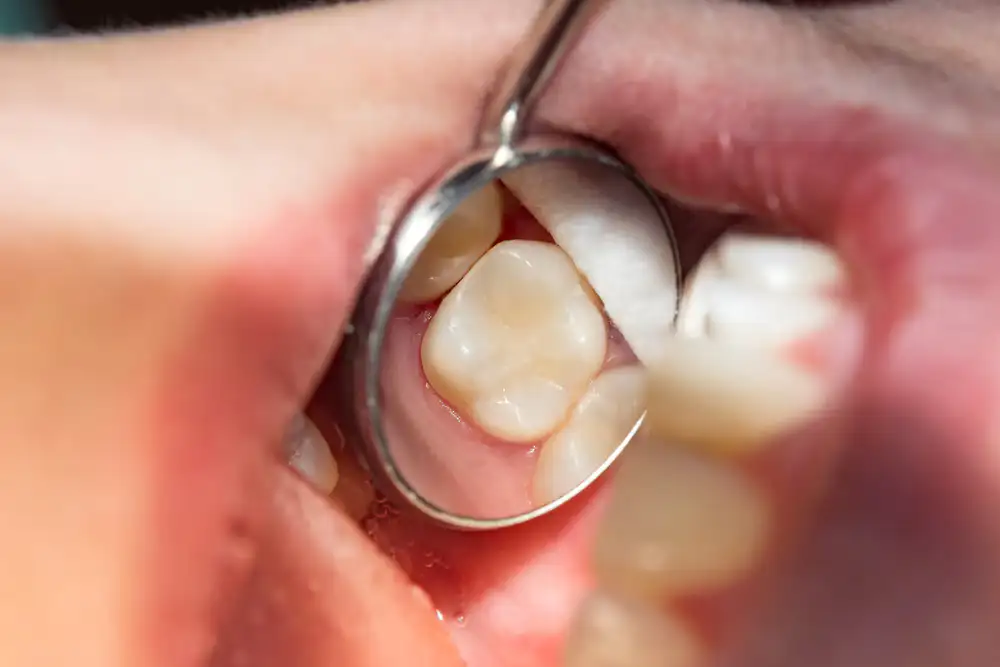
Is tooth sensitivity after filling normal? Mild sensitivity can occur after a dental filling, but not every type of pain should be considered a normal response. Some symptoms may gradually improve, while worsening pain, spontaneous pain, or swelling should be evaluated by a dentist.
Every tooth may respond differently depending on its condition before treatment, the depth of the cavity, the condition of the dental pulp, and the filling procedure performed.
Therefore, it is important to pay attention not only to how long the sensitivity lasts, but also to what triggers it, how intense the pain feels, and whether the symptoms are improving or getting worse.
Why Does Tooth Sensitivity Occur After a Filling?
A dental filling restores the shape and function of a tooth affected by decay or damage. However, the treated tooth may remain sensitive to certain stimuli after the procedure. This discomfort may be related to the tooth's response to treatment or other factors that require further evaluation.
Pulp Response and Cavity Depth
The pulp is the innermost part of the tooth, containing blood vessels, nerves, and connective tissue. It can become inflamed or irritated due to tooth decay or dental procedures.
When a cavity is deep, the distance between the filling site and the pulp becomes shorter. The condition of the pulp before treatment, along with the filling procedure itself, may influence the likelihood of sensitivity after restoration.
Several factors may contribute to this discomfort:
Pulp response to the procedure: The pulp tissue may develop an inflammatory response after treatment, making the tooth more sensitive to certain stimuli.
Depth of the cavity before filling: Teeth with deeper lesions may have more vulnerable pulp tissue than teeth with less extensive decay.
Pre-existing tooth conditions: If the tooth previously experienced spontaneous or persistent pain, the condition of the pulp should be considered when evaluating post-filling symptoms.
Condition of the restoration: The fit and quality of the filling should also be assessed if sensitivity persists or new symptoms develop.
Not all sensitivity after a filling indicates permanent pulp infection. However, persistent or worsening pain should not be ignored. Visit your dentist again to have the tooth and restoration evaluated.
Pain When Biting and High Bite Contacts
In addition to sensitivity to hot or cold temperatures, some patients may feel as though the treated tooth is being struck when biting down.
One possible cause is a high bite contact. This occurs when the filling makes contact with the opposing tooth too early or receives excessive pressure when the jaws close.
Symptoms may include:
The treated tooth touches the opposing tooth before the others when biting.
Pain occurs when chewing or applying pressure to the tooth.
The tooth feels uncomfortable when closing the jaws.
However, pain when biting is not always caused by a high filling. Conditions affecting the tissues around the tooth root, cracks in the tooth, or other dental problems may produce similar symptoms.
If the bite contact is found to be uneven, the dentist can examine and adjust the restoration surface as needed. Do not attempt to file down or reshape the filling yourself.
Symptoms to Pay Attention To
To identify the cause of tooth sensitivity after filling, your dentist needs to understand the characteristics of your symptoms in more detail. Information about triggers, duration, intensity, and changes in symptoms can help determine the next steps in the examination.
1. Sensitivity to Cold, Heat, Pressure, and Spontaneous Pain
Pay attention to when the discomfort occurs. The following patterns may help your dentist evaluate the condition:
Symptom pattern | What to pay attention to |
Sensitivity when drinking cold beverages | Does the sensitivity disappear immediately after the stimulus is removed, or does it linger? |
Pain when exposed to heat | Does it occur repeatedly or become more intense? |
Pain when biting | Does the pain occur when pressure is applied or when the pressure is released? |
Pain without an obvious trigger | Does the pain occur spontaneously when you are not eating or drinking? |
Throbbing pain or pain that disrupts sleep | Does the intensity increase or wake you up during the night? |
Brief sensitivity to cold that gradually improves may occur after a filling. However, pain that lingers after hot or cold stimuli are removed, occurs spontaneously, or becomes more severe should be evaluated.
Pain when biting also deserves attention, especially if it develops after a filling and makes chewing difficult.
These symptom patterns can help your dentist understand the condition of the tooth, but they cannot independently determine whether the pulp can be preserved or whether root canal treatment is needed.
2. Changes in Pain Intensity, Duration, and Type of Filling
Is tooth sensitivity after a permanent filling different from sensitivity after a temporary filling?
Both types of fillings may cause discomfort, but they serve different purposes during treatment.
A temporary filling is usually placed as part of a treatment plan, such as when a tooth still requires further evaluation or additional procedures. Since it is not intended as a long-term restoration, patients should follow their dentist's instructions and scheduled follow-up appointments.
A permanent filling, on the other hand, is designed to restore the tooth's function over a longer period. However, this does not mean the tooth will immediately become free of sensitivity after the procedure.
It is therefore inaccurate to assume that temporary fillings always cause longer-lasting sensitivity or that permanent fillings never cause discomfort. The tooth's response depends on its clinical condition and the purpose of the treatment.
To help your dentist evaluate the symptoms, keep track of the following information:
When the filling was placed.
Whether the filling is temporary or permanent.
Whether the sensitivity was already present before treatment.
What triggers the pain, such as cold, heat, or pressure.
Whether the pain is brief or continues after the trigger is removed.
Whether the symptoms are improving, staying the same, or becoming more severe.
If the symptoms do not improve or become increasingly uncomfortable, contact the dentist who performed the filling for a follow-up examination.
When Can Tooth Sensitivity After Filling Be Monitored, and When Should You See a Dentist?
The decision to monitor symptoms or schedule a follow-up examination should not be based solely on how many days have passed since the filling. Changes in symptoms and the tooth's clinical condition are more important considerations.
1. Mild Symptoms That Improve Can Be Monitored as Advised by Your Dentist
Mild sensitivity that occurs only in response to certain stimuli and gradually decreases may be monitored if your dentist considers it an expected response based on the tooth's condition.
While monitoring your symptoms:
Follow your dentist's post-treatment instructions.
Temporarily avoid foods or drinks that clearly trigger sensitivity.
Chew carefully, especially if the treated tooth still feels sensitive.
Maintain good oral hygiene by brushing gently.
Pay attention to whether the intensity and frequency of symptoms are decreasing.
If the symptoms do not improve as advised, new symptoms develop, or the discomfort becomes more bothersome, contact your dentist again.
2. Worsening Pain, Swelling, or Fever Requires Prompt Attention
Do not delay an examination if you experience any of the following:
Pain that becomes more severe or persists continuously.
Tooth pain that occurs without stimulation, even when you are resting.
Pain from hot or cold stimuli that lingers after the stimulus is removed.
Increasing discomfort or pain when biting.
Swelling in the gum tissue around the treated tooth.
Fever or a general worsening of your condition.
A filling that cracks, falls out, or feels uncomfortable when biting.
If swelling spreads to the face, fever develops alongside worsening symptoms, or you experience severe pain, seek prompt dental or medical care. Difficulty breathing or swallowing is a medical emergency that requires immediate attention at an emergency department.
Do not wait for symptoms to persist for an extended period if they are becoming more severe or getting worse. Have your tooth examined by a dentist as soon as possible.
Daily Care After a Dental Filling
Proper care after a dental filling helps maintain the cleanliness of the restored area and reduce the risk of additional problems. However, your treating dentist's instructions should always take priority, as different procedures may require different aftercare.
1. Follow Your Dentist's Instructions for Eating and Oral Hygiene
After getting a filling, keep the following points in mind:
Wait until the local anesthetic wears off before chewing to avoid accidentally biting your cheeks, lips, or tongue.
Follow your dentist's instructions about when to eat and chew, especially if a temporary restorative material was used.
Temporarily avoid foods or drinks that trigger sensitivity if the treated tooth still feels uncomfortable.
Brush your teeth twice a day using fluoride toothpaste and a soft-bristled toothbrush.
Clean between your teeth regularly using an appropriate technique.
Do not stop maintaining your oral hygiene simply because you have recently had a filling. The restored area and the surrounding teeth still need to be cleaned properly.
2. Do Not File Down the Filling or Add Materials Yourself
If your filling feels too high, rough, or uncomfortable, do not attempt to fix it yourself.
Filing down the filling can alter its shape and bite contact. Adding other materials without a dental examination may also interfere with the restoration and make it more difficult for your dentist to evaluate the problem.
If the filling feels uneven or interferes with your bite, contact your dentist so the restoration and bite contact can be examined directly.
What Does a Dentist Check During a Follow-Up Visit?
A follow-up examination aims to identify the cause of your symptoms, rather than simply checking whether the filling is still in place. Your dentist will assess the tooth as a whole before determining the appropriate next steps.
Evaluating the Bite, Restoration, and Pulp Condition
Depending on your symptoms, your dentist may perform several examinations, including:
Restoration assessment: The dentist checks the condition of the filling, its margins, possible leakage, and how well it adapts to the surrounding tooth structure.
Bite contact examination: The dentist evaluates how the upper and lower teeth come together to identify any premature or uneven contact.
Pulp response testing: A cold test or other pulp sensitivity tests may be used to assess how the tooth responds to stimuli. The results should be compared with those of control teeth and interpreted alongside other clinical findings.
Examination of the surrounding tissues: The dentist may perform percussion, pressure, palpation, or other tests depending on your symptoms.
Dental X-rays when necessary: Radiographs can help assess the tissues around the tooth root and tooth structures that cannot be seen directly.
No single examination is always sufficient to determine the condition of the pulp. Your dentist needs to consider your symptom history, clinical findings, and additional tests when necessary.
Further treatment will depend on the examination results. In some cases, the dentist may only need to monitor the tooth's response or adjust the bite contact. If a problem with the restoration is identified, the filling may need to be repaired.
If the examination reveals a pulp condition that requires further treatment, your dentist will explain the appropriate options. Tooth sensitivity after filling does not automatically mean that root canal treatment is necessary.
Antibiotics are also not always needed to manage sensitivity after a filling. Antibiotics or other medications should only be considered when there is a specific clinical indication based on the examination.
Conclusion
Tooth sensitivity after filling may occur as a response of the tooth tissue to the procedure, particularly when the original cavity was deep or the pulp became irritated. Discomfort may also be related to uneven bite contact, the condition of the restoration, or other dental problems.
Mild sensitivity that gradually improves may be monitored according to your dentist's instructions. However, spontaneous pain, pain that lingers after exposure to hot or cold stimuli, worsening pain when biting, swelling, or fever should be evaluated promptly.
There is no single waiting period that applies to every patient. A dental examination is necessary to assess the restoration, bite contact, and pulp response before determining the appropriate treatment. By keeping track of your symptoms and following aftercare instructions, you can help your dentist make a more accurate evaluation.
Read More
References
Banomyong, D. (2026). Postoperative tooth sensitivity in direct resin composite restorations: Etiology, diagnosis, and management. Journal of Endodontics and Restorative Dentistry, 4(1), 15–21. https://doi.org/10.5281/zenodo.18585763
Berkowitz, G., Spielman, H., Matthews, A., Vena, D., Craig, R., Curro, F., & Thompson, V. (2013). Postoperative hypersensitivity and its relationship to preparation variables in Class I resin-based composite restorations: Findings from the practitioners engaged in applied research and learning (PEARL) Network. Part 1. Compendium of Continuing Education in Dentistry, 34(3), e44–e52.
Maghaireh, G. A., Albashaireh, Z. S., & Allouz, H. A. (2023). Postoperative sensitivity in posterior restorations restored with self-adhesive and conventional bulk-fill resin composites: A randomized clinical split-mouth trial. Journal of Dentistry, 137, Article 104655. https://doi.org/10.1016/j.jdent.2023.104655