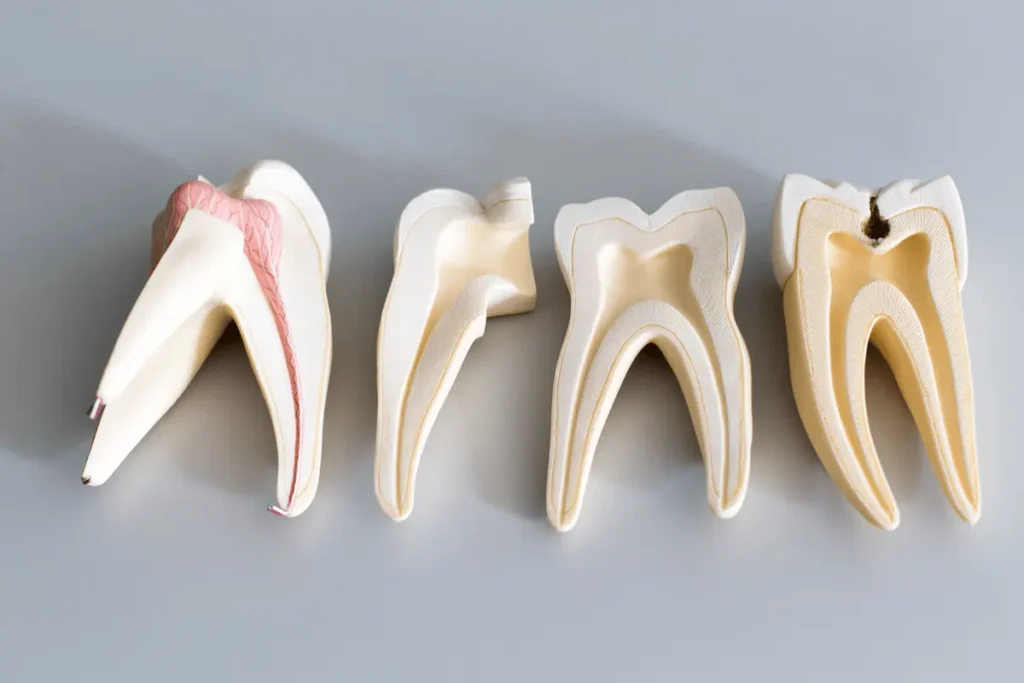
When people think about dental health, they often focus only on the visible part of the tooth. However, an essential structure lies hidden beneath the gums and jawbone—the tooth root.
Many dental issues, including recurring tooth pain, dental abscesses, swollen gums, and loose teeth, are often linked to problems affecting the tooth root. Because tooth roots cannot be seen directly, these conditions may go unnoticed until the infection becomes more serious.
So, what exactly is the function of a tooth root? What problems can affect it? And when might root canal treatment be necessary to save a tooth?
Let's explore these questions in more detail.
What Is a Tooth Root?
A tooth root is the portion of the tooth embedded within the jawbone and hidden beneath the gums.
While the crown of the tooth is responsible for biting and chewing, the root serves to anchor the tooth securely and withstand daily chewing forces.
The number of roots varies depending on the type of tooth:
Incisors typically have one root
Canines usually have one long root
Premolars may have one or two roots
Molars generally have two to three roots or more
In general, teeth that experience greater chewing forces tend to have more complex root structures.
The Function of Tooth Roots
The function of tooth roots extends beyond simply holding teeth in place.
Key functions of tooth roots include:
Keeping teeth firmly anchored in the jawbone
Distributing chewing forces evenly to the surrounding bone
Providing a pathway for blood vessels and nerves
Helping maintain tooth stability and alignment
Supporting proper speech and chewing function
Without healthy roots, teeth can become loose, lose functionality, and eventually fall out.
The Relationship Between Tooth Roots, Dental Pulp, and Nerves
Inside every root is a narrow space known as the root canal.
The root canal contains:
Dental pulp
Blood vessels
Connective tissue
Nerves
When bacteria enter through deep cavities or cracks in the tooth, infection can reach the pulp and develop into a tooth root infection that requires professional treatment.
Common Problems That Affect Tooth Roots
Tooth Root Infection
A tooth root infection is one of the most common reasons patients require root canal treatment.
This condition usually occurs when bacteria from untreated tooth decay reach the pulp and spread toward the tip of the root.
Common causes of tooth root infection include:
Deep tooth decay
Leaking or fractured fillings
Cracked teeth
Dental trauma or injury
If left untreated, the infection can lead to the formation of a dental abscess around the root tip.
Signs of a Tooth Root Infection
Common symptoms include:
Throbbing tooth root pain
A tooth feeling higher when biting
Swollen gums
A pus-filled bump on the gums
Persistent bad breath
Sensitivity to hot foods or drinks
In some cases, the pain may disappear once the nerve dies. However, the infection can continue progressing and gradually damage the surrounding jawbone.
Retained Tooth Roots
A retained tooth root occurs when most of the crown has broken down or fractured, while the root remains trapped beneath the gums or inside the jawbone.
Common causes include:
Severe tooth decay
Dental trauma
Extensive damage from chronic infection
Many patients assume that retained roots are harmless if they do not cause pain. However, retained roots can become a source of chronic infection and lead to:
Bad breath
Recurrent gum inflammation
Dental abscesses
Bone loss around the affected root
For this reason, retained roots should always be evaluated by a dentist, even if no symptoms are present.
Root Resorption and Supporting Tissue Damage
Root resorption is a condition in which the root structure gradually breaks down.
Possible causes include:
Dental trauma
Certain orthodontic treatments
Chronic infections
Specific biological conditions
Severe gum disease (periodontitis) can also damage the tissues supporting the roots, causing teeth to become loose and increasing the risk of tooth loss.
Signs of Tooth Root Problems
Because tooth roots are hidden beneath the gums and bone, symptoms are not always obvious.
You should seek dental evaluation if you experience:
Recurring pain in a specific tooth
Tooth root pain when biting
Swollen gums
A pimple-like bump on the gums
Loose teeth
Persistent bad breath
Darkening of a tooth
Prolonged sensitivity to heat
Recurring symptoms often indicate infection within the root canal system.
How Dentists Evaluate Tooth Root Health
Since tooth roots are located inside the jawbone, comprehensive examination is required for diagnosis.
1. Clinical Examination
Your dentist may evaluate:
The condition of the tooth crown
Tooth mobility
Pulp vitality responses
Gum health
2. Dental X-Rays
Dental radiographs are essential for assessing:
Root shape
Number of roots
Infection around the root tip
Bone loss
Retained roots
3. Dental Microscope
In selected cases, a dental microscope allows dentists to examine root canal anatomy under high magnification, improving diagnostic accuracy and treatment precision.
Treatment Options: Root Canal Treatment, Crown, or Extraction?
The appropriate treatment depends on the severity of the condition.
1. Root Canal Treatment (RCT)
Root canal treatment removes infected pulp tissue and bacteria from inside the root canal before sealing it to prevent reinfection.
This procedure allows the natural tooth to be preserved instead of extracted.
2. Dental Crown
After root canal treatment, teeth may become more fragile.
A dental crown is often recommended to strengthen and protect the remaining tooth structure from fractures.
3. Tooth Extraction
Extraction may be necessary when:
The infection is too extensive and only retained roots remain
The tooth cannot be successfully treated with root canal therapy
Bone support has been severely compromised
Severe tooth mobility cannot be stabilized through splinting
How to Maintain Healthy Tooth Roots
The following habits can help protect your tooth roots and overall oral health:
Brush twice daily with fluoride toothpaste and a soft-bristled toothbrush
Clean between teeth using dental floss
Reduce sugary food and drink consumption
Schedule dental checkups every six months
Treat cavities promptly
Address gum disease early
Wear a night guard if you grind your teeth (bruxism)
Preventing disease is always easier than treating an infection that has already reached the tooth root.
Conclusion
Tooth roots are the foundation that keeps teeth strong, stable, and functional. Problems such as tooth root infections, retained roots, and damage to supporting tissues can lead to pain, swelling, and even tooth loss if left untreated.
Because many root-related conditions develop beneath the surface, regular dental examinations and dental X-rays play an important role in early detection.
If you experience recurring tooth pain, swollen gums, or symptoms that do not improve, consult your dentist promptly. Early diagnosis and appropriate treatment, including root canal therapy when necessary, can help preserve your natural teeth for years to come.
References
Elsevier. (n.d.). Tooth root. ScienceDirect Topics. Retrieved June 19, 2026, from https://www.sciencedirect.com/topics/agricultural-and-biological-sciences/tooth-root
Iliescu AA, Gheorghiu IM, Ciobanu S, Roman I, Dumitriu AS, Popescu GAD, Păunică S. Primary Endodontic Infections—Key Issue in Pathogenesis of Chronic Apical Periodontitis. Journal of Mind and Medical Sciences. 2024; 11(2):331-336. https://doi.org/10.22543/2392-7674.1562
Li, J., Parada, C., & Chai, Y. (2017). Cellular and molecular mechanisms of tooth root development. Development (Cambridge, England), 144(3), 374–384. https://doi.org/10.1242/dev.137216