Clean-looking teeth are influenced not only by their natural color but also by the condition of their surfaces. One procedure that can help remove surface stains on teeth is polishing. But is polishing the same as scaling? Can it also make your teeth whiter?
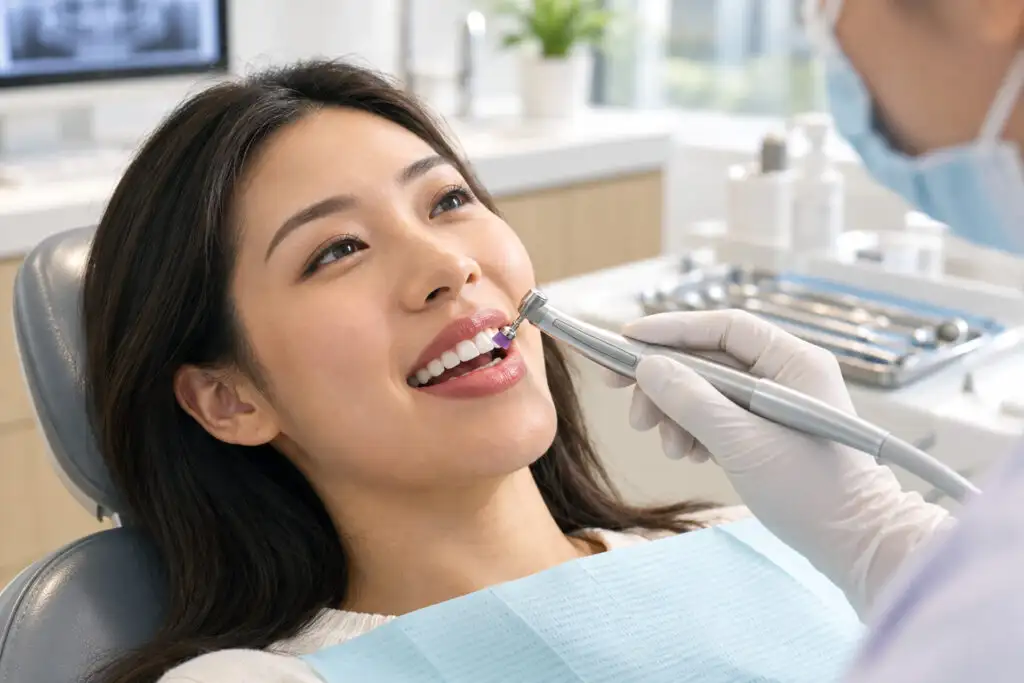
Teeth polishing is a procedure that smooths the tooth surfaces using specialized instruments and materials to help remove extrinsic stains and soft deposits. It may be performed after scaling when residual surface stains still need to be removed.
Although dental polishing is often included as part of professional dental cleaning, it serves a different purpose from scaling and teeth whitening. It is also not necessary at every dental visit, as the indication depends on each patient's oral condition and individual needs.
What Is Teeth Polishing and How Does the Procedure Work?
Teeth polishing is a procedure that smooths the tooth surfaces using specialized instruments, such as a rubber cup or a small low-speed brush, combined with a polishing paste.
Its primary purpose is to help remove extrinsic stains and residual soft deposits from the tooth surfaces. The procedure can also leave the teeth feeling smoother and cleaner.
The abrasiveness of the polishing paste must be selected according to the condition of the teeth. The dentist also controls the pressure, instrument speed, and duration of the procedure to achieve effective cleaning while minimizing unnecessary abrasion.
What Causes Surface Stains on Teeth?
Extrinsic stains are discolorations that develop on the outer surface of the teeth. Several factors can contribute to their formation, including:
Regular consumption of coffee and tea.
Foods and beverages containing strong pigments.
Smoking or using tobacco products.
Long-term use of certain mouthwashes, such as those containing chlorhexidine.
The accumulation of pigments and deposits on tooth surfaces.
Polishing can help reduce these stains through mechanical cleaning using appropriately selected polishing materials.
Polishing After Scaling: Is It Always Necessary?
Not every patient needs polishing after scaling. Dentists first evaluate the condition of the tooth surfaces to determine whether additional polishing is necessary.
Modern dental practice recognizes an approach called selective polishing. This means polishing is performed only on areas with stains or deposits that require removal, rather than automatically polishing every tooth surface.
Although polishing involves materials with varying levels of abrasiveness, the procedure is not intended to remove enamel. Choosing the appropriate materials and techniques is important to protect tooth surfaces, particularly around restorations and exposed root surfaces.
What Is Dental Polishing Used For? Understanding the Difference from Teeth Whitening
A common misconception is that polishing can whiten teeth in the same way as bleaching. However, the two procedures work through different mechanisms and serve different purposes.
Dental polishing: Uses a mechanical process to help remove extrinsic stains attached to the tooth surfaces.
Teeth whitening: Uses chemical agents containing peroxides, such as hydrogen peroxide or carbamide peroxide, to oxidize pigments within the tooth structure that contribute to discoloration.
Therefore, polishing can help restore a cleaner appearance by removing external stains, but it does not change the natural color of the teeth.
If teeth appear yellow due to aging, the natural characteristics of dentin, or other intrinsic discoloration, polishing alone will not provide the desired whitening effect. In these cases, a dentist can assess whether teeth whitening or another treatment would be more appropriate.
Scaling vs Polishing: What Are the Differences?
Scaling, conventional polishing, and air polishing are professional dental cleaning procedures that differ in their purposes and techniques.
Here is a comparison of the three:
Aspect | Dental Scaling | Conventional Polishing | Air Polishing |
Main purpose | Removes hardened plaque, also known as dental calculus or tartar | Helps remove extrinsic stains and residual soft deposits | Removes biofilm and extrinsic stains from selected areas |
Instruments used | Ultrasonic scaler or manual instruments | Low-speed rubber cup or small brush with polishing paste | Air-polishing unit that uses air, water, and specialized powder |
How it works | Uses ultrasonic vibrations or manual instruments to loosen and remove calculus | Uses mechanical friction on the tooth surfaces | Uses a pressurized spray of air and water carrying fine powder particles |
Main target | Supragingival and subgingival calculus, depending on clinical indications | Surface stains and soft deposits | Biofilm and stains in selected areas, including areas that may be difficult to reach |
Limitations | Does not aim to change the natural color of teeth | Cannot remove hardened calculus or intrinsic stains | Does not replace scaling for removing hardened calculus |
Indications | Depends on the amount of calculus and periodontal condition | Depends on the presence of stains and the condition of tooth surfaces | Depends on clinical needs and the type of tissue or restoration involved |
When Do Dentists Choose Different Cleaning Techniques?
The choice of cleaning technique is not based solely on the desire to achieve cleaner-looking teeth. It should be determined by clinical indications.
When dental calculus is present: If hardened calculus is attached to the tooth surfaces, scaling is required to remove it. Afterward, the dentist evaluates whether any remaining extrinsic stains require polishing.
When stains and biofilm are present: If there are persistent stains and biofilm (a layer of microorganisms) on the teeth, air polishing may be considered. This technique uses a combination of air, water, and specialized powder to help remove deposits.
Types of Powder Used in Air Polishing
The type of powder used for air polishing should be selected according to the treatment area and the patient's oral condition.
Sodium bicarbonate: Can be used to help remove extrinsic stains from tooth surfaces. Its use should take into account its abrasiveness and the condition of the surrounding tissues.
Glycine and erythritol: These powders have finer particles and lower abrasiveness. They may be considered for biofilm removal, including in subgingival areas or around dental implants, when clinically indicated.
Air polishing does not completely replace scaling or conventional polishing. These three techniques may be used separately or in combination, depending on the dentist's clinical assessment.
Who Needs Special Evaluation Before Teeth Polishing?
Not all dental conditions can be treated using the same polishing technique. Dentists need to examine the tooth surfaces and existing restorations before selecting the appropriate materials and methods.
Some conditions that require special consideration include:
Composite fillings: These require suitable polishing materials and techniques to help prevent excessive wear or changes in the restoration's surface texture.
Crowns and veneers: The restoration material must be identified because not all polishing pastes or powders are suitable for every type of ceramic or porcelain material.
Exposed root surfaces: Dentin and cementum are softer than enamel, so polishing should be performed selectively.
Sensitive teeth and gum inflammation: The cause of sensitivity and the condition of the gum tissues should be evaluated to avoid aggravating existing symptoms.
The goal of polishing is not simply to make teeth look shiny. It is also important to preserve tooth surfaces and maintain the quality of existing restorations over time.
What Happens During a Dental Visit?
1. Initial Examination
Before recommending a procedure, the dentist will evaluate several aspects of your oral health, including:
The presence of plaque and calculus (tartar).
The type and location of stains on the tooth surfaces.
The condition of the enamel and any exposed dentin.
Existing fillings and other dental restorations.
Gum health and any history of tooth sensitivity.
Based on the examination, the dentist will determine whether you need scaling alone, additional conventional polishing, or air polishing.
2. At-Home Care and Routine Checkups
Professional dental cleaning should be supported by good oral hygiene habits at home, such as:
Brushing your teeth twice a day with fluoride toothpaste.
Cleaning between your teeth using dental floss or interdental brushes.
Limiting the consumption of foods and beverages high in sugar.
Managing your coffee and tea consumption and avoiding smoking.
Scheduling regular dental checkups.
The recommended frequency of professional cleaning varies from patient to patient. Follow-up appointments should be tailored to individual caries risk, gum health, daily habits, and clinical needs.
Conclusion: Teeth Polishing Should Match Your Dental Needs
Teeth polishing is a procedure that smooths tooth surfaces and helps remove extrinsic stains and residual soft deposits. Although it is often performed after scaling, the two procedures serve different purposes.
Scaling focuses on removing calculus, polishing helps clean surface stains, while air polishing uses a combination of air, water, and specialized powder to remove biofilm and stains. All three are also different from teeth whitening, which uses chemical agents to change tooth color.
Not every patient needs polishing after scaling. The decision should be based on a dentist's examination, taking into account tooth surface conditions, periodontal health, sensitivity, and existing restorations.
A clean and healthy smile does not always require more procedures. It requires the right care based on your individual needs. Consult the dental team at Onyx Dental Center in Karawaci, Tangerang, to receive personalized and well-planned dental care.
Read More
References
Matthews, D. C., & Al-Waeli, H. (2025). Benefits of Dental Scaling and Polishing in Adults: A Rapid Review and Evidence Synthesis. JDR Clinical and Translational Research, 10(3), 269–281. https://doi.org/10.1177/23800844241271684
Sagmak, S., & Bakir, M. (2026). Comparative effects of air-polishing and conventional prophylaxis methods on surface roughness and gloss of composite restorations. BMC Oral Health, 26, Article 1504. https://doi.org/10.1186/s12903-026-09243-0
Tungare, S., & Paranjpe, A. G. (2022). Teeth Polishing. StatPearls Publishing. https://www.ncbi.nlm.nih.gov/books/NBK513328/