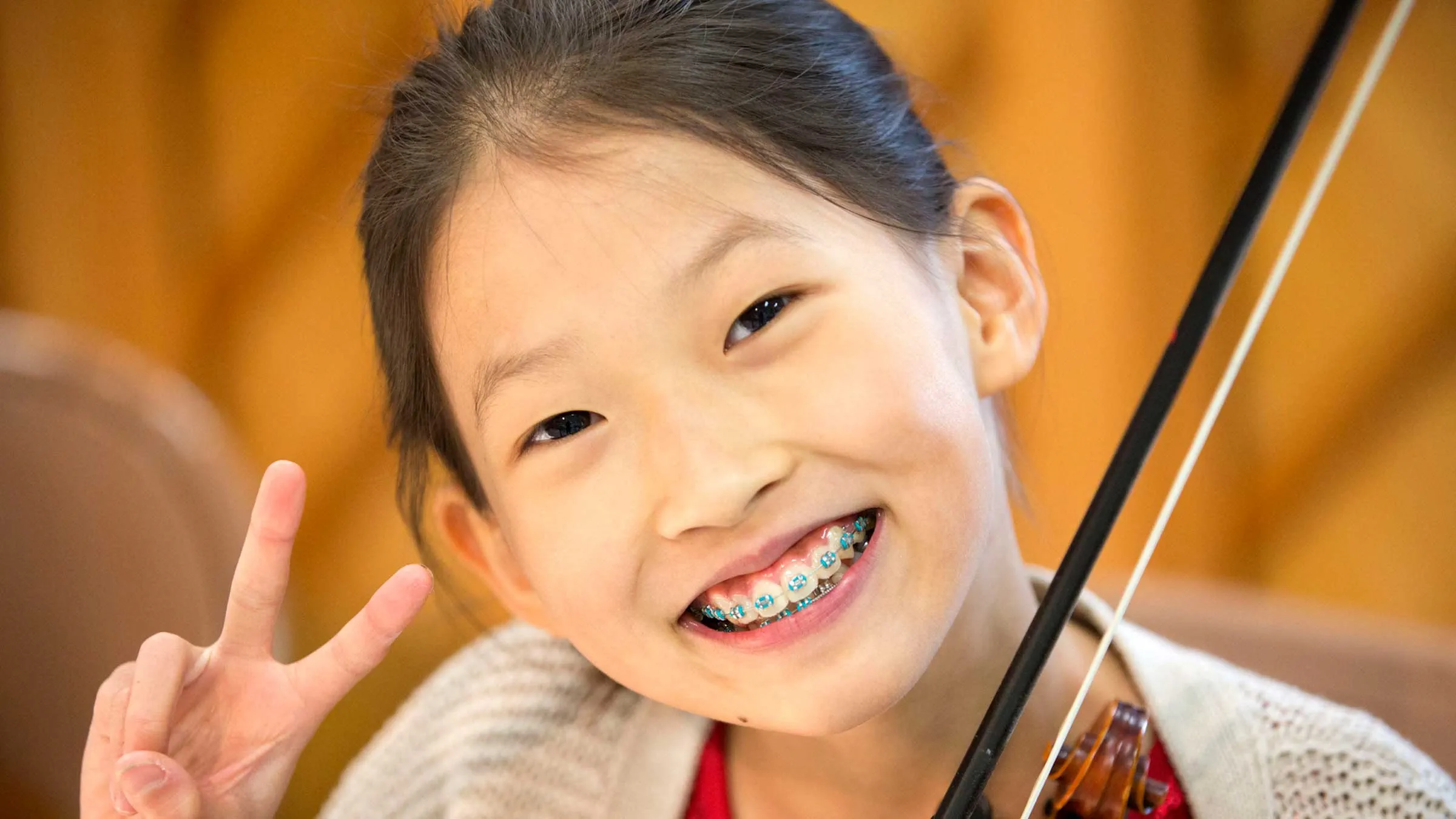
What Is Pediatric Orthodontics and Why Is It Important Early On?
Pediatric orthodontics focuses on correcting the alignment of teeth and jaw relationships to achieve optimal function and aesthetics.
Compared to adults, orthodontic treatment in children offers several advantages:
The jaw is still growing
Tooth movement is more responsive
Certain issues can be prevented before becoming more complex
This is why understanding when a child may need braces is essential for long-term oral health.
Early Signs Your Child May Need Braces
Not all children require braces immediately, but some early indicators include:
Crowded Teeth or Lack of Space
Teeth appear overlapping due to insufficient jaw space.Excessive Gaps Between Teeth
Large spaces (diastema) that may affect both appearance and bite function.Misaligned Bite (Malocclusion)
Such as:Protrusion (upper teeth stick out)
Underbite (lower teeth extend forward)
Crossbite (misaligned bite when closing)
Habits That Affect Dental Development
Thumb sucking
Mouth breathing
Tongue thrusting
Difficulty Chewing or Speaking
This may indicate underlying jaw alignment issues.
If these signs are present, it’s best to consult a dentist to determine whether your child needs braces or another orthodontic approach.
Ideal Age for Orthodontic Evaluation
Orthodontists generally recommend an initial evaluation around age 7.
At this stage:
Primary and permanent teeth coexist (mixed dentition)
Early jaw growth issues can be detected
However:
Not all children will need braces at this age
This phase focuses on assessment and treatment planning
Orthodontic care is typically divided into:
Phase 1 (Interceptive Treatment): Ages 7–10
Focus on guiding jaw growth
Addresses early issues like mild crowding or crossbite
Phase 2: Ages 11–13
Full braces after permanent teeth erupt
Focus on alignment and aesthetics
Orthodontic Options for Children: Which Is Right?
Today, orthodontic treatments for children are more flexible and tailored:
Removable Appliances
Used in early stages
Help guide jaw development
Conventional Braces
Most common option
Effective for a wide range of cases
Suitable for comprehensive treatment
Clear Aligners (e.g., Invisalign for Kids)
Transparent and more aesthetic
Removable
Suitable for mild to moderate cases with good compliance
Must be worn 20–22 hours per day
The best option depends on:
The child’s age
Severity of the condition
Compliance with treatment
Why Orthodontic Treatment Shouldn’t Always Be Delayed
Delaying treatment at the wrong time may lead to:
Increased complexity of the condition
Longer treatment duration
Functional issues with chewing or speaking
That said:
Not all children need early treatment
Timing depends on individual growth patterns
Recognizing the signs early helps determine the right moment to begin.
The Role of Early Intervention
In appropriate cases, early (interceptive) treatment can:
Guide proper jaw development
Correct bite issues early
Reduce the need for more complex treatment later
This approach often leads to more efficient and optimal outcomes.
Pediatric Orthodontic Approach at Onyx Dental Center
At Onyx Dental Center, every pediatric orthodontic treatment is designed with a personalized, growth-based approach.
We consider:
Facial and jaw structure
Growth patterns
Balance between function and aesthetics
For us, braces for children are not just about straightening teeth—but about building a strong, healthy foundation for a confident smile into adulthood.
Conclusion
Understanding when your child may need braces and recognizing early signs are key to preventing more complex dental issues in the future.
Not every child requires immediate treatment, but early evaluation allows for better planning and outcomes.
With the right approach, pediatric orthodontics helps create a smile that is healthy, functional, and confident for years to come.
References
Carli, E., Fambrini, E., Lardani, L., Derchi, G., & Defabianis, P. (2023). Early orthodontic treatment need in paediatric age: a prospective observational study in Italian school-children. European journal of paediatric dentistry, 24(2), 94–98. https://doi.org/10.23804/ejpd.2023.1835
Sandhu, A., Sakaria, B. A., Patel, S. D., Ahuja, G., Jadeja, N., Mehta, A., & Kakkad, D. (2024). The impact of early orthodontic intervention on dental and skeletal development in children with mixed dentition. Journal of Pharmacy and Bioallied Sciences, 16(Suppl 1), S818–S820. https://doi.org/10.4103/jpbs.jpbs_1035_23
Schneider-Moser, U. E. M., & Moser, L. (2022). Very early orthodontic treatment: when, why and how?. Dental press journal of orthodontics, 27(2), e22spe2. https://doi.org/10.1590/2177-6709.27.2.e22spe2