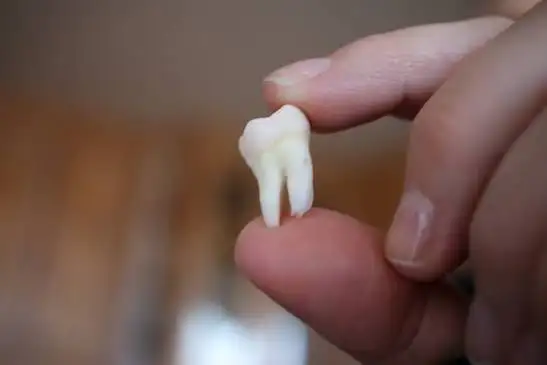
Do All Wisdom Teeth Need to Be Removed?
When wisdom teeth begin to erupt, one of the most common questions people ask is, "Do wisdom teeth always need to be removed?" Some people wait until they experience pain, while others want them extracted immediately—even if they have no symptoms.
So, which approach is correct?
The answer is not all wisdom teeth need to be removed. If a wisdom tooth erupts in the correct position, can be cleaned properly, contributes to chewing function, and does not cause problems for the surrounding tissues, extraction may not be necessary.
However, if the wisdom tooth grows at an angle, becomes trapped beneath the gums or jawbone (impacted), causes repeated infections, or damages the neighboring tooth, your dentist may recommend extraction.
If you have started experiencing pain at the back of your jaw, an early examination can help determine whether your wisdom tooth simply needs monitoring or requires treatment.
Before recommending extraction, your dentist will evaluate several clinical factors, including:
The position of the wisdom tooth
The direction of eruption
Whether symptoms are present
The condition of the adjacent tooth
Oral hygiene around the wisdom tooth
The risk of future complications
Because every case is unique, the decision should always be based on a comprehensive dental examination.
When Does a Wisdom Tooth Not Need to Be Removed?
Not every wisdom tooth causes problems.
A wisdom tooth can usually be retained if it:
Erupts upright in a normal position
Has fully erupted so the entire crown is visible
Functions properly during chewing
Can be cleaned easily
Does not cause pain
Is free from tooth decay or gum disease
Shows no pathological conditions, such as cysts or root resorption of the neighboring tooth
In these situations, your dentist will generally recommend regular monitoring and routine dental check-ups.
Signs Your Wisdom Tooth Should Be Evaluated
Even if extraction is not immediately necessary, the following symptoms should not be ignored.
Pain at the Back of the Jaw
The most common complaint is pain in the very back of the jaw.
The pain may:
Come and go
Worsen while chewing
Radiate to the ear or head
Make it difficult to open the mouth
This discomfort often occurs because there is insufficient space for the tooth to erupt or because the surrounding gum tissue has become inflamed.
Swollen Gums or Recurrent Infection
A partially erupted wisdom tooth may leave a flap of gum tissue (operculum) that easily traps food debris and bacteria. This can lead to pericoronitis, an inflammation of the tissue surrounding a partially erupted tooth.
Symptoms may include:
Swollen gums
Pain while swallowing
Bad breath
Pus or discharge
Difficulty opening the mouth (trismus) in more severe cases
Recurrent pericoronitis is one of the most common reasons dentists recommend wisdom tooth removal.
Wisdom Tooth Growing at an Angle
Some wisdom teeth erupt in abnormal positions, including:
Mesioangular (tilted forward)
Distoangular (tilted backward)
Horizontal
Vertical but unable to fully erupt
These positions may result in:
Plaque accumulation
Tooth decay affecting the wisdom tooth or the adjacent second molar
Gum inflammation
Root resorption of the neighboring tooth in certain cases
Difficulty maintaining proper oral hygiene
These conditions may lead your dentist to recommend extraction.
Examinations Before Wisdom Tooth Removal
Before determining the most appropriate treatment, your dentist will perform a comprehensive evaluation.
This typically includes:
Discussing your symptoms and dental history
An oral examination
Assessing the position of the wisdom tooth
Evaluating the surrounding gum tissue
Checking your ability to open your mouth
Radiographic examinations are also essential.
Common imaging methods include:
Panoramic X-rays to evaluate the overall position of the wisdom teeth
Periapical X-rays in selected cases
Cone Beam Computed Tomography (CBCT) when necessary to assess the relationship between the wisdom tooth roots and important structures such as the mandibular canal or maxillary sinus
At Onyx Dental Center Karawaci, radiographic evaluation helps determine the complexity of the procedure and allows for safer, more accurate treatment planning.
What Is an Odontectomy?
Many people assume that every wisdom tooth extraction is performed the same way. However, if a wisdom tooth is partially or completely trapped beneath the gum or jawbone, the recommended procedure is often an odontectomy.
An odontectomy is a surgical procedure used to remove a tooth that cannot be extracted using a simple extraction technique.
The procedure generally involves:
Administering local anesthesia
Making a small incision in the gum when necessary
Removing a small amount of surrounding bone if required
Dividing the tooth into smaller sections in certain cases to facilitate removal
Cleaning the surgical site
Closing the area with sutures when indicated
The goal is to minimize trauma to the surrounding tissues while ensuring a safe and predictable procedure.
Risks of Delaying Wisdom Tooth Evaluation
Some people postpone seeing a dentist because the pain subsides on its own. However, the underlying infection can return at any time.
Possible complications include:
Recurrent pericoronitis
Tooth decay affecting the wisdom tooth
Tooth decay of the adjacent second molar due to difficulty cleaning the area
Gum disease around the second molar
Root resorption of neighboring teeth
Odontogenic cysts (less common)
Dental abscesses or the spread of infection in more severe cases
Early evaluation is often much simpler than treating complications after they have developed.
What Can You Do at Home?
If symptoms appear but you cannot visit a dentist immediately, the following measures may temporarily relieve discomfort:
Keep the back of your mouth clean as carefully as possible.
Rinse with warm salt water several times a day if mild inflammation is present.
Brush gently around the wisdom tooth.
Take medications only as prescribed or recommended by your dentist.
These measures can help reduce symptoms but will not correct the underlying problem if the tooth position itself is causing the issue. A professional dental examination is still necessary.
When Should You See a Dentist?
Schedule a dental consultation if you experience:
Recurrent pain at the back of the jaw
Swollen gums around a wisdom tooth
Difficulty opening your mouth
Pain while swallowing
Bad breath accompanied by swelling
Fever or pus discharge
A wisdom tooth growing at an angle
Food frequently becoming trapped behind the last tooth
At Onyx Dental Center Karawaci, your dentist will perform a thorough clinical and radiographic examination to determine whether your wisdom tooth only requires monitoring or if surgical treatment, such as an odontectomy, is necessary. Early evaluation can help prevent complications and protect the health of your surrounding teeth.
Conclusion
Not all wisdom teeth need to be removed. Wisdom teeth that erupt normally, function properly, are easy to clean, and do not cause problems can often be monitored through regular dental examinations. However, wisdom teeth that are impacted, grow at an angle, cause recurrent infections, or threaten the health of adjacent teeth may require surgical removal through an odontectomy.
Because every patient's condition is different, the best treatment decision can only be made after a comprehensive clinical and radiographic examination. If you are experiencing pain at the back of your jaw or suspect a problem with your wisdom tooth, don't wait until the symptoms become more severe. Consult the dental team at Onyx Dental Center Karawaci for an accurate diagnosis and a personalized treatment plan.
References
Choi, J. F., Park, D. Y., Scruggs Williams, S. L., & al. (2025, January 22). Oral surgery, extraction of unerupted teeth. StatPearls Publishing. https://www.ncbi.nlm.nih.gov/books/NBK592391/
Normando D. (2015). Third molars: To extract or not to extract?. Dental press journal of orthodontics, 20(4), 17–18. https://doi.org/10.1590/2176-9451.20.4.017-018.edt
Zou, R., Qiao, Y., Lin, Y., Piao, Z., Zhao, T., Wu, Q., Xing, L., Zhang, J., & Ouyang, K. (2023). Is it necessary to remove bone-impacted teeth? A retrospective study. Journal of Stomatology, Oral and Maxillofacial Surgery, 124(2), Article 101304. https://doi.org/10.1016/j.jormas.2022.10.003