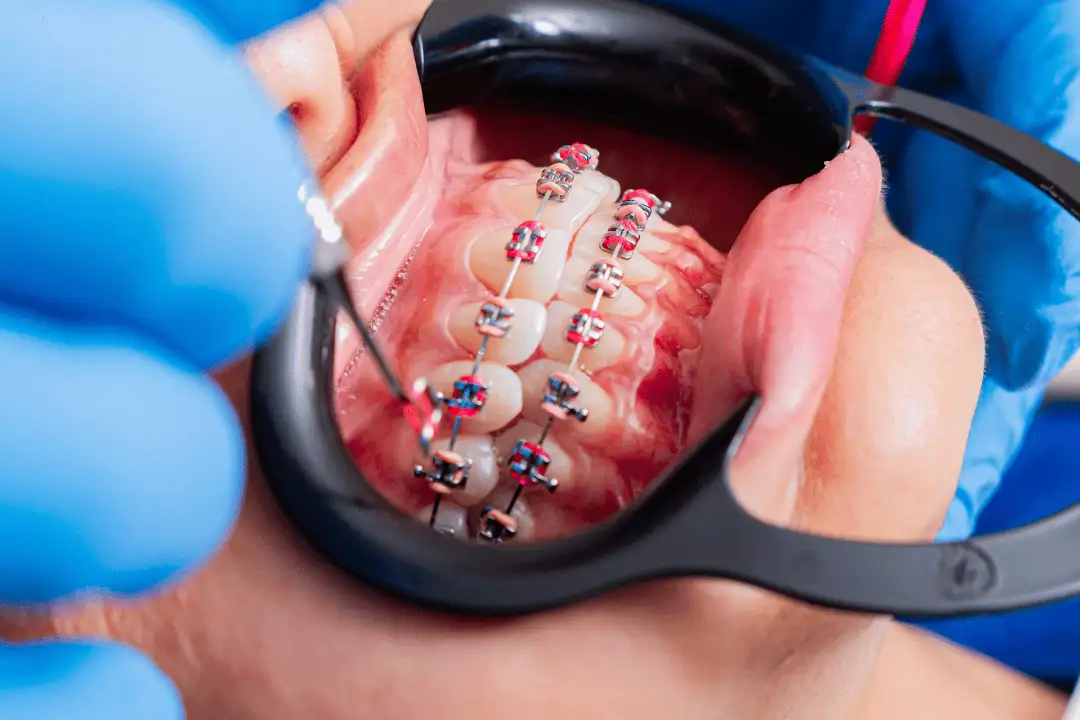
Choosing the right type of braces is an important step in orthodontic treatment. Today, in addition to conventional metal braces, more and more patients are considering self-ligating braces as a solution for straightening their teeth using more modern technology.
But what exactly are self-ligating braces? Are they really more comfortable than traditional braces? And is this system suitable for all orthodontic cases?
Before deciding which treatment option to choose, it is important to understand how each system works, along with its advantages and limitations. This allows you to have a more informed discussion with your dentist or orthodontic specialist about the option that best suits your dental and jaw condition.
What Are Self-Ligating Braces?
Self-ligating braces are a fixed orthodontic appliance system that uses brackets with an integrated self-locking mechanism to hold the orthodontic wire (archwire) in place.
In conventional braces, the archwire must be secured using small elastic ligatures (ligature wires or O-rings). In contrast, self-ligating braces feature built-in clips or sliding doors that open and close mechanically, allowing the archwire to be securely locked within the bracket slot without the need for elastic ligatures.
In general, self-ligating brackets are divided into two categories based on how they interact mechanically with the archwire:
Passive Self-Ligating System: The bracket door functions as a sliding mechanism that does not apply direct pressure to the wire. This design creates ultra-low friction, allowing the wire to move freely and facilitating gentler tooth movement during the initial stages of treatment. One of the most well-known systems utilizing this passive mechanism is the Damon System.
Active Self-Ligating System: Uses a spring-loaded metal clip that actively presses the wire into the bracket slot. This system provides more precise force control for managing tooth torque and rotation during the finishing stages of treatment.
The Biomechanics of Self-Ligating Braces
The fundamental principle of orthodontic treatment is the application of continuous mechanical force to stimulate the biological remodeling process (bone resorption and formation) around the roots of the teeth.
In conventional braces, elastic ligatures tightly secure the archwire to the brackets. This creates a high level of friction. As a result, greater force is required to move the teeth and overcome this friction.
With self-ligating braces, the absence of elastic ligatures allows the wire to move more freely within the brackets. This significantly lower friction offers several biomechanical advantages:
Lighter and More Continuous Forces: Tooth movement can be achieved using lighter biological forces, helping minimize excessive trauma to the blood vessels within the periodontal tissues.
Improved Chairside Efficiency: Archwire changes become significantly faster and more practical because the dentist only needs to open and close the bracket clips, without removing and replacing multiple elastic ligatures on every tooth.
Self-ligating systems do not require ligature ties to hold the archwire, but they may still require intermaxillary elastics that connect the upper and lower jaws during the middle or later stages of treatment if correction of interarch bite relationships is needed.
Advantages of Self-Ligating Braces
This modern system offers several clinical benefits that make it a preferred choice among dental professionals and urban patients alike.
Easier Oral Hygiene Maintenance
The elastic ligatures used in conventional braces are porous and can easily absorb saliva and food debris. These elastic materials often become a breeding ground for bacterial plaque. Without elastic ligatures, the spaces around self-ligating brackets are generally easier to clean using orthodontic toothbrushes and dental floss, helping reduce the risk of gingivitis.
More Aesthetic Appearance
The elastic ligatures on traditional braces often become stained by coffee, tea, or pigmented foods. Self-ligating brackets, whether made of metal or clear ceramic, maintain a more consistent aesthetic appearance from the time of placement until the next adjustment appointment.
Greater Comfort for Some Patients
Low-friction mechanics can reduce the extreme soreness or tightness often experienced during the first few weeks after wire adjustments. Additionally, self-ligating brackets are generally designed with smoother, low-profile edges, reducing the risk of irritation or ulcers on the cheeks and lips.
More Flexible Adjustment Intervals
Conventional elastic ligatures lose their elasticity (force decay) within approximately 3–4 weeks, requiring monthly adjustment visits. In contrast, the mechanical locking mechanism of self-ligating brackets does not loosen over time, allowing clinical adjustment intervals to be extended to every 6–8 weeks, making them particularly suitable for individuals with busy schedules.
Disadvantages and Considerations
Although self-ligating braces offer various advantages, they are not always the best option for every patient.
Results Still Depend on the Dentist and Diagnosis
The success of orthodontic treatment is not determined solely by the type of bracket used. Accurate diagnosis, treatment planning, and the experience of the dentist or orthodontic specialist have a much greater impact on the final treatment outcome.
Not Every Case Requires Self-Ligating Braces
Many orthodontic cases can be successfully treated using conventional metal braces. Therefore, the choice of bracket system should be based on clinical needs rather than trends alone.
Regular Follow-Up Visits Are Still Necessary
Even with modern technology, patients must continue attending routine appointments according to the schedule recommended by their dentist.
Self-Ligating Braces vs Conventional Metal Braces
Aspect | Self-Ligating Braces | Conventional Metal Braces |
Wire Retention | Built-in bracket clip | Elastic ligature |
Wire Friction | Generally lower | Relatively higher |
Elastic Ligatures | None | Required |
Ease of Cleaning | Relatively easier | Requires more attention |
Treatment Principle | Both straighten teeth | Both straighten teeth |
Final Results | Dependent on diagnosis and patient compliance | Dependent on diagnosis and patient compliance |
Orthodontic Treatment Stages and Digital Documentation
Before braces are placed on the teeth, patients must undergo a series of standardized diagnostic procedures.
Before treatment begins, dentists typically perform several examinations.
Extraoral and Intraoral Clinical Examination: Evaluation of facial symmetry, gum health, and dental arch space analysis.
Integrated Digital Scanning: Panoramic and cephalometric radiographs are taken. In clinics equipped with modern technology, traditional dental impressions—which often trigger gag reflexes—are increasingly being replaced by intraoral scanners. This technology digitally scans the oral cavity to instantly generate highly accurate 3D models of the jaws, allowing computerized simulation of tooth movement.
Treatment Planning
Once all diagnostic information has been collected, the dentist will explain:
The diagnosis
Available brace options
Estimated treatment stages
Tooth movement objectives
Oral Preparation and Infection Control
All sources of oral infection are addressed before bracket bonding, including professional dental cleaning (scaling) and treatment of dental cavities.
For residents of Tangerang, Gading Serpong, Kelapa Dua, and Lippo Karawaci, comprehensive orthodontic care supported by digital scanner technology is available at Onyx Dental Center. Its accessible location makes it easier for patients to maintain regular follow-up visits and stay on track throughout their orthodontic treatment journey.
Conclusion
Self-ligating braces represent a modern innovation in orthodontics, offering enhanced comfort, easier oral hygiene maintenance, and more efficient adjustment appointments through a mechanical locking system that eliminates the need for conventional elastic ligatures. However, selecting the most suitable orthodontic appliance should always be based on the complexity of the skeletal condition and the specific biological needs of each patient.
The best approach is to begin with a comprehensive evaluation. Consult with the dental team at Onyx Dental Center to receive a personalized, evidence-based treatment plan designed to help you achieve straighter teeth, better oral health, and a harmonious smile.
References
Arora, M. A., Shah, A., & Somani, D. (2025). Self-ligating versus conventional brackets: A narrative review. Cureus, 17(3), Article e81499. https://doi.org/10.7759/cureus.81499
Baxi, S., Tripathi, A. A., Bhatia, V., Prasad Dubey, M., Kumar, P., & Bagde, H. (2023). Self-Ligating Bracket Systems: A Comprehensive Review. Cureus, 15(9), e44834. https://doi.org/10.7759/cureus.44834
Singh, A., Rai, B. S., Ahuja, D., & Ashith, M. V. (2023). Self-ligation in orthodontics: A more hygienic and biocompatible treatment option? A narrative review. Journal of International Oral Health, 15(3), 257–264. https://doi.org/10.4103/jioh.jioh_103_22