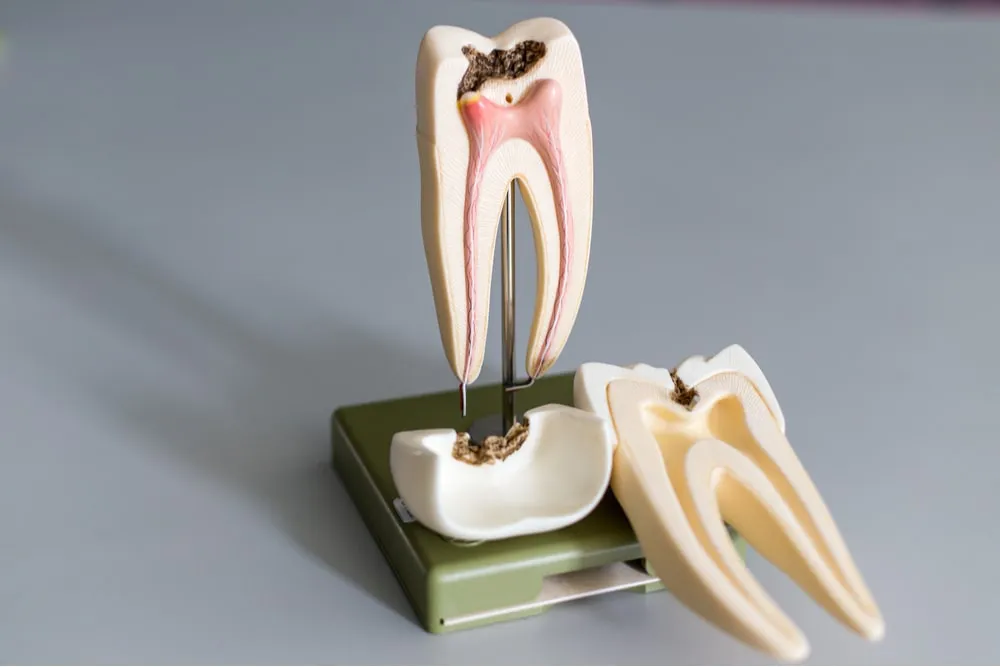
Hearing the term root canal treatment often makes many people feel anxious. Some assume that the procedure is extremely painful or believe it is easier to have the tooth extracted instead. In reality, root canal treatment is performed to save a natural tooth affected by an infected tooth nerve due to deep tooth decay, allowing the tooth to remain functional without the need for extraction.
Thanks to advances in modern dentistry and the use of local anesthesia, root canal treatment can now be performed comfortably for most patients. The earlier the infection is treated, the greater the chance of preserving your natural tooth.
What Is Root Canal Treatment?
Root canal treatment (RCT) is a dental procedure used to treat infection inside the tooth. During the procedure, the infected dental pulp is removed, the root canals are thoroughly cleaned and disinfected, and the canals are sealed to prevent bacteria from re-entering.
The dental pulp is the soft tissue located in the center of the tooth and contains:
Blood vessels
Dental nerves
Connective tissue
When the pulp becomes infected due to deep tooth decay or trauma, root canal treatment offers the best opportunity to preserve the natural tooth rather than removing it.
When Is Root Canal Treatment Needed?
Not every toothache requires root canal treatment. The procedure is generally recommended when the pulp has developed irreversible inflammation (irreversible pulpitis) or has become necrotic due to infection or trauma.
Common indications include:
Persistent or Throbbing Tooth Pain
Pain may occur spontaneously or continue long after consuming hot or cold foods and drinks.
Symptoms may include:
Throbbing pain
Difficulty sleeping because of tooth pain
Pain radiating to the jaw, ear, or head
Temporary relief from pain medication
These symptoms often indicate that the dental pulp has been irreversibly damaged.
Deep Tooth Decay Reaching the Dental Pulp
Untreated cavities can progress through the enamel and dentin until they reach the pulp. Once the infection extends into the pulp chamber, a simple filling is usually no longer sufficient.
Swelling or Dental Abscess
An infection spreading beyond the tooth root may cause:
Swollen gums
Pus drainage through a gum fistula
Pain when biting
Facial swelling
Fever in more severe infections
In these situations, your dentist will perform a clinical examination and take dental X-rays to determine whether the tooth can still be saved with root canal treatment or requires another form of treatment.
Common Causes of Root Canal Treatment
Root canal treatment is most commonly needed because of:
Untreated tooth decay
Leaking dental fillings that allow bacteria to re-enter the pulp
Cracked teeth that expose the pulp to bacteria
Dental trauma, even when no visible cavity is present
Severe tooth wear approaching the pulp (less common)
Early treatment significantly increases the likelihood of saving the natural tooth.
The Root Canal Treatment Process
Although many patients think root canal treatment is complicated, the procedure follows a systematic process.
Clinical Examination and Diagnosis
Your dentist will perform:
A comprehensive dental examination
Pulp vitality testing when indicated
Periapical dental X-rays
These examinations help evaluate:
The number of root canals
The severity of infection
The surrounding bone
Any additional abnormalities
At Onyx Dental Center Karawaci, radiographic evaluation plays an essential role in developing an accurate treatment plan.
Local Anesthesia
The area surrounding the affected tooth is numbed with local anesthesia to ensure the procedure is as comfortable as possible.
Rubber Dam Isolation
Ideally, the tooth is isolated using a rubber dam, a protective sheet that keeps the treatment area clean, dry, and free from saliva contamination. Rubber dam isolation is considered the standard of care during root canal treatment.
Cleaning the Root Canals
The dentist will create access to the pulp chamber and then:
Remove the infected pulp tissue
Clean the root canals
Shape the canals using specialized instruments
Irrigate the canals with disinfecting solutions to eliminate bacteria
This stage focuses on removing the source of infection.
Filling the Root Canals
Once the canals are clean and dry, they are filled with a biocompatible material—typically gutta-percha combined with an endodontic sealer—to create a tight seal and prevent reinfection.
Final Restoration
The final step restores the tooth's strength and function. Depending on how much healthy tooth structure remains, treatment may include:
Composite filling
Onlay restoration
Dental crown, especially for posterior teeth after root canal treatment
A well-sealed final restoration is critical for the long-term success of root canal therapy because it prevents bacterial leakage.
At Onyx Dental Center Karawaci, every patient undergoes a comprehensive clinical and radiographic assessment to determine whether root canal treatment or another restorative option is the most appropriate solution.
For patients in Karawaci, Gading Serpong, Kelapa Dua, Tangerang, and the Greater Jakarta area, early diagnosis helps prevent infection from progressing while maximizing the chance of preserving the natural tooth.
Is Root Canal Treatment Better Than Tooth Extraction?
Whenever possible, preserving a natural tooth is generally the preferred option when the long-term prognosis is favorable.
Benefits of saving the natural tooth include:
Maintaining normal chewing function
Preserving proper bite alignment
Preventing neighboring teeth from shifting
Supporting the surrounding jawbone
However, extraction may be necessary when:
The tooth cannot be restored
A vertical root fracture is present
Severe loss of supporting bone has occurred
The long-term prognosis is poor
The best treatment option can only be determined after a thorough examination by your dentist.
Dental Microscope for Greater Precision
Modern dental technology has made root canal treatment more accurate than ever. One of the most valuable advancements is the use of a dental microscope.
Enhanced magnification and illumination allow dentists to:
Locate additional root canals
Detect microscopic cracks
Clean the canals more thoroughly
Reduce the risk of missing hidden anatomy
This technology is particularly beneficial for teeth with complex root canal systems.
Caring for Your Tooth After Root Canal Treatment
After treatment, your dentist will typically recommend:
Avoid chewing on the treated side until the final restoration is completed if a temporary filling has been placed.
Brush your teeth twice daily using fluoride toothpaste.
Clean between your teeth with dental floss or interdental brushes.
Take prescribed medications as directed.
Attend all scheduled follow-up appointments.
It is normal for some patients to experience mild discomfort when biting for a few days after the procedure. This is generally part of the normal healing process and should gradually improve.
Conclusion
Root canal treatment is designed to eliminate infection within the dental pulp while preserving your natural tooth. For teeth affected by deep decay and infected dental nerves, root canal treatment offers an effective alternative to extraction.
With an accurate diagnosis, a well-sealed final restoration, and advanced technologies such as a dental microscope, long-term treatment success can be significantly improved. If you experience persistent tooth pain, deep cavities, or signs of dental infection, consult the dental team at Onyx Dental Center Karawaci as early as possible to receive the most appropriate treatment before the condition worsens.
Read More:
References
El-Kishawi, M., & Khalaf, K. (2021). An update on root canal preparation techniques and how to avoid procedural errors in endodontics. The Open Dentistry Journal, 15(1), 318–326. https://doi.org/10.2174/1874210602115010318
Makanjuola, J. O., Oderinu, O. H., & Umesi, D. C. (2022). Treatment Outcome and Root Canal Preparation Techniques: 5-Year Follow-Up. International dental journal, 72(6), 811–818. https://doi.org/10.1016/j.identj.2022.08.008
Winkler, A., Adler, P., Ludwig, J., Hofmann, N., Soliman, S., Krastl, G., & Krug, R. (2023). Endodontic Outcome of Root Canal Treatment Using Different Obturation Techniques: A Clinical Study. Dentistry Journal, 11(8), 200. https://doi.org/10.3390/dj11080200