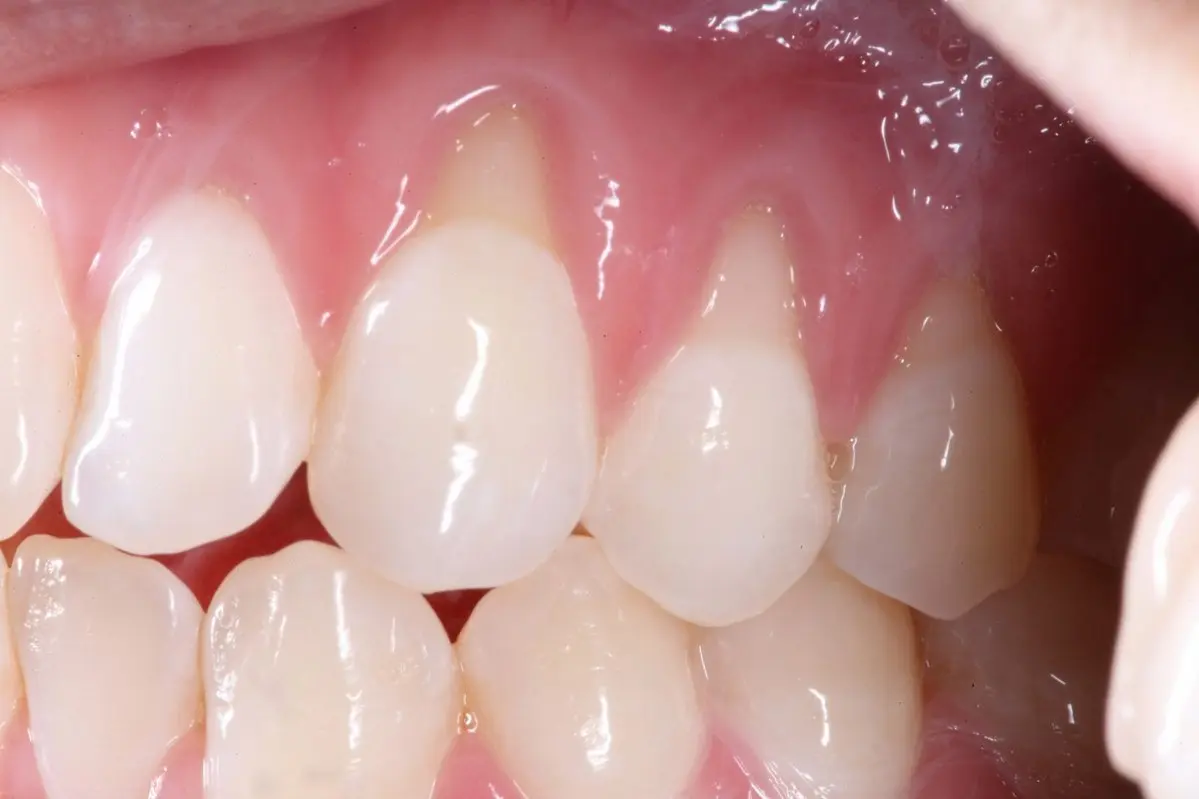
Why Does Gum Recession Make the Face Look Older?
Subtle changes along the gum line can significantly affect facial aesthetics. When gums recede, the gum tissue shrinks and exposes the tooth roots, which are naturally more yellow in color.
As a result:
The smile may appear sharper or less soft
The face may look older
Teeth may appear asymmetrical
Sensitivity to hot, cold, or sweet foods may develop
Gum recession is not merely an aesthetic concern. It is closely related to the health of the supporting structures of the teeth. If left untreated, it can increase the risk of tooth sensitivity, root caries, and even compromise tooth stability, potentially leading to mobility over time.
Main Causes of Gum Recession
Several common factors contribute to receding gums:
Aggressive Brushing Technique
Brushing with excessive pressure or using a hard-bristled toothbrush can gradually wear away gum tissue. Horizontal scrubbing motions are a classic cause of gum shrinkage.
Bruxism (Teeth Grinding)
Repeated pressure from grinding or clenching can accelerate gum tissue displacement and worsen root exposure.
Gum Disease (Periodontitis)
Chronic infection of the gums can damage the supporting tissues and lead to bone loss and progressive gum recession.
Anatomical and Genetic Factors
Some individuals naturally have thinner gum tissue (thin biotype), making them more susceptible to gum recession.
Non-Surgical Solutions for Managing Gum Recession
In its early stages, mild gum recession can often be managed conservatively.
Proper Brushing Education
Using a soft-bristled toothbrush and correct brushing technique helps prevent excessive pressure on the gums and reduces the risk of further recession.
Desensitizing Toothpaste
If exposed roots cause sensitivity, your dentist may recommend specialized toothpaste that helps seal dentinal tubules and reduce discomfort.
Scaling and Periodontal Therapy
If inflammation is the cause, professional cleaning (scaling) and periodontal treatment can halt disease progression and protect remaining gum tissue.
It is important to understand that non-surgical approaches cannot always restore lost gum tissue. However, they are effective in preventing further progression and protecting long-term tooth health.
Aesthetic and Corrective Solutions for Receding Gums
When teeth appear noticeably longer and root exposure is significant, aesthetic and corrective procedures may be considered.
Gum Grafting
Gum grafting involves adding tissue to cover exposed roots. Benefits include:
Improving the appearance of the gum line
Reducing tooth sensitivity
Protecting roots from abrasion and root caries
This procedure is typically recommended for moderate to severe gum recession, especially when there is an increased risk of root infection.
Cervical Filling (Root Surface Restoration)
If exposed roots show abrasion or discoloration, tooth-colored restorations can:
Mask color differences between the crown and root
Reduce sensitivity
Help preserve function and aesthetics
Additional Treatment Options (When Needed)
In certain cases, a combination approach may be required, such as:
Periodontal treatment combined with veneers for optimal aesthetic results
Advanced periodontal therapy before aesthetic procedures if inflammation or bone loss is present
What Should Be Considered Before Treatment?
The choice of procedure depends on:
The severity of gum recession
The condition of the supporting bone
Long-term aesthetic goals
A comprehensive diagnosis by an experienced dentist is essential to determine the most appropriate and personalized approach.
Conclusion
Receding gums are more than a minor cosmetic change along the smile line. When gums shrink, teeth appear longer, proportions shift, and sensitivity increases.
The good news is that gum recession can be prevented and managed. Improving brushing technique, addressing bruxism, and receiving proper periodontal care can help stop progression. In selected cases, procedures such as gum grafting or cervical fillings can restore both aesthetics and comfort.
Maintaining healthy gums means preserving the foundation of a youthful smile. Because a harmonious smile is not only about tooth color, but also about the balance of the surrounding tissues.
References
Göler, B., Duman, I., & Agrali, Ö. B. (2024). Treatment of localized gingival recession: One year follow-up. International Dental Journal, 74(Suppl. 1), S277. https://doi.org/10.1016/j.identj.2024.07.220
Imber, J. C., & Kasaj, A. (2021). Treatment of gingival recession: When and how? International Dental Journal, 71(3), 178–187. https://doi.org/10.1111/idj.12617
Shkreta, M., Atanasovska-Stojanovska, A., Dollaku, B., & Belazelkoska, Z. (2018). Exploring the gingival recession surgical treatment modalities: A literature review. Open Access Macedonian Journal of Medical Sciences, 6(4), 698–708.https://doi.org/10.3889/oamjms.2018.185