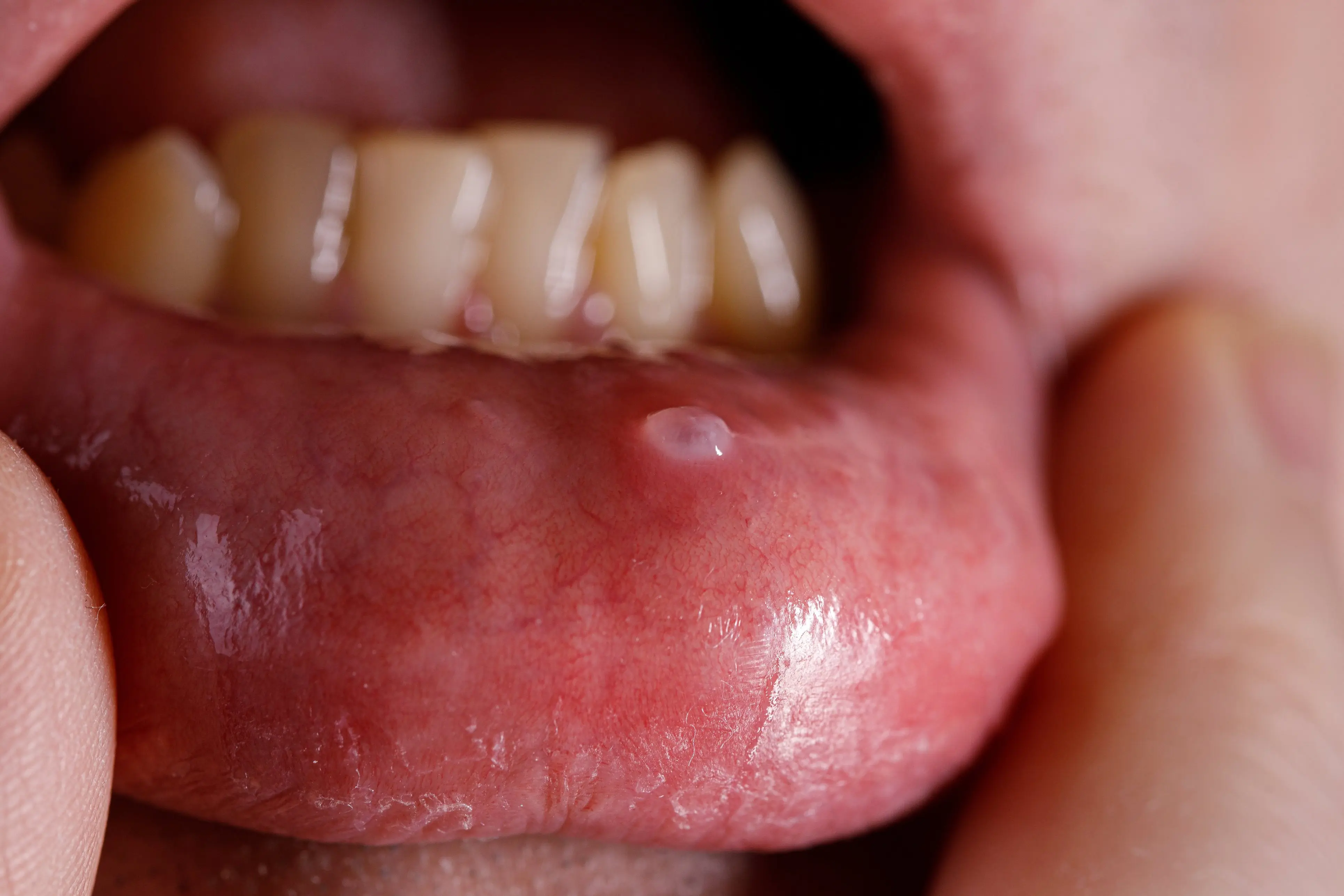
What Is a Mucocele?
A mucocele is a mucus-filled swelling that forms in the soft tissues of the oral cavity. It most commonly appears on the inner surface of the lower lip, although it may also develop on the inner cheek, the floor of the mouth, or beneath the tongue.
This condition occurs when the duct of a minor salivary gland becomes blocked or ruptured, preventing saliva from being released normally. As a result, saliva accumulates in the surrounding tissue, forming the characteristic swelling known as a mucocele.
A mucocele is not a malignant tumor and is generally benign. Most cases are not harmful and may resolve on their own. However, evaluation by a dentist is still recommended, especially if the lesion persists or causes discomfort.
Signs and Symptoms of a Mucocele
Mucoceles typically present with distinct clinical features, including:
A round or oval lump in the soft tissues of the mouth
A clear, bluish, or tissue-colored appearance
A soft texture with a fluid-filled sensation
Usually painless, unless repeatedly bitten or inflamed
Size that may fluctuate, sometimes shrinking and enlarging again
In certain cases, a mucocele may cause discomfort or interfere with speaking, eating, or other oral functions.
Causes of Mucocele
The most common cause of a mucocele is mild, repetitive trauma to the soft tissues of the mouth, such as:
Habitual biting of the lips or inner cheeks
Repeated contact with sharp teeth or uneven tooth alignment
Minor injuries during eating or play, particularly in children
Chronic irritation from orthodontic appliances such as braces
These forms of trauma can damage the ducts of minor salivary glands, allowing saliva to leak into the surrounding tissue and form a cyst-like swelling.
Is a Mucocele Dangerous?
In general, a mucocele is harmless and not associated with oral cancer. However, it should be monitored closely if:
It does not shrink or disappear after several weeks
It frequently ruptures and recurs
It continues to increase in size
Its location interferes with chewing, speaking, or overall oral comfort
Some oral conditions may resemble a mucocele. Therefore, a dental examination is essential to confirm an accurate diagnosis and rule out other possible abnormalities.
When Should You See a Dentist?
A dental consultation is recommended if:
The lump does not resolve after more than three weeks
Pain or inflammation develops
It interferes with eating, speaking, or daily activities
It repeatedly appears in the same area
Early evaluation helps determine whether the lesion is truly a mucocele or another condition requiring a different treatment approach.
Treatment Options by a Dentist
Management of a mucocele depends on its size, location, and the symptoms experienced by the patient. Not all cases require immediate intervention. Treatment options may include:
Observation (Monitoring)
Recommended for small, painless mucoceles that do not interfere with oral function. In some cases, the lesion may shrink or resolve without treatment.
Minor Surgical Procedure (Mucocele Excision)
This involves removing the mucocele along with the affected minor salivary gland. It is recommended for lesions that recur frequently, increase in size, or cause functional disturbances.
Laser or Minimally Invasive Techniques
In selected cases, laser treatment may be used to reduce tissue trauma and promote faster healing, depending on the patient’s clinical condition and available facilities.
These procedures are typically performed under local anesthesia, are relatively brief, and allow for a quick recovery when followed by appropriate post-treatment care.
Preventive Measures to Reduce Recurrence
Several simple steps can help lower the risk of recurrent mucocele:
Avoiding the habit of biting the lips or inner cheeks
Addressing sharp or uneven teeth
Maintaining good oral and soft tissue hygiene
Visiting a dentist for routine check-ups every six months
Small habit changes can play a significant role in preventing recurrence.
Conclusion
Mucocele, or oral cysts, are benign conditions commonly caused by trauma to the minor salivary glands. While often harmless, any persistent lump in the mouth should not be ignored, especially if it interferes with daily activities.
With accurate diagnosis and appropriate care, mucoceles can be managed safely and comfortably. At Onyx Dental Center, we believe that proper education is an essential part of treatment. Any change within the oral cavity deserves to be evaluated calmly, objectively, and professionally.
Learn more about Onyx Dental Center Treatments:
Proper consultation is always the first step toward determining the most suitable solution for your individual needs.
References
Nallasivam, K. U., & Sudha, B. R. (2015). Oral mucocele: Review of literature and a case report. Journal of Pharmacy & Bioallied Sciences, 7(Suppl 2), S731–S733. https://doi.org/10.4103/0975-7406.163516
Scribante, A., Pellegrini, M., Pulicari, F., De Martino, F., Li Vigni, G., Ghizzoni, M., & Spadari, F. (2023). Oral cavity mucocele and different surgical treatment strategies: Is laser excision effective? Applied Sciences, 13(22), 12327.https://doi.org/10.3390/app132212327