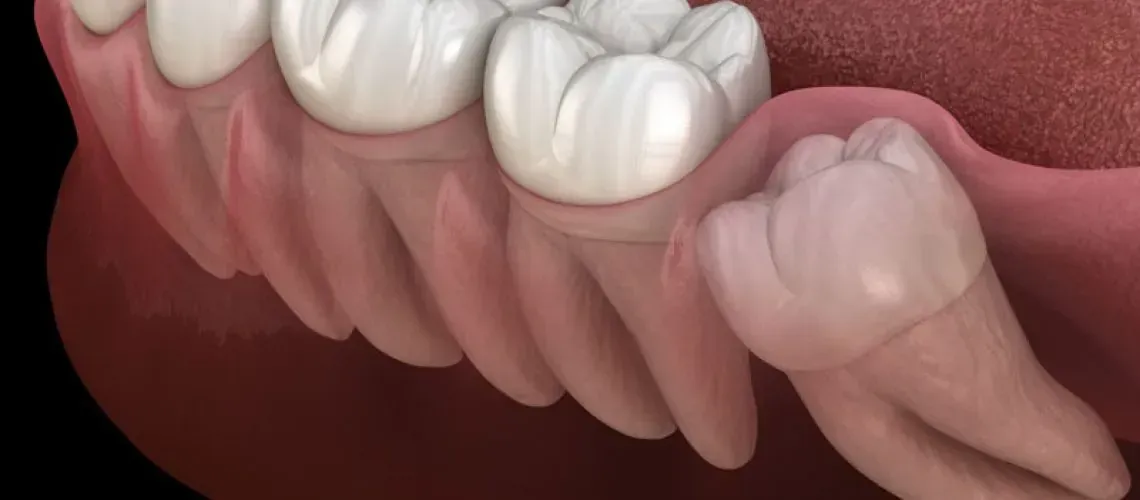
Molars are the teeth with broad chewing surfaces that help grind and crush food before swallowing. Because they handle the greatest chewing pressure every day, molars are also the teeth most prone to problems such as tooth decay, tooth pain, and impacted wisdom teeth caused by insufficient space to erupt properly.
Molar tooth pain is one of the most common reasons patients visit a dental clinic. Unfortunately, many people only seek treatment once the pain becomes severe.
In reality, routine dental check-ups can help detect tooth and gum infections early before the condition progresses into something more serious.
What Are Molars?
Molars are the posterior teeth located at the back of the mouth. They are larger than the front teeth and have wide chewing surfaces.
In humans, molars consist of:
Premolars (small molars)
Molars (large molars)
Premolars help break food into smaller pieces, while molars grind food thoroughly before swallowing.
Position and Number of Molars in Humans
In adults, there are normally 32 permanent teeth, including:
8 premolars
12 molars (including 4 wisdom teeth)
In children, primary teeth total 20 and do not include premolars. Baby molars usually begin erupting between 13–19 months of age.
Main Functions of Molars
Molars serve several important functions, including:
Chewing and Grinding Food
Their broad chewing surfaces help crush hard foods into smaller pieces for easier digestion.
Maintaining Bite Stability
Molars help maintain balance between the upper and lower jaws during chewing and biting.
Supporting Facial Structure
Losing multiple molars over time can affect facial structure and chewing ability.
Baby Molars vs Adult Molars
Primary molars typically erupt around 13–19 months of age.
Meanwhile, the first permanent molars usually appear around age 6 and are often called the “six-year molars.”
Many parents do not realize these are permanent teeth, which often leads to delayed treatment once cavities begin to develop.
Wisdom Teeth: When Do They Appear and What Are the Risks?
Wisdom teeth generally erupt between the ages of 17–25. However, not everyone has enough jaw space to accommodate them.
As a result, wisdom teeth may become impacted or grow at an angle. This condition may cause:
Jaw pain
Swollen gums
Difficulty opening the mouth
Infection in adjacent teeth
In some cases, problematic wisdom teeth require odontectomy or wisdom tooth extraction surgery.
The Most Common Molar Problems
Cavities in Molars
Molars have natural grooves and pits that easily trap plaque and food debris. Because they are located at the back of the mouth, they are also more difficult to clean properly.
If not cleaned thoroughly, bacteria produce acids that lead to dental caries or cavities. Common symptoms include:
Sensitivity to sweet or cold foods
Food getting stuck easily
Visible brown or black holes
Pain while chewing
In the early stages, the tooth may still be treated with a filling. However, if the infection reaches the nerve, root canal treatment may be required.
Impacted Wisdom Teeth
Impaction occurs when a tooth cannot erupt normally because it is blocked by gum tissue, bone, or neighboring teeth.
Impacted wisdom teeth are difficult to clean and may lead to:
Cavities
Gum inflammation
Bad breath
Recurrent pain
Infection around the tooth
A panoramic X-ray is usually required to determine the position of the wisdom tooth before odontectomy or impacted tooth extraction is performed.
What Causes Molar Tooth Pain?
Molar pain does not always mean there is a cavity. Pain may also be caused by:
Cracked teeth
Gum infection
Bruxism or teeth grinding
Tooth sensitivity
Dental abscess
Impacted wisdom teeth
Because the causes vary, a proper dental examination is necessary to determine the correct diagnosis and treatment.
In modern dental clinics, the use of a dental microscope can help detect tiny cracks and early molar problems more accurately.
How to Care for Molars to Prevent Cavities
Because molars are harder to reach, they require more careful cleaning.
Recommended habits include:
Brushing at least twice daily using fluoride toothpaste
Cleaning between teeth with dental floss
Reducing sugary food and drink consumption
Drinking water after meals
Visiting the dentist every 6 months for routine check-ups
For children, dentists may also recommend pit and fissure sealants to protect molars from cavities.
When Should You Visit a Dentist?
Schedule a dental examination immediately if you experience:
Molar pain lasting more than 1–2 days
Swollen gums
Difficulty chewing
Persistent bad breath
Impacted or tilted wisdom teeth
Increasing tooth sensitivity
Early treatment helps prevent the condition from progressing into a more serious infection.
Conclusion
Molars play a crucial role in chewing and maintaining proper bite function. However, due to their location and complex surfaces, they are also the teeth most commonly affected by cavities, pain, and wisdom tooth impaction.
Routine dental examinations help detect problems early so treatment can be performed before the damage becomes more severe. With proper care, molars can remain healthy and functional for many years.
References
Brett Zimmerman, Katherine R. Shumway, & Alex C. Jenzer (2023). Physiology, tooth. In StatPearls. StatPearls Publishing. https://www.ncbi.nlm.nih.gov/books/NBK538475/
Robert, J. (2023). Dental anatomy understanding the structure and function of teeth. Journal of Interdisciplinary Medicine and Dental Sciences, 6(3), 32–35. https://doi.org/10.37532/2376-032X.2023.6(3).32-35