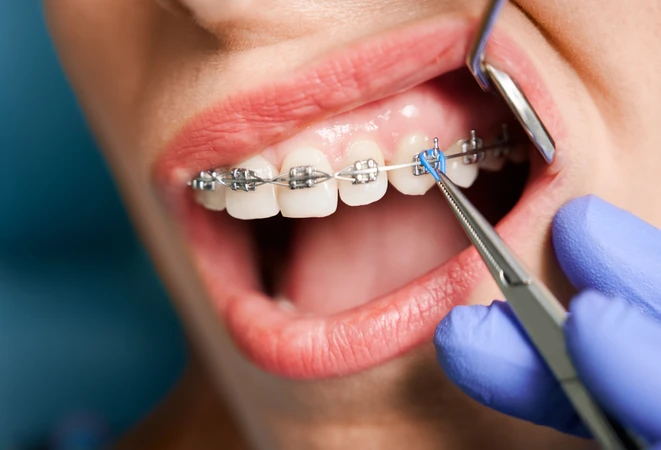
What Are Metal Braces?
Metal braces are fixed orthodontic appliances used to correct the alignment of teeth and jaws. This system consists of metal brackets attached to the surface of the teeth and connected by orthodontic wires that gradually move the teeth into better positions.
Metal braces have been used for decades and remain one of the most common orthodontic options today due to their high effectiveness, especially in complex dental cases.
Orthodontic treatment is not only aimed at improving aesthetics, but also helps enhance chewing function, oral hygiene, and bite force distribution.
How Do Metal Braces Work?
Metal braces work by applying gentle, continuous, and controlled pressure on the teeth over time. This mechanical pressure triggers a biological process called bone remodeling.
When a tooth is pushed in a certain direction, the bone tissue in front of the tooth root naturally resorbs to create space for movement. At the same time, new bone forms in the area left behind by the moving tooth root. This process allows teeth to shift gradually without damaging their structure.
The main components of metal braces include:
Metal Brackets: Small metal attachments bonded to the teeth that act as anchors.
Archwire: A curved orthodontic wire that delivers the force needed to move teeth.
Ligature Elastics: Small colorful rubber bands that hold the wire securely to the brackets.
Orthodontic Bands / Buccal Tubes: Metal rings or tubes usually attached to molars to provide additional support.
Intermaxillary Elastics: Elastic bands worn between the upper and lower jaws to improve bite alignment during certain stages of treatment.
Tooth movement is monitored through regular adjustment appointments, ideally handled directly by an orthodontist.
Before treatment begins, the orthodontist typically performs:
A clinical examination
Dental impressions or digital scans
Radiographic analysis such as panoramic and cephalometric X-rays
At Onyx Dental Center, the initial evaluation is supported by 3D intraoral scanner technology to digitally map the patient’s oral condition with greater precision before planning orthodontic treatment.
Dental Problems That Can Be Treated with Metal Braces
Metal braces can help correct various orthodontic issues, including:
Crowded teeth
Gaps between teeth (diastema)
Protruding teeth
Deep bite
Crossbite
Open bite
Certain jaw alignment discrepancies
Because they offer excellent control over tooth movement, metal braces are often preferred for more complex orthodontic cases.
Advantages of Metal Braces
Effective for Complex Cases
One of the biggest advantages of metal braces is their ability to manage severe or complicated orthodontic problems.
Metal brackets provide strong biomechanical control, allowing orthodontists to guide tooth movement with high precision.
More Affordable Than Other Orthodontic Options
In general, metal braces are usually more cost-effective compared to some other orthodontic treatments such as ceramic braces or clear aligners.
However, the best type of braces should always be selected based on clinical needs, not solely on cost considerations.
Durable and Highly Precise
Metal brackets are relatively strong and resistant to breakage, making them suitable for long-term orthodontic treatment, especially in cases requiring stronger corrective forces.
They also allow orthodontists to make detailed adjustments throughout the treatment process.
Disadvantages of Metal Braces
More Noticeable Appearance
Because they use metal brackets, metal braces are more visible compared to ceramic braces or clear aligners.
For some adult patients who prioritize aesthetics, this may be an important consideration.
Risk of Cheek and Gum Irritation
During the early stages of treatment, brackets and wires may rub against the inner cheeks or lips, causing mild irritation or mouth ulcers.
This condition is usually temporary and improves as the mouth adapts within a few weeks.
Orthodontic wax is often provided to help reduce friction and discomfort.
Quick Comparison: Metal Braces vs Ceramic Braces vs Clear Aligners
Factor | Metal Braces | Ceramic Braces | Clear Aligners |
Appearance | Most visible | Less noticeable | Nearly invisible |
Effectiveness for complex cases | Excellent | Good | Depends on the case |
Comfort | Initial adjustment may feel stronger | Similar to metal | Generally more comfortable |
Risk of breakage | Low | Slightly higher | No brackets involved |
Removable | No | No | Yes |
Oral hygiene | Requires extra care | Requires extra care | Easier to clean |
The ideal orthodontic treatment depends on:
Tooth condition
Case complexity
Aesthetic preferences
Patient habits
Long-term treatment goals
How Long Do Metal Braces Need to Be Worn?
Treatment duration varies for every patient. In general, orthodontic treatment may take approximately:
1–3 years for most cases
Several clinical factors influence treatment duration, including:
The severity of the malocclusion
Patient compliance in attending routine adjustment appointments (usually every 3–4 weeks for elastic or wire replacement)
Oral hygiene quality (inflamed gums caused by plaque can slow tooth movement)
The body’s cellular metabolism rate in remodeling bone around the teeth
Mild cases may require a shorter duration, while more complex cases can take longer.
After braces are removed, patients must wear retainers to maintain the new tooth positions and prevent relapse.
Tips for Caring for Metal Braces at Home
Maintaining oral hygiene during orthodontic treatment requires extra attention because braces can trap plaque and food debris more easily.
Brush Teeth Properly
Braces wearers must clean around brackets and under wires more carefully using:
Orthodontic toothbrushes (with V-shaped bristles)
Soft-bristled toothbrushes
Fluoride toothpaste to strengthen enamel
Use Dental Floss and Interdental Brushes
Areas between wires and beneath the archwire cannot be cleaned optimally using a regular toothbrush alone. Helpful tools include:
Interdental Brush: A small cylindrical or cone-shaped brush that effectively removes food trapped around brackets.
Dental Floss: Use a floss threader to guide floss beneath the orthodontic wire to clean plaque between tightly positioned teeth.
Avoid Hard or Sticky Foods
Excessive chewing force may cause brackets to detach or wires to bend. Avoid foods such as:
Ice cubes
Very hard nuts
Sticky candies
Caramel
Chewing gum
Tip: Cut hard foods like apples or guava into small pieces instead of biting directly with the front teeth.
Attend Regular Adjustment Appointments
Regular adjustment visits (usually every 3–4 weeks) are key to successful treatment. Routine appointments are important to:
Activate or replace orthodontic wires
Replace ligature elastics or power chains that have lost elasticity
Evaluate the biomechanical direction of tooth movement
Monitor and clean tartar buildup during braces treatment
Delaying appointments for too long can cause the pressure on teeth to become inactive, slowing progress and extending the total treatment duration.
Do Metal Braces Make Teeth Weak?
No. Medically, metal braces themselves do not weaken or reduce the density of tooth structures.
However, if plaque is allowed to accumulate around the brackets, acids produced by bacteria may cause:
Gingivitis: Swollen, reddish gums that bleed easily during brushing
White Spot Lesions: Chalky white spots around brackets indicating early enamel demineralization — the first stage of cavities
Dental Cavities: If white spot lesions are left untreated, the enamel structure may collapse and form cavities requiring fillings
When Should You Consult an Orthodontist?
Schedule a dental visit if you experience the following clinical conditions:
Crowded, protruding, spaced, or misaligned teeth
Bite discomfort while chewing
Jaw or facial profile imbalance (for example, the lower jaw appears too forward or too backward)
Difficulty cleaning between teeth because they are too crowded
Aesthetic concerns affecting self-confidence while smiling
The American Association of Orthodontists recommends that children have their first orthodontic evaluation by age 7 to detect early jaw growth or tooth development issues.
If you live in the Tangerang area, especially Karawaci, Kelapa Dua, or Gading Serpong, comprehensive orthodontic consultations are available at Onyx Dental Center.
The clinic provides consultations for metal braces and various modern orthodontic treatments supported by advanced dental technology. Each treatment plan is personalized to achieve healthy, functional, and aesthetic results.
Conclusion
Metal braces remain one of the most effective orthodontic solutions for correcting tooth alignment, especially in complex cases. They work by applying gradual and controlled pressure to move teeth into better positions over time.
Although more visible than other orthodontic options, metal braces offer significant advantages in effectiveness, durability, and precision.
Choosing the right orthodontic treatment should always be based on a comprehensive evaluation by a dentist or orthodontist to ensure optimal and healthy long-term results.
References
American Association of Orthodontists. (2019). Right age for an orthodontist visit. AAO Clinical Guidelines. https://www.aaoinfo.org
Elsevier. (n.d.). Orthodontic bracket. ScienceDirect Topics. Diambil 21 Mei 2026, dari https://www.sciencedirect.com/topics/engineering/orthodontic-bracket
Mundhada, V. V., Jadhav, V. V., & Reche, A. (2023). A Review on Orthodontic Brackets and Their Application in Clinical Orthodontics. Cureus, 15(10), e46615. https://doi.org/10.7759/cureus.46615