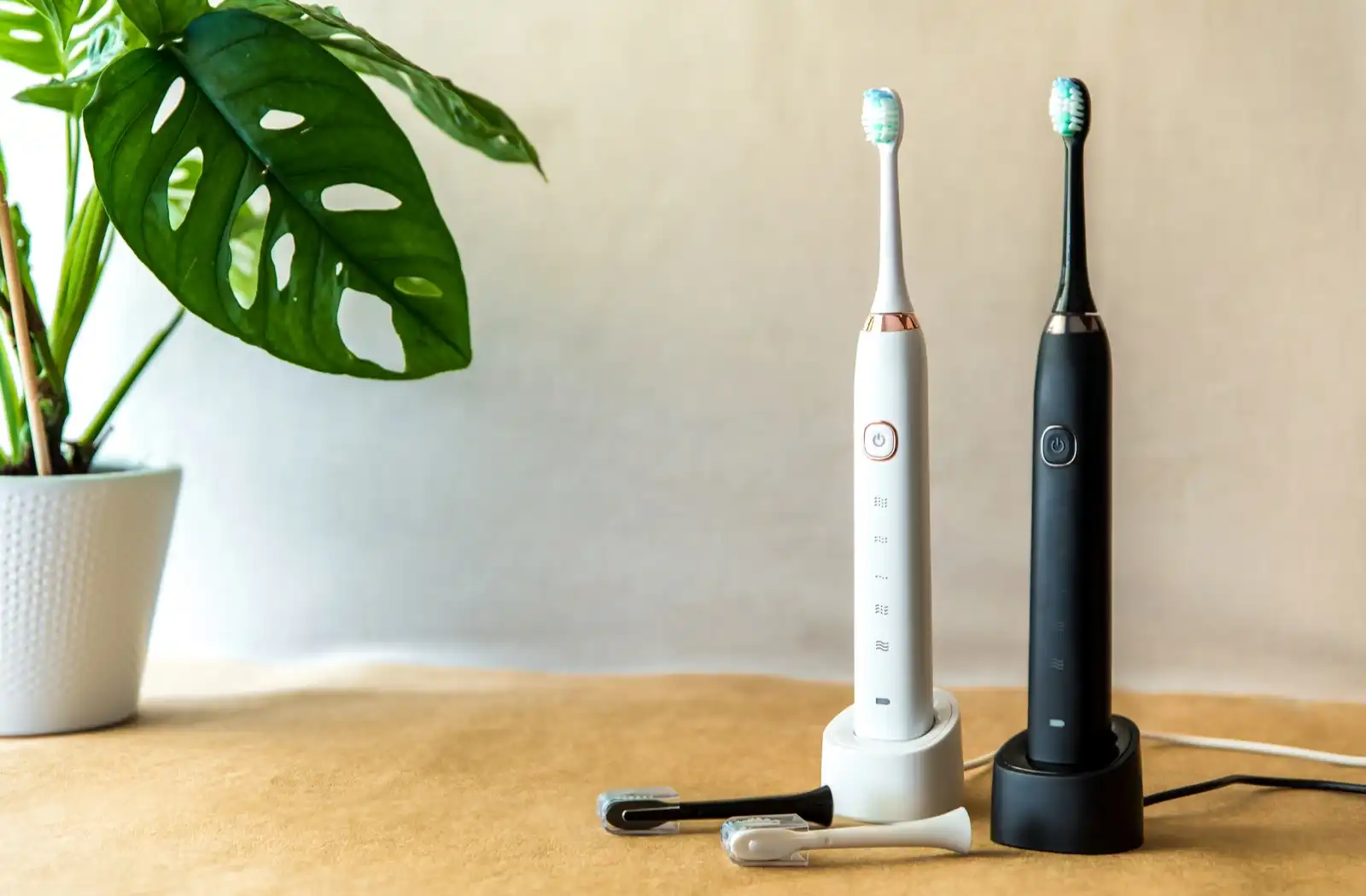
Choosing between an electric toothbrush and a manual toothbrush does not have to be complicated. Both can effectively clean your teeth and help maintain healthy gums when used with the right technique. The main differences lie in how they work, how easy they are to use, and whether their features help you control brushing time and pressure.
So, is an electric toothbrush always better than a manual one? Not necessarily. The right choice depends on your habits, needs, and ability to maintain a consistent oral hygiene routine.
For optimal results, brush your teeth twice a day for two minutes using fluoride toothpaste, choose a toothbrush with soft bristles, and clean between your teeth daily.
Electric vs Manual Toothbrush: What Is the Difference?
A manual toothbrush relies on hand movements to clean your teeth, while an electric toothbrush uses automated movements, such as oscillating-rotating action or sonic vibrations.
Both can effectively remove plaque when used correctly. However, electric toothbrushes offer additional features that may help some people maintain a more consistent brushing routine.
Here is how they compare:
Feature | Manual Toothbrush | Electric Toothbrush |
How it works | Relies on hand movements | Uses automated brush-head movements |
Brushing time | Requires you to track the time | Many models include a built-in timer |
Pressure control | Depends on your brushing technique | Some models include a toothbrush pressure sensor |
Ease of use | Requires coordinated hand movements | May help people with limited hand mobility |
Cost | Generally more affordable | Usually has a higher upfront cost and replacement-head expenses |
Portability | Lightweight and requires no power | May require batteries or charging, depending on the model |
The takeaway: An electric toothbrush can be a practical choice if you need help controlling brushing time, pressure, or movement. However, a manual toothbrush can work just as well when used consistently with proper technique.
When Should You Choose an Electric Toothbrush?
An electric toothbrush may help improve brushing consistency, especially if you find it difficult to maintain regular hand movements or apply the right amount of pressure.
Here are some features worth considering.
1. Built-In Timer
A built-in timer helps you brush for the recommended two minutes. Some models also provide interval reminders, encouraging you to move to another section of your mouth for more even cleaning.
2. Toothbrush Pressure Sensor
A toothbrush pressure sensor alerts you when you press too hard against your teeth or gums. Depending on the model, the warning may come in the form of a light, vibration, or change in brushing speed.
This feature can be particularly helpful if you tend to brush aggressively. Excessive pressure may contribute to gum irritation, gum recession, and tooth wear.
3. Automated Brushing Movements
Automated brush-head movements may make brushing easier for older adults, people with arthritis, or anyone with limited hand mobility.
However, an electric toothbrush still needs to be guided across all tooth surfaces. Automated movements alone cannot guarantee effective cleaning if the brush is not positioned correctly.
How to Choose the Right Toothbrush
Whether you choose an electric or manual toothbrush, consider the following factors to help protect your teeth and gums.
1. Choose Soft Toothbrush Bristles
Soft toothbrush bristles are recommended because they help clean your teeth while reducing unnecessary pressure on your gums. Avoid brushing too aggressively, as harder brushing does not necessarily remove more plaque and may contribute to gum irritation or tooth wear.
2. Consider Your Individual Needs
An electric toothbrush may be useful if you need help controlling brushing time or pressure. A manual toothbrush remains a practical option if you can maintain proper brushing technique consistently.
3. Check the Brush-Head Size
Choose a brush head that feels comfortable and can reach your back teeth and other difficult-to-clean areas.
4. Replace Your Toothbrush Regularly
Replace your manual toothbrush or electric toothbrush head every three to four months, or sooner if the bristles become frayed or damaged.
5. Keep Your Toothbrush Clean
Rinse your toothbrush after each use and store it upright in an open area where it can air-dry. Avoid sharing toothbrushes with others.
How to Use an Electric Toothbrush Correctly
Knowing how to use an electric toothbrush is just as important as choosing the right model. Simply turning it on and letting it run without proper guidance may leave some areas inadequately cleaned.
Follow these steps for a more effective brushing routine.
Apply fluoride toothpaste. Use an appropriate amount of fluoride toothpaste on the brush head.
Position the brush head before switching it on. This helps prevent toothpaste from splattering.
Angle the bristles toward the gumline. Position the brush at approximately 45 degrees to the gumline when appropriate for your brush-head design.
Apply gentle pressure. Let the electric toothbrush do the work instead of scrubbing aggressively.
Move systematically from tooth to tooth. Guide the brush head slowly along the curve of your teeth.
Clean every tooth surface. Brush the outer, inner, and chewing surfaces for a total of two minutes.
If your electric toothbrush has a built-in timer or toothbrush pressure sensor, use these features to help maintain a consistent brushing routine.
Does an Electric Toothbrush Replace Flossing and Professional Cleaning?
No. Neither an electric nor a manual toothbrush can fully replace interdental cleaning or professional dental care.
Flossing: Clean between your teeth daily using dental floss or an appropriately sized interdental brush. This helps remove plaque from areas that toothbrush bristles cannot easily reach.
Professional scaling: Once plaque hardens into tartar, it cannot be removed through regular brushing at home. A dentist can perform professional scaling to remove tartar according to your clinical needs.
Regular dental checkups also help your dentist assess your teeth and gums and determine how frequently you need professional cleaning. A six-month interval can be a general guide, but the appropriate schedule depends on your individual oral health.
Checklist: Should You Switch to an Electric Toothbrush?
Before replacing your current toothbrush, take a moment to evaluate your daily oral hygiene habits.
Do you brush your teeth twice a day for two minutes?
Do you clean all tooth surfaces?
Do you use gentle brushing pressure?
Are your toothbrush bristles still in good condition?
Do you clean between your teeth regularly?
Do you tend to brush too hard or struggle to brush for the recommended duration?
Do you have limited hand mobility?
Do you frequently experience bleeding gums or have difficulty cleaning certain areas?
If your brushing technique is already effective, a manual toothbrush may be all you need. However, if you struggle to maintain brushing time, control pressure, or move the brush consistently, switching to an electric toothbrush may be beneficial.
Recurring bleeding gums should be evaluated by a dentist, as they may indicate inflammation rather than simply a problem with your toothbrush choice.
Conclusion
Choosing an electric vs manual toothbrush is not simply a matter of comparing modern technology with a traditional tool. Both can help maintain good oral hygiene when used with proper technique, gentle pressure, and sufficient brushing time.
An electric toothbrush offers features such as a built-in timer and toothbrush pressure sensor that may help some people brush more consistently. Meanwhile, a manual toothbrush remains an effective, practical, and affordable option.
Whichever type you choose, use soft toothbrush bristles, brush twice a day for two minutes, and clean between your teeth daily.
If you are unsure which toothbrush is right for you, experience frequent gum bleeding, or need professional tartar removal, consult a dentist for personalized advice.
If you live in Tangerang or the surrounding areas, Onyx Dental Center in Karawaci, Tangerang Regency, can help you assess your oral health and recommend dental care suited to your needs.
References
Di Stefano, A., et al. (2026). Electric vs manual toothbrushing effects on QLF-assessed plaque in smokers and non-smokers: A 24-week RCT. International Dental Journal. Advance online publication. https://doi.org/10.1016/j.identj.2026.109716
Jain, Y. (2013). A comparison of the efficacy of powered and manual toothbrushes in controlling plaque and gingivitis: A clinical study. Clinical, Cosmetic and Investigational Dentistry, 5, 3–9. https://doi.org/10.2147/CCIDE.S40656
Khan, A. K., Ali Khan, S., Kazmi, S. M. R., & Khalid, T. (2026). Efficacy of electric tooth brushing compared to manual toothbrushing in patients with special health care needs: A systematic review. International Journal of Dental Hygiene, 1–11. Advance online publication. https://doi.org/10.1111/idh.70142