Many people want to remove tartar but postpone the treatment because they worry that teeth scaling will be painful. In reality, any discomfort experienced during scaling is often influenced more by the condition of the teeth and gums than by the procedure itself.
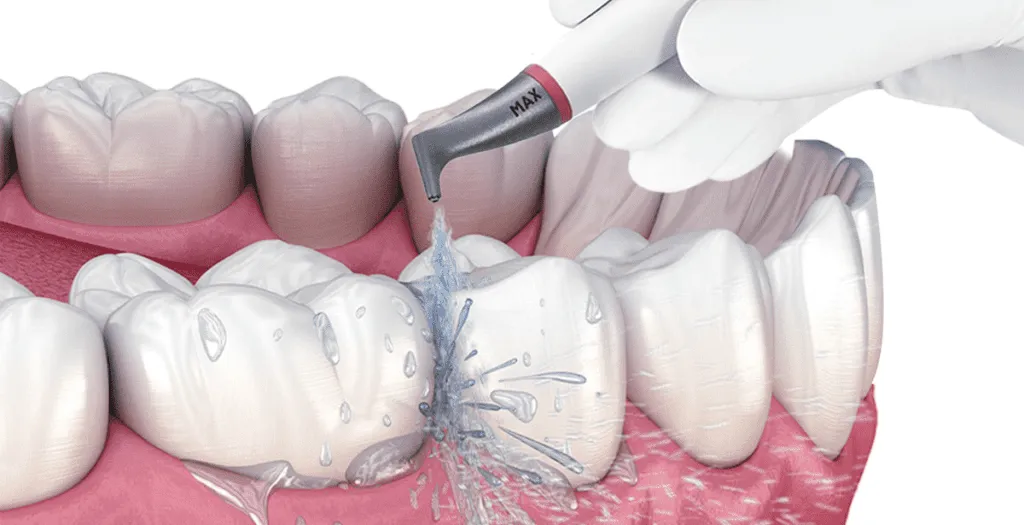
With advancements in technology such as Dental Spa Airflow, scaling can now be a much more comfortable experience than many people imagine. In fact, most patients only experience gentle vibrations or slight pressure without significant pain.
So, does teeth scaling actually hurt? Why do some people experience sensitivity while others barely feel anything? Here's what you need to know.
Does Teeth Scaling Hurt?
The belief that teeth scaling is always painful is one of the most common reasons people delay removing tartar. In reality, most patients only experience mild sensations that are generally well tolerated.
The level of comfort depends on several factors, including:
The amount of tartar buildup
The condition of the gums
Existing tooth sensitivity
The technology used during treatment
At Onyx Dental Center, scaling is performed using Dental Spa Airflow, a professional cleaning technology that combines warm water, pressurized air, and ultra-fine cleaning powder to gently remove biofilm and surface stains.
During the procedure, most patients experience:
Gentle contact without harsh vibrations on the tooth surface
A warm water sensation with adjustable temperature to help minimize sensitivity
Efficient cleaning, even between hard-to-reach areas of the teeth
Why Can Teeth Scaling Feel Sensitive for Some People?
Not every patient experiences the same level of sensitivity. Several factors can make scaling feel more uncomfortable.
Long-Standing Tartar Buildup
Tartar develops when plaque hardens due to minerals found in saliva.
The longer tartar remains untreated, the more likely it is to:
Adhere firmly to the teeth
Extend below the gumline
Cause inflammation of the gum tissue
In these situations, cleaning may take longer, making temporary sensitivity more noticeable.
Gum Recession or Exposed Tooth Roots
Normally, the roots of the teeth are covered by gum tissue. However, when gum recession occurs, portions of the roots become exposed.
Unlike the crown of the tooth, the root is covered by cementum rather than enamel, making it more sensitive to:
Touch
Cold water
Ultrasonic vibrations
Gingivitis (Gum Inflammation)
Inflamed gums are typically:
Red
Prone to bleeding
Swollen
More sensitive to touch
When the dentist removes the tartar causing the inflammation, mild discomfort may occur. However, once the tartar is removed and oral hygiene improves, the gums generally recover within several days to a few weeks.
Pre-Existing Tooth Sensitivity
If you already experience tooth sensitivity—for example, discomfort when consuming cold drinks or sweet foods—scaling may temporarily trigger sensitivity.
However, there's no need to worry. Besides the minimally invasive Airflow technology, your dentist may also recommend local anesthesia or desensitizing gel to make the cleaning process as comfortable as possible.
What Happens During a Teeth Scaling Procedure?
Many patients imagine scaling as an intimidating procedure, but the process is actually quite straightforward.
A typical scaling appointment includes:
Oral Examination
Your dentist will assess:
Tartar buildup
Plaque
Gum condition
Tooth decay
Periodontal pocket depth, when necessary
Tartar Removal
Tartar is removed using an ultrasonic scaler that produces high-frequency vibrations to detach deposits from the tooth surface without damaging healthy tooth structure.
Polishing
Once scaling is complete, the teeth are polished to create a smoother surface that helps reduce future plaque accumulation.
Oral Hygiene Education
Your dentist will provide personalized recommendations regarding:
Proper brushing techniques (twice daily after breakfast and before bedtime)
Daily use of dental floss
Recommended recall schedule
Oral hygiene habits that should be improved
How to Make Teeth Scaling More Comfortable
There are several ways to make your scaling appointment feel more comfortable.
Tell Your Dentist if You Have Sensitive Teeth
Don't hesitate to let your dentist know if you have:
Sensitive teeth
A previous uncomfortable scaling experience
Anxiety about dental treatment
Your dentist can modify the treatment approach or consider local anesthesia when appropriate.
Don't Wait Until Tartar Becomes Severe
The longer tartar accumulates, the more difficult the cleaning process may become.
Routine scaling is generally much more comfortable than waiting several years between cleanings.
The Combination of Airflow Dental Spa & Scaling
For patients with coffee, tea, or tobacco stains, as well as plaque and biofilm buildup, Airflow Dental Spa offers a modern approach designed for maximum comfort.
This innovative technology combines:
Warm water to reduce sensitivity
Ultra-fine erythritol or glycine powder that is gentle on teeth and gums
Precisely controlled air pressure to clean difficult-to-reach areas and periodontal pockets
When Are Airflow and Scaling Used Together?
It is important to understand that Airflow is highly effective for gently removing food debris, stains, and bacterial biofilm. However, ultrasonic scaling is still necessary to completely remove hardened tartar.
For this reason, both methods are often combined to achieve the most comprehensive professional cleaning.
At Onyx Dental Center, our dentists carefully evaluate your oral condition before treatment. Based on this assessment, they will recommend whether Airflow alone, conventional scaling, or a combination of both is the most appropriate approach to ensure optimal cleanliness with maximum comfort.
Is Bleeding During Teeth Scaling Normal?
Mild bleeding during scaling is fairly common, especially in patients with gum inflammation.
This does not mean the scaling instrument is injuring the gums. Instead, inflamed gum tissue naturally bleeds more easily when touched.
Once the source of inflammation has been removed and good oral hygiene is maintained, bleeding typically decreases over time.
Does Teeth Scaling Make Teeth Thin or Create Gaps?
This is one of the most common misconceptions.
In reality, teeth scaling does not wear away healthy enamel.
Scaling removes only:
Plaque
Tartar
Surface stains
Some patients feel their teeth appear more spaced after scaling. In fact, these spaces were previously filled with tartar and simply become visible once the deposits are removed.
In other words, scaling restores the natural shape of your teeth—it does not create gaps.
When Should You Have Teeth Scaling?
Dentists generally recommend professional scaling if you have:
Tartar buildup
Bleeding gums while brushing
Persistent bad breath
Gum inflammation
Plaque that cannot be adequately removed at home
For most people with a low risk of periodontal disease, professional dental examinations and cleanings are recommended at least every six months, depending on individual clinical needs. The frequency may vary based on oral hygiene, gum disease history, smoking habits, diabetes, and other risk factors.
For patients living in Karawaci, Tangerang, and the Greater Jakarta area, routine dental examinations at Onyx Dental Center help detect tartar buildup before it leads to more serious oral health problems.
Conclusion
So, does teeth scaling hurt? In most cases, the answer is no. The majority of patients experience only mild, temporary sensations, especially when their gums are healthy and tartar buildup is still minimal.
Delaying scaling because of fear of pain may actually increase the risk of gum disease and periodontal problems. With regular dental check-ups and advanced technologies such as Dental Spa Airflow, professional teeth cleaning is now far more comfortable than many people expect.
If you're looking for a comfortable professional cleaning experience in Karawaci, Tangerang, and the surrounding areas, consult the team at Onyx Dental Center to receive personalized care and determine whether scaling, Dental Spa Airflow, or a combination of both is the best option for your oral health.
Related Reads:
References
American Dental Association. (n.d.). Scaling and root planing. MouthHealthy. https://www.ada.org/sitecore/content/ADA-Organization/ADA/MouthHealthy/home/all-topics-a-z/scaling-and-root-planing
Canadian Agency for Drugs and Technologies in Health. (2016, October 17). Dental scaling and root planing for periodontal health: A review of the clinical effectiveness, cost-effectiveness, and guidelines. (CADTH Rapid Response Report: Summary of Evidence). National Center for Biotechnology Information (US). https://www.ncbi.nlm.nih.gov/books/NBK401542/
Matthews, D. C., & Al-Waeli, H. (2025). Benefits of Dental Scaling and Polishing in Adults: A Rapid Review and Evidence Synthesis. JDR clinical and translational research, 10(3), 269–281. https://doi.org/10.1177/23800844241271684