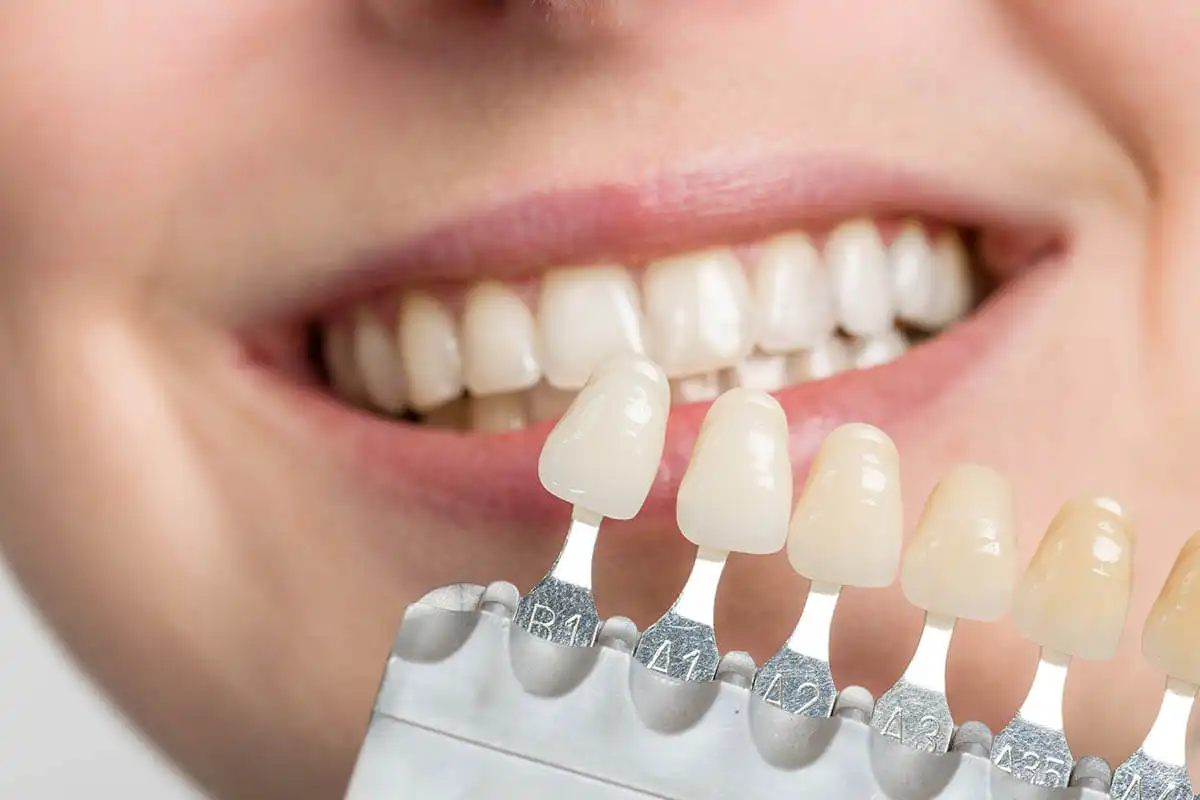
A smile is an essential part of facial expression. The color, shape, size, position, and proportion of your teeth can significantly impact your overall smile aesthetics.
For many, small adjustments to the shape or shade of their teeth can create a more harmonious smile and boost self-confidence. One popular treatment to consider for these cosmetic enhancements is dental veneers.
A veneer is a thin custom-made shell placed over the front surface of a tooth to improve its aesthetic appearance. This procedure can help alter tooth shade, shape, size, length, and proportions in clinically appropriate cases.
However, veneers are far more than just white shells bonded to your teeth. Delivering a great outcome requires accurate diagnosis, digital smile planning, material selection, conservative tooth preparation, proper adhesive bonding techniques, and a comprehensive evaluation of oral function and health.
At Onyx Dental Center, veneer planning is meticulously tailored by evaluating each patient’s tooth structure, gum health, bite relationship, facial symmetry, and unique facial characteristics.
What Are Dental Veneers?
Dental veneers are thin, custom restorations applied to the front surface of teeth to enhance their visual appearance. The most common materials used are ceramic/porcelain and composite resin.
Veneers can help address:
Specific types of tooth discoloration
Unproportionate tooth shapes
Teeth that appear too short or uneven
Small gaps (diastemas) between teeth in select cases
Minor chips or superficial wear
Visual imbalances in smile symmetry
Veneers differ from dental crowns. While veneers typically cover only the front visible surface, crowns cover most or all of the underlying tooth structure.
Consequently, veneers are usually recommended when the natural tooth structure is still healthy and intact, and the primary goal is aesthetic enhancement.
Veneers Are More Than Just "White Teeth"
Terms like the "Hollywood smile" are frequently used to describe a bright, straight, perfectly uniform smile. However, modern veneer concepts do not always mean making teeth blindingly white or identical.
A natural-looking smile takes various subtle factors into account, such as:
Tooth shade and translucency
Individual tooth shapes and lengths
Proportions between teeth and facial features
The gum line (gingival architecture)
Lip position during a full smile
Surface texture and micro-morphology
Functional bite alignment (occlusion)
The ultimate goal is not to give every patient a carbon-copy smile, but rather to craft a harmonious result tailored to each individual's unique facial features and dental health.
Types of Dental Veneers
Generally, veneers are categorized by the material used: porcelain veneers and composite veneers.
1. Porcelain Veneers
Porcelain veneers are crafted from high-grade ceramic materials and are typically fabricated indirectly in a dental laboratory using precise patient impressions or 3D scans.
Ceramics possess superior optical properties that closely mimic natural tooth enamel, including natural translucency, light reflection, and long-term color stability.
Porcelain veneers are ideal for patients seeking high-end aesthetic transformations with demanding expectations for form, shade, and surface characterization. However, they generally require laboratory fabrication time before final placement.
2. Composite Veneers
Composite veneers utilize tooth-colored composite resin. Through the direct composite veneer technique, the material is applied, sculpted, and cured directly onto the tooth by the dentist in a single visit.
One key advantage is a simpler process that allows for immediate adjustments or future touch-ups directly in the chair.
However, composite resin properties differ from ceramics. Composite materials are more susceptible to surface wear, staining, and loss of luster over time, especially if proper oral hygiene is not maintained.
Porcelain Veneers vs. Composite Veneers
There is no single "best" veneer type for everyone. Selection depends on tooth condition, aesthetic goals, functional bite, durability needs, and personal preferences.
Feature | Porcelain Veneers | Composite Veneers |
Material | Dental ceramic/porcelain (lab-fabricated) | Composite resin (sculpted directly) |
Appearance | Highly natural optical properties and translucency | Natural look, depending on material and technique |
Stain Resistance | Highly resistant to discoloration over time | More susceptible to staining over time |
Durability | High durability when properly planned and cared for | Good durability, but more prone to wear and chipping |
Procedure | Requires laboratory fabrication (multiple visits) | Can often be completed directly in one visit |
Repairability | Damage usually requires full laboratory replacement | Minor damage can often be patched directly |
Tooth Preparation | Varies based on tooth position and restoration design | Often requires minimal preparation |
Suitability | Best for high-demand, long-term aesthetic changes | Great for conservative, minor aesthetic corrections |
Maintenance | Requires daily oral hygiene and regular check-ups | Requires hygiene, check-ups, and periodic polishing |
Choosing between porcelain and composite veneers should be based on a comprehensive clinical evaluation by your dentist, rather than cost or trends alone.
Dental Concerns Addressed by Veneers
Veneers are primarily designed to enhance aesthetic aspects while preserving as much natural tooth structure as possible.
1. Persistent Tooth Discoloration
Veneers are an excellent option for deep or intrinsic stains that do not respond well to professional teeth whitening (bleaching). However, if the tooth structure is healthy and color is the only concern, whitening is usually explored first.
2. Small Gaps Between Teeth
Veneers can close minor spacing or diastemas in suitable cases. However, if spacing is caused by significant orthodontic misalignment, braces or clear aligners may be recommended first.
3. Minor Chipping or Tooth Wear
Veneers are a great choice for teeth with small edge chips, slight surface wear, or minor structural defects. If the damage is extensive, a full crown may be required to restore structural integrity.
4. Uneven Shape and Size Proportions
Veneers allow dentists to subtly adjust tooth length, width, contour, and overall smile proportions. Planning is key to ensuring that the teeth blend seamlessly with the gums, lips, and facial profile without looking oversized.
The Dental Veneer Process
Getting veneers is a multi-step journey designed to ensure longevity, optimal aesthetics, and functional comfort.
1. Consultation and Evaluation
The process starts with a thorough check-up of your teeth and gums, alongside an open conversation about your goals.
Your dentist will evaluate:
Tooth shade, shape, and alignment
Enamel thickness and health
Gum tissue condition
Occlusion (bite relationship)
Facial and smile proportions
Habits such as teeth grinding (bruxism) or clenching
Pre-existing restorations
Any active decay or gum disease must be fully treated before veneer planning begins.
2. Smile Design and Planning
Once cleared, a customized smile plan is created. At Onyx Dental Center, digital technology like intraoral scanning and Digital Smile Design (DSD) is utilized to map out precise shape, size, and proportions before treatment starts.
3. Tooth Preparation: Do Teeth Always Need to Be Filed Down?
The amount of enamel preparation depends on tooth alignment, veneer type, and final design goals. Conventional porcelain veneers usually require minor trimming to create space for the material and avoid a bulky appearance.
In select cases, minimal-prep or no-prep approaches are possible. However, "no-prep" does not apply universally to every patient. Preparation is kept as minimal as possible while prioritizing long-term tooth health, structural durability, and gum harmony.
4. Digital Scanning and Fabrication
After preparation, precision digital scans or traditional impressions are taken. For porcelain veneers, this data guides dental ceramists in fabricating custom restorations tailored specifically to your smile plan.
5. Try-In and Evaluation
Before final bonding, a try-in session is conducted to assess:
Tooth shape, length, and width.
Color match and optical naturalness.
Smile symmetry.
Interdental contacts and gum margins.
Functional bite dynamics.
Overall patient satisfaction.
Adjustments are made at this stage to guarantee complete comfort and satisfaction.
6. Adhesive Bonding and Final Placement
Once approved, the veneers are permanently bonded using specialized adhesive techniques and resin cements matched to the veneer material. The dentist performs final bite adjustments and polishes the edges to ensure seamless integration.
How to Care for Your Veneers
Veneered teeth are not immune to problems. The natural tooth underneath can still develop cavities, and the surrounding gums require ongoing care to remain healthy.
To keep your veneers looking and functioning at their best:
Brush Twice Daily: Use a soft-bristled toothbrush and non-abrasive fluoride toothpaste. Avoid aggressive brushing near the gumline.
Floss Daily: Clean interdental spaces using dental floss or interdental brushes to remove plaque along veneer margins.
Avoid Hard Objects: Do not use your teeth to open packages, bite nails, or chew on ice or hard objects, as extreme pressure can chip ceramics or composite materials.
Manage Bruxism: If you grind or clench your teeth at night, ask your dentist about a custom nightguard to protect your investment from excessive forces.
Maintain Regular Dental Visits: Routine check-ups and professional cleanings allow your dentist to monitor veneer integrity, margin health, and overall oral hygiene.
How Long Do Dental Veneers Last?
There is no single lifespan that applies to everyone. The longevity of veneers depends on several factors:
Material quality and type.
Restoration design.
Adhesive bonding quality.
Underlying tooth health.
Bite force distribution.
Personal oral hygiene habits.
Routine professional maintenance.
Porcelain veneers demonstrate high clinical survival rates over long periods, but they are not indestructible. Chipping, cracking, or debonding can occasionally occur over time. Veneers should be viewed as a long-term restorative investment that requires ongoing care.
Achieving a Natural-Looking Smile
While the term "Hollywood smile" often brings to mind stark white, uniform teeth, modern cosmetic dentistry prioritizes a balance that enhances your natural features.
A truly aesthetic, natural smile balances:
Facial symmetry and lip contours.
Healthy gingival architecture (gum line).
Natural translucency and surface micro-texture.
Proper upper-to-lower bite harmony.
The finest veneer outcomes do not look like artificial additions; they look like a naturally beautiful, healthy set of teeth.
Dental Veneers at Onyx Dental Center
For patients in Karawaci, Gading Serpong, BSD, Alam Sutera, and across the greater Tangerang area, choosing a clinic for veneers should involve more than reviewing before-and-after photos.
Proper treatment requires a comprehensive evaluation of dental health, gum condition, bite alignment, material choices, conservative preparation, and long-term care plans.
At Onyx Dental Center, the 360° Smile Philosophy is applied to plan personalized smile transformations. Powered by advanced digital workflows, our dental team evaluates facial proportions alongside functional needs to craft smiles that are healthy, balanced, and unique to every patient.
Common Myths vs. Facts About Veneers
Myth: "Veneers always look fake and unnatural."
Fact: Natural-looking results depend on design, translucency, shade selection, surface texture, and clinical technique. When properly planned, veneers blend seamlessly with natural teeth.
Myth: "Your natural teeth must be heavily shaved down."
Fact: Modern techniques prioritize enamel preservation. Depending on your initial tooth position, minimal-prep or non-invasive approaches are often possible.
Myth: "You can remove veneers whenever you want and go back to normal."
Fact: Traditional veneers requiring enamel removal are irreversible, as reduced enamel cannot regrow. They should be considered a permanent restorative commitment.
Myth: "Veneers can never chip or break."
Fact: Like natural teeth, veneers can chip or fracture under excessive forces, trauma, severe bruxism, or poor biting habits.
Myth: "Veneers are only for celebrities."
Fact: Veneers are a versatile solution for anyone seeking cosmetic improvements, provided they meet the clinical criteria for treatment.
Conclusion
Dental veneers offer an effective method for enhancing tooth shade, shape, size, length, and symmetry in appropriate candidates.
However, veneers are far more than a quick cosmetic trick for bright white teeth. Achieving long-lasting, natural results demands comprehensive planning, from initial oral health screenings and digital smile design to conservative tooth preparation, precision bonding, and ongoing maintenance.
Both porcelain and composite veneers offer unique advantages and trade-offs. Consulting an experienced cosmetic dentist is the most important first step to determine which solution best aligns with your dental health and aesthetic goals.
References
Patel, K., Asthana, G., Parmar, A., Tamuli, R., Manglani, S., & Dhanak, N. (2025). Clinical assessment of direct composite veneer and indirect veneers using a minimally invasive preparation technique. Journal of Conservative Dentistry and Endodontics, 28(10), 965–971. https://doi.org/10.4103/JCDE.JCDE_279_25
Pini, N. P., Aguiar, F. H., Lima, D. A., Lovadino, J. R., Terada, R. S., & Pascotto, R. C. (2012). Advances in dental veneers: Materials, applications, and techniques. Clinical, Cosmetic and Investigational Dentistry, 4, 9–16. https://doi.org/10.2147/CCIDEN.S7837