After months of wearing dental braces or undergoing treatment with clear aligners, the day finally comes when your orthodontic appliance is removed. Your teeth look straighter, your bite feels more balanced, and your smile feels different.
But your orthodontic journey is not quite over yet.
After the active phase of treatment, there is another important stage that helps maintain your new tooth positions: the retention phase, supported by dental retainers.
Retainers are used after active orthodontic treatment to help maintain tooth alignment and reduce the risk of relapse, which occurs when teeth begin shifting back toward their previous positions.
That is why the success of orthodontic treatment is not only about the result when your braces come off, but also about how well that result is maintained over time.
What Are Dental Retainers and Why Are They Important After Braces?
Dental retainers are appliances used during the retention phase after active orthodontic treatment is complete.
While wearing braces or clear aligners, your teeth are gradually moved into their planned positions. Once the movement is complete, the tissues surrounding the teeth still need time to adapt to their new positions.
Teeth can also naturally change position throughout life. Biological changes, growth, changes in the supporting tissues, and the aging process can all influence tooth alignment.
Retainers provide additional stability to help maintain the positions achieved during orthodontic treatment.
However, retainers do not make your teeth stop moving forever. Their purpose is to help minimize tooth shifting after orthodontic treatment.
Why Can Teeth Shift After Braces?
Changes in tooth position after orthodontic treatment can be influenced by various factors, including biological changes in the tissues surrounding the teeth, facial growth and structural changes, as well as natural changes that occur with age.
The risk of shifting can also vary from one patient to another. Certain conditions, such as teeth that were previously severely crowded, rotated, or spaces that were closed during treatment, may require particular attention during the retention phase.
Therefore, wearing a retainer after braces does not mean that the treatment result is unstable. Instead, retainers are an important part of treatment that helps maintain those results over the long term.
Types of Dental Retainers
There is no single type of retainer that is best for every patient. Your dentist or orthodontist will consider your tooth alignment, treatment results, bite, oral health, individual needs, and ability to follow a wear schedule when determining the most suitable type of retainer.
In general, there are three commonly used types of retainers:
1. Fixed Retainer
A fixed retainer consists of a thin wire bonded to the back surfaces of the teeth using an adhesive material.
Because it cannot be removed by the patient, a fixed retainer can provide continuous retention without relying on daily compliance.
However, the presence of the wire can make certain areas more difficult to clean. Plaque and food debris may accumulate around the retainer if oral hygiene is not maintained properly.
Patients with fixed retainers therefore need to pay extra attention to cleaning around and between the teeth. Dental floss, a floss threader, or interdental cleaning tools can help reach areas underneath the wire.
A fixed retainer may be considered for patients with specific retention needs, including cases with a higher risk of tooth movement. However, the decision should always be based on each patient's individual condition.
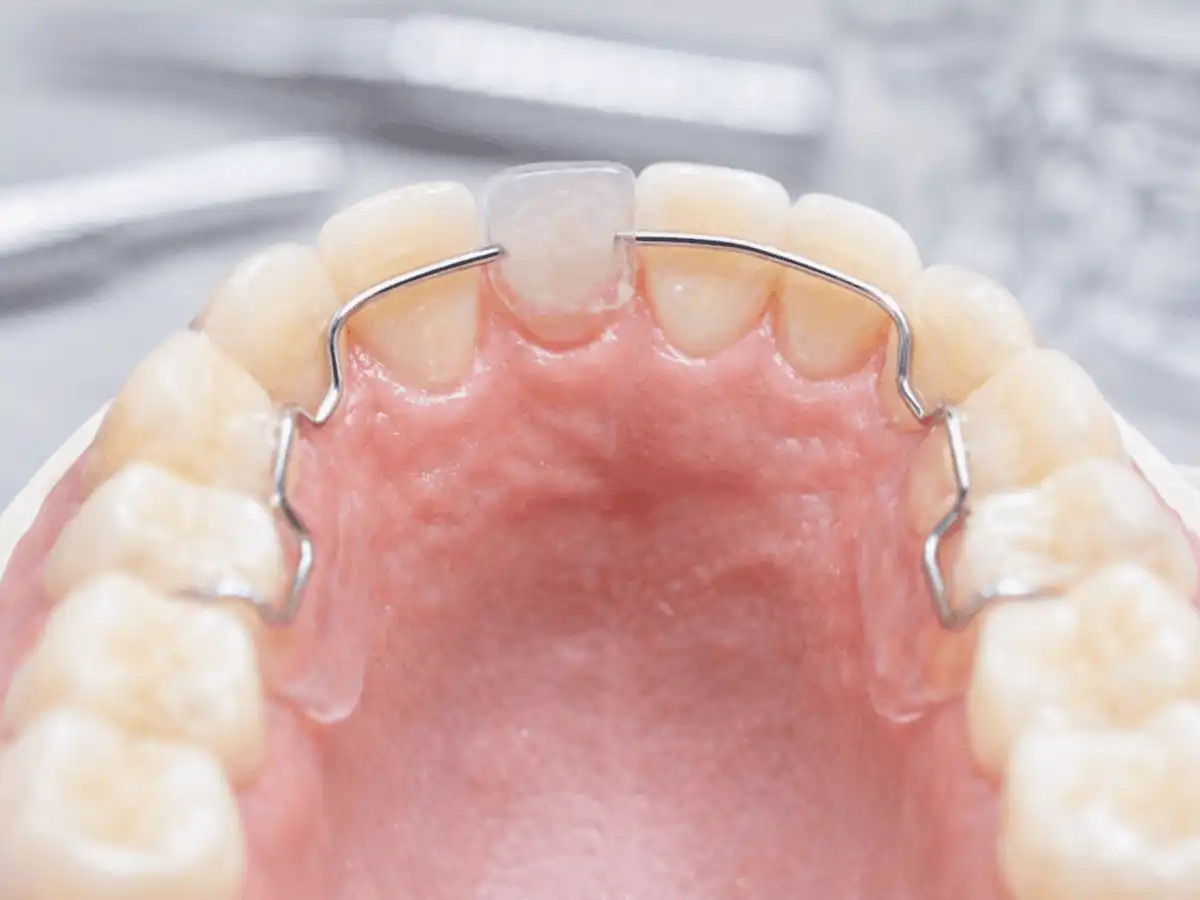
2. Hawley Removable Retainer
The Hawley removable retainer is one of the most established types of orthodontic retainers and has been used in orthodontic treatment for many years.
It typically consists of an acrylic plate and a wire positioned along the front of the teeth to help maintain their alignment.
One of its advantages is its relatively durable design, and it can be adjusted by a dentist or orthodontist when necessary. Since it is removable, patients can also brush and floss their teeth without the appliance getting in the way.
On the other hand, the metal wire across the front of the teeth makes a Hawley retainer more visible than a clear retainer. The acrylic portion may also take some time to get used to, particularly during the early stages of wear.
3. Clear Retainer
A clear retainer is made from thermoplastic material that is molded to follow the contours of the teeth.
Because it is thin and transparent, this type of retainer is relatively discreet when worn. Clear retainers can also be removed while eating and during regular oral hygiene routines.
However, because they are removable, their effectiveness depends greatly on the patient's consistency in following the wear schedule recommended by their dentist or orthodontist.
Retainer hygiene is also important. A retainer that is not cleaned regularly can accumulate plaque and biofilm, which may affect the health of the teeth and gums.
Thermoplastic materials can also wear down, become distorted, or develop damage over time. For this reason, your retainer should be checked if it becomes cracked, loose, distorted, or no longer fits comfortably.
Is There a Best Type of Retainer?
There is no single type of retainer that is ideal for every patient.
Fixed retainers, Hawley retainers, and clear retainers each have different characteristics and maintenance requirements. In some cases, your dentist or orthodontist may even recommend a combination of fixed and removable retainers to help maintain the treatment results.
Retainer selection may take into consideration:
Final orthodontic treatment results
Tooth position and alignment
Bite condition
Risk of tooth movement
Oral hygiene
Comfort
Ability to follow the recommended wear schedule
For this reason, a retainer should not be chosen based solely on appearance or personal preference. A professional evaluation remains the foundation for determining the most suitable option.
How Long Do You Need to Wear a Retainer?
One of the most common questions after braces are removed is how long a retainer needs to be worn.
There is no single wear schedule that applies to every patient. Your dentist or orthodontist will determine the duration and frequency based on your tooth alignment, treatment results, and individual risk of tooth movement.
During the early stage after active treatment, a removable retainer may be recommended for more frequent use. Once the teeth are considered more stable, the wear schedule may be reduced, such as to nighttime wear.
In the long term, some form of retention is still necessary because teeth can naturally change position throughout life.
Therefore, rather than focusing on when you will “finish” wearing a retainer, it is more appropriate to follow the long-term retention plan recommended by your orthodontist.
If you reduce or stop wearing your retainer without professional guidance, the risk of your teeth shifting back may increase.
Do You Have to Wear a Retainer Forever?
“Forever” may sound excessive, but long-term retention is an important part of orthodontic treatment.
Your teeth do not stop changing simply because your braces have been removed. Over time, biological changes and other factors can affect tooth position.
For this reason, retainers may still be needed long term, although the frequency of use can change depending on your condition.
The most important thing is to follow your dentist or orthodontist's recommendations and schedule an evaluation if your retainer begins to feel different, becomes too loose, or no longer fits properly.
How to Care for Your Dental Retainer
Proper retainer care helps keep the appliance clean while supporting your overall oral health.
1. Clean Your Retainer Regularly
After removing your retainer, rinse it with room-temperature or lukewarm water.
For removable retainers, use a soft-bristled toothbrush or a cleaning product specifically designed for retainers. Avoid hot water, as it can alter the shape of the material, particularly with clear retainers.
You should also avoid highly abrasive toothpaste on clear retainers, as it can scratch the surface and make the appliance appear cloudy.
2. Avoid Hot Water
Do not soak your clear retainer in hot water or clean it with high-temperature water.
Thermoplastic materials can become distorted when exposed to heat. As a result, the retainer may no longer fit the shape of your teeth properly.
3. Store It in a Case When Not in Use
Removable retainers should be kept in their case whenever they are not being worn.
Avoid wrapping your retainer in tissue or leaving it in random places, as it can easily be misplaced, accidentally thrown away, or damaged.
Store your retainer somewhere clean and away from excessive heat.
4. Keep Both Your Teeth and Retainer Clean
Your retainer and your teeth need to be cared for together. Continue brushing your teeth regularly and clean between your teeth as recommended by your dentist.
For fixed retainers, pay extra attention to the areas around the wire and use interdental cleaning tools when needed.
Signs Your Retainer Needs Repair or Replacement
Retainers are not designed to last indefinitely. Their materials can wear down or become damaged over time.
Watch out for the following signs:
The retainer is cracked or broken
Its shape has changed
It no longer fits your teeth properly
It feels too loose
The wire of a fixed retainer has become detached
The surface has become excessively cloudy
It causes discomfort that was not present before
It has become increasingly difficult to put on
Do not force a retainer that no longer fits.
If your retainer suddenly cannot be placed as it normally would, it may indicate that your teeth have shifted or that the retainer has become distorted.
It is best to consult your dentist or orthodontist to determine whether the retainer can still be used, needs to be repaired, or should be replaced.
Clear Retainer vs Clear Aligner What's the Difference?
Clear retainers and clear aligners may look similar, but they serve different purposes.
A clear aligner is an active orthodontic appliance designed to gradually move teeth toward their planned positions.
A clear retainer, on the other hand, is primarily used after active orthodontic treatment to help maintain tooth alignment.
Simply put:
Clear aligners help move your teeth. Retainers help maintain the result.
In certain situations, removable appliances may also be used as part of other types of treatment. Therefore, the function of an appliance should always be understood in relation to the purpose of the treatment.
Dental Retainers at Onyx Dental Center
Once orthodontic treatment is complete, the results achieved deserve to be maintained with the right approach.
At Onyx Dental Center, retainer planning and fabrication can be supported by digital scanning technology to obtain a more precise representation of your dental condition.
Digital Scanning with an Intraoral Scanner
An intraoral scanner can create a digital model of your teeth without conventional impression materials.
This data can be used as part of documentation, evaluation, and the retainer fabrication process according to each patient's needs.
Digital records can also support your dentist in monitoring changes in your teeth over time.
Retainers Designed Around Your Needs
A retainer is not simply an appliance chosen based on its appearance or design.
After evaluating the results of your orthodontic treatment, your dentist can determine the type of retainer and wear schedule that best suit your dental condition and individual needs.
At Onyx Dental Center, this approach reflects our philosophy of personalized dental care, where every detail of your treatment is considered around your condition, needs, and goals.
Conclusion
Dental retainers are an important part of orthodontic treatment, helping maintain tooth alignment after braces or clear aligner treatment. With the right type of retainer and a wear schedule tailored to your needs, your treatment results can be maintained more effectively.
Because every smile has different needs, consult your dentist or orthodontist to determine the retainer and retention plan that is right for you.
If you have recently completed orthodontic treatment, your retainer no longer feels right, or you would like to find out which type of retainer suits your needs, consult with the dental team at Onyx Dental Center.
References
Littlewood, S. J. (2026). Posttreatment orthodontic care for retention and stability. American Journal of Orthodontics and Dentofacial Orthopedics. Advance online publication. https://doi.org/10.1016/j.ajodo.2026.01.025
Lyros, I., Tsolakis, I. A., Maroulakos, M. P., Fora, E., Lykogeorgos, T., Dalampira, M., & Tsolakis, A. I. (2023). Orthodontic Retainers-A Critical Review. Children (Basel, Switzerland), 10(2), 230. https://doi.org/10.3390/children10020230
ScienceDirect. (n.d.). Retainer - an overview | ScienceDirect Topics. ScienceDirect. https://www.sciencedirect.com/topics/medicine-and-dentistry/retainer-orthodontics