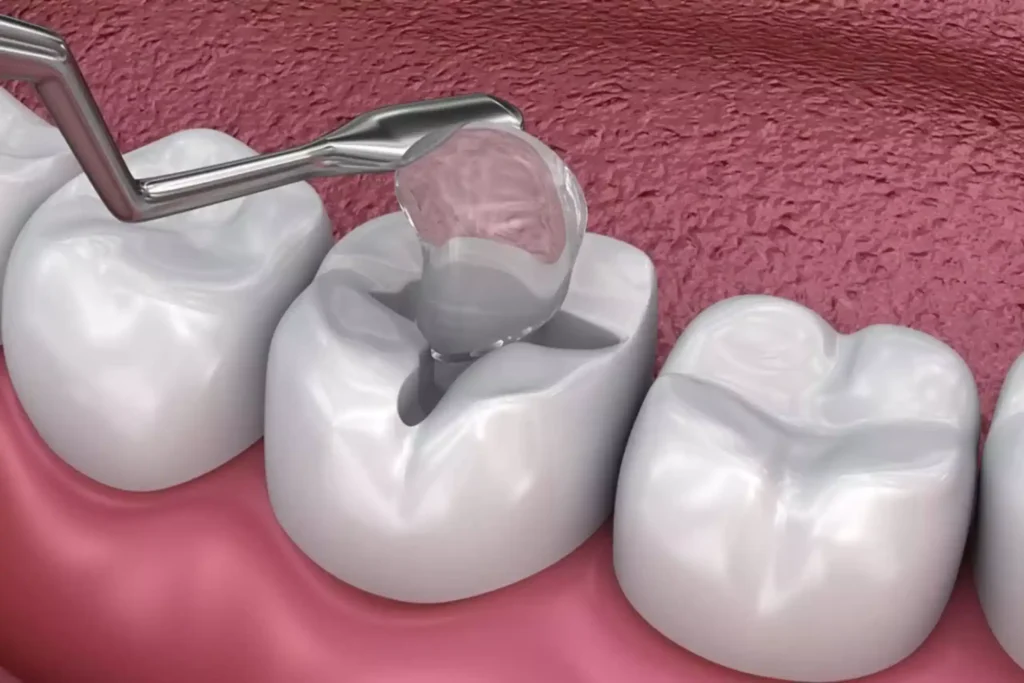
Many people postpone dental fillings because they feel the symptoms are still manageable or worry that the procedure may be uncomfortable. In reality, delaying treatment can worsen the damage and increase the risk of more complex dental procedures.
When dental fillings are performed at the right time, the natural tooth structure can be preserved, chewing function remains optimal, and long-term oral health is better maintained.
When Are Dental Fillings Needed?
Dental fillings are restorative treatments designed to restore the shape, strength, and function of teeth affected by cavities, minor fractures, or wear. More than simply closing a cavity, this treatment focuses on preventing further damage and maintaining comfort when chewing.
Dental fillings are generally recommended if you experience:
Cavities that have not reached the dental pulp
Partial tooth fractures caused by minor trauma
Old fillings that are leaking or have become detached
Tooth sensitivity due to enamel erosion
The earlier the dental filling procedure for cavities is performed, the greater the chance of preserving the natural tooth without invasive treatment.
Types of Dental Filling Materials
The choice of dental filling material depends on the tooth’s location, functional needs, and long-term aesthetic and durability considerations.
1. Composite Resin
A tooth-colored filling material commonly used for both front and back teeth because it offers:
A natural, aesthetic appearance
Strong adhesion to tooth structure
Suitability for restorations requiring high precision
2. Glass Ionomer Cement (GIC)
Often used in specific areas or for children’s teeth due to its ability to:
Release fluoride
Be gentler on tooth tissue
GIC is suitable for:
Back teeth that are less visible
Areas prone to recurrent cavities
Temporary fillings or cavity liners
Teeth with mild wear or small cracks
Patients with certain medical conditions requiring faster, low-irritation procedures
Your dentist will recommend the most appropriate material based on clinical findings and functional needs.
A Precise and Proper Dental Filling Procedure for Cavities
At Onyx Dental Center, the dental filling procedure for cavities is carried out with a conservative, precision-focused approach. Each step is designed to preserve as much healthy tooth structure as possible.
The procedure includes:
1. Comprehensive Examination and Diagnosis
The dentist evaluates the depth of the cavity, the condition of the tooth structure, and determines the most suitable treatment plan and filling material.
2. Tooth Isolation with a Rubber Dam
The treated tooth is isolated using a rubber dam to keep the area dry and sterile. This step is essential to:
Improve bonding strength
Reduce the risk of filling leakage
Maintain procedural safety and cleanliness
3. Removal of Infected Tooth Tissue
Damaged tooth tissue is selectively removed without compromising healthy structure.
4. Application and Shaping of the Filling Material
The dental filling material is applied in layers and shaped to match the natural tooth anatomy.
5. Hardening and Bite Adjustment
The filling is hardened using a special curing light, then adjusted to ensure a comfortable and balanced bite.
With a proper dental filling procedure for cavities, teeth can remain symptom-free, strong, and functional.
Aftercare Following Dental Fillings
To ensure the longevity of dental fillings, proper aftercare is essential:
Avoid chewing hard foods on the treated area for the first 24 hours
Brush your teeth twice daily after breakfast and before bedtime
Clean between teeth with dental floss
Visit your dentist for routine check-ups every six months
With good care, dental fillings can last for many years without issues.
Our Approach to Dental Fillings at Onyx Dental Center
At Onyx Dental Center, dental fillings are not merely about closing cavities, but part of a long-term strategy to maintain oral health.
Our approach is guided by one principle:repairing teeth without sacrificing healthy tissue.
This is reflected through:
Minimal invasive dentistry
Optimal moisture control using rubber dam isolation
Material selection based on long-term function and durability
Precise and comfortable bite adjustment
The ideal outcome is a filling that feels natural, stable, and enhances the patient’s quality of life.
Conclusion
Dental fillings are an essential treatment for addressing cavities, fractures, or tooth wear before they progress into more serious conditions. With accurate diagnosis, proper technique, and appropriate material selection, the dental filling procedure for cavities helps preserve natural teeth for as long as possible.
At Onyx Dental Center, every dental filling is performed with meticulous attention to detail, precision, and patient comfort. Consulting with a dentist is the first step toward determining the most suitable treatment for your dental condition.
Learn more about Onyx Dental Center Treatments:
Proper consultation is always the first step toward determining the most suitable solution for your individual needs.
References
Evans, C. P. (2023). Understanding the different types of dental fillings: Which is right for you? Journal of Dental Research and Practice, 5(2), 1. Retrieved from https://www.iomcworld.org/articles/understanding-the-different-types-of-dental-fillings-which-is-right-for-you.pdf
Weldon, J. C., Yengopal, V., Siegfried, N., Gostemeyer, G., Schwendicke, F., & Worthington, H. V. (2016). Dental filling materials for managing carious lesions in the primary dentition. The Cochrane Database of Systematic Reviews, 2016(9), CD012338. https://doi.org/10.1002/14651858.CD012338