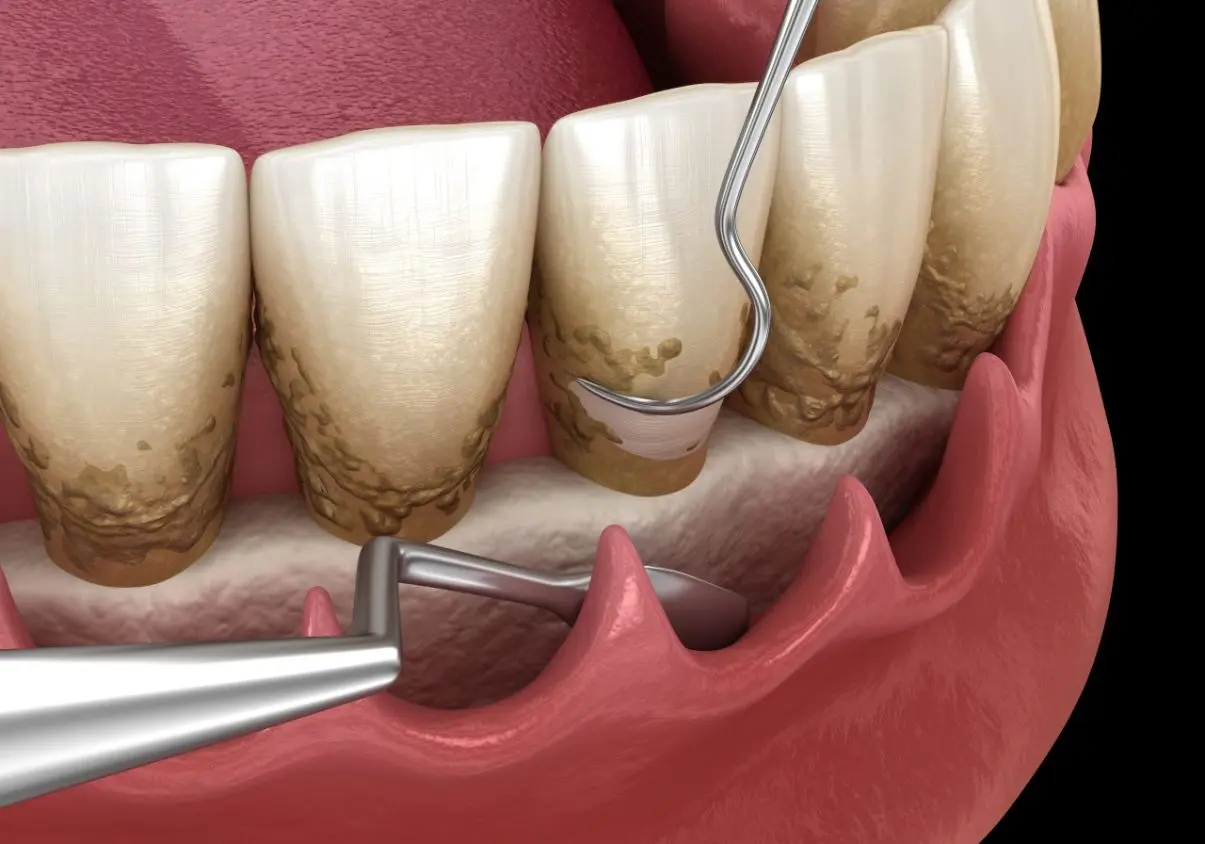
Have you ever been advised by your dentist to undergo curettage when your gums bleed or swell frequently? Although it may sound intimidating, dental curettage is an important procedure to protect the supporting tissues of your teeth from more severe infection.
What Is Dental Curettage?
Dental curettage is a deep cleaning procedure aimed at removing infected or inflamed soft tissue from the walls of periodontal pockets (gum pockets).
Unlike regular scaling, which removes plaque and tartar from the tooth surface, curettage goes deeper—cleaning below the gum line where a toothbrush cannot reach. The goal is to allow healthy gum tissue to reattach tightly to the tooth root.
Scaling vs. Curettage: What’s the Difference?
Feature | Regular Scaling | Curettage (Deep Cleaning) |
Cleaning Area | Above the gum line (supragingival) | Below the gum line (subgingival) |
Target | Plaque and tartar (calculus) | Tartar on root surfaces, infected tissue, gum pockets |
Purpose | Prevention and routine cleaning | Treatment of advanced gum disease (periodontitis) |
Who Needs Dental Curettage?
Not everyone requires this procedure. Curettage is typically recommended for patients with periodontitis (advanced gum disease).
You may need curettage if you experience:
Deep gum pockets (more than 4–5 mm)
Chronic gum inflammation (red, swollen, bleeding gums despite scaling)
Signs of infection, including pus
Loose teeth due to weakened supporting structures
Persistent bad breath that doesn’t improve with brushing
Dental Curettage Procedure
This procedure is performed by a dentist or periodontist with precision. The steps typically include:
Initial Examination
The dentist measures gum pocket depth and identifies areas requiring treatment.
Local Anesthesia
A local anesthetic is applied to ensure comfort and minimize pain during the procedure.
Scaling and Root Planing (SRP)
Before curettage, plaque and tartar are removed, and root surfaces are smoothed to prevent bacteria from reattaching.
Curettage Process
Using a special instrument called a curette, the dentist removes infected tissue and smooths the root surface to:
Improve cleanliness
Reduce bacterial retention
Help gums reattach to the tooth
Irrigation
The area is rinsed with an antiseptic solution to eliminate bacteria and debris.
Gingival Compression
Gentle pressure is applied using sterile gauze to:
Help gum tissue reattach to the root
Stabilize blood clots, essential for healing
Follow-Up Evaluation
A review is scheduled after a few weeks to assess healing.
Is Dental Curettage Painful?
A common concern is whether curettage is painful. In reality:
The procedure is performed under local anesthesia, so discomfort during treatment is minimal
After anesthesia wears off, you may experience:
Mild sensitivity
Temporary discomfort
Slight gum tenderness
These effects are temporary and usually subside within a few days. In fact, discomfort caused by infection often improves after treatment.
Recovery After Dental Curettage
After the procedure, patients are advised to:
Avoid very hot or cold foods temporarily
Eat soft foods on the first day
Maintain gentle oral hygiene
Use prescribed antiseptic mouthwash
Avoid smoking
Within a few days:
Gum swelling decreases
Bleeding reduces
Bad breath improves
How Many Sessions Are Needed and How Long Do Results Last?
Curettage is typically performed over multiple sessions, depending on:
The number of affected areas
The severity of periodontitis
Generally:
Treatment is divided by quadrants (2–4 visits)
Results can last long-term if you:
Maintain good oral hygiene
Attend regular periodontal maintenance visits
Without proper aftercare, infection may recur.
Precision Deep Cleaning with Comfort
At Onyx Dental Center, deep cleaning procedures like curettage are performed with a precise and patient-centered approach.
We ensure:
Accurate diagnosis based on periodontal condition
Thorough yet comfortable cleaning techniques
Patient education for long-term results
Because the goal is not only to clean—but to stop disease progression and preserve your natural teeth for as long as possible.
Conclusion
Dental curettage is an essential procedure for treating advanced gum disease. Unlike regular scaling, it cleans deep below the gum line and helps stop infection before it worsens. With proper care and regular follow-ups, gum health can be maintained and the risk of tooth loss significantly reduced.
References
Bian, Y., Liu, C., & Fu, Z. (2021). Application value of combination therapy of periodontal curettage and root planing on moderate-to-severe chronic periodontitis in patients with type 2 diabetes. Head & face medicine, 17(1), 12. https://doi.org/10.1186/s13005-020-00253-z
Dani Fajar Arifin, Ariyani Faizah, & Qitarah Safa Haqiqah. (2026). Gingival Curettage Treatment in a Case of Chronic Periodontitis: A Case Report. Jurnal EduHealth, 17(01), 103–108. Retrieved from https://ejournal.seaninstitute.or.id/index.php/healt/article/view/7837