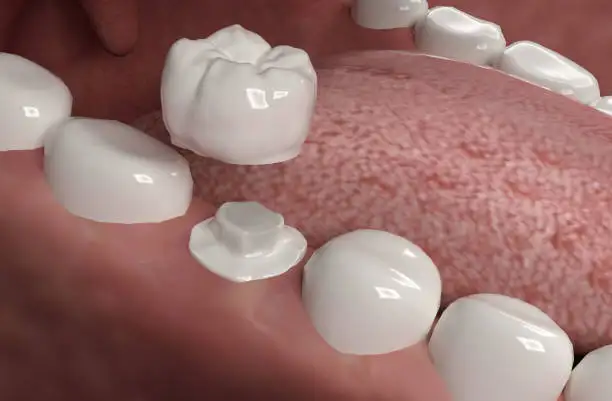
Experiencing a broken or cracked tooth, or recently undergoing a root canal treatment, can often be a cause for concern. The remaining natural tooth structure may become thinner, weaker, and more susceptible to fracture when exposed to chewing forces.
In restorative dentistry, one of the most established solutions for protecting weakened teeth and restoring their function is a dental crown, also known as a tooth crown, dental cap, or artificial tooth crown.
This article covers what dental crowns are, the available material options, conditions that may require them, and the modern treatment process available at Onyx Dental Center.
What Is a Dental Crown?
A dental crown is a tooth-shaped protective restoration placed over a prepared tooth to cover and protect its remaining structure. A crown acts like a protective “helmet,” helping preserve the tooth underneath while restoring its original shape, size, strength, and appearance.
Functions of Dental Crowns: Protect, Strengthen, and Restore
When a tooth has lost a significant amount of its natural structure, it may no longer be able to withstand everyday chewing forces on its own. A dental crown can provide several important functions:
Mechanical protection: Helps protect weakened teeth from cracking or splitting during chewing.
Functional restoration: Restores chewing function and helps distribute biting forces more appropriately.
Aesthetic restoration: Recreates the natural contour, color, and harmony of the smile.
For this reason, dental crowns are an important part of restorative dentistry, particularly when a conventional filling is no longer sufficient to protect the remaining tooth structure.
When Is a Dental Crown Needed?
A dentist may recommend a dental crown when the remaining tooth structure is too weak to be adequately restored with a filling alone.
Some conditions that may require a dental crown include:
1. After Root Canal Treatment
When the nerve and blood vessels inside a tooth are removed due to severe infection, the tooth may lose a significant amount of its internal structure. This can leave the remaining tooth more vulnerable to fracture.
For teeth with substantial structural loss, placing a dental crown after root canal treatment can provide additional protection and help restore the tooth's function.
2. Severely Broken, Cracked, or Worn Teeth Due to Bruxism
Teeth grinding during sleep (bruxism) or physical trauma can contribute to tooth cracks and structural damage.
A dental crown can cover and protect the remaining tooth structure, helping restore its shape and function.
3. Teeth with Large Fillings
When a large portion of a tooth has been replaced by a filling, the remaining natural tooth walls may become more vulnerable to fracture.
In certain cases, a dental crown may provide more comprehensive protection for the remaining structure.
4. Dental Implant Restoration
A dental crown can also be used as part of an implant restoration.
After the dental implant has integrated with the jawbone and an abutment has been placed, the crown serves as the visible portion of the replacement tooth above the gum line.
5. Severe Tooth Discoloration
For certain cases of severe discoloration that cannot be adequately corrected with conventional teeth whitening, such as some tetracycline stains or discoloration caused by trauma, a dental crown may be considered to improve the tooth's appearance.
However, the decision to use a dental crown should always be based on the condition of the tooth and the individual patient's needs.
Types of Dental Crowns
The material used for a dental crown can affect its strength, aesthetics, and long-term performance. Some commonly used types include:
1. All-Porcelain Crown (Emax)
All-porcelain crowns are made from high-quality ceramic materials such as lithium disilicate, commonly known by the brand name Emax.
Advantages: They offer natural-looking translucency that closely resembles natural tooth enamel. They are metal-free and are often considered for anterior teeth where aesthetics and smile harmony are important.
2. Zirconia Crown
Zirconia crowns are made from a high-strength ceramic material known for their durability and biocompatibility with surrounding tissues.
Advantages: They can withstand high chewing forces and offer good resistance to fracture. Zirconia crowns can also be designed with a natural tooth-colored appearance, making them suitable for posterior teeth that are exposed to greater chewing forces.
3. Porcelain-Fused-to-Metal (PFM) Crown
PFM crowns combine a metal framework on the inside with a porcelain layer on the outside.
Advantages: The metal framework provides a strong internal structure, while the porcelain exterior offers a tooth-colored appearance. PFM crowns may be used for posterior teeth or as part of a dental bridge.
Over time, as the gum line naturally changes, a dark line caused by the underlying metal may sometimes become visible near the gum margin.
Dental Crown Procedure: From Start to Finish
Dental crown treatment at Onyx Dental Center generally requires two visits, with the following steps:
Step 1: First Visit
Dental examination and X-rays: The dentist will evaluate the clinical condition of the tooth and may take periapical or panoramic X-rays to assess the supporting tissues and root condition.
Local anesthesia and tooth preparation: Local anesthesia is administered to help ensure a comfortable procedure. The tooth is then carefully prepared by removing a small amount of tooth structure to create sufficient space for the dental crown.
Digital impression with an intraoral scanner: The prepared tooth is scanned using a modern 3D intraoral scanner.
Temporary crown placement: Before leaving the clinic, the prepared tooth is protected with an acrylic temporary crown to maintain comfort while speaking and eating.
Step 2: Dental Laboratory Fabrication
The digital 3D model is sent to a dental laboratory for precise fabrication using the selected porcelain or zirconia material and advanced manufacturing technology.
Step 3: Second Visit
Temporary crown removal and try-in: The temporary crown is removed, and the permanent crown is placed to evaluate the fit around the gum line, contact with adjacent teeth, and color.
Occlusal adjustment: The dentist checks your bite to make sure there are no excessive or uncomfortable contact points when chewing.
Permanent crown placement: Once everything is properly adjusted, the crown is permanently cemented using a specialized dental cement.
Modern Technology for Dental Crowns at Onyx Dental Center
Dental crown treatment has become increasingly comfortable and precise with the help of digital technology.
Digital Scanning vs. Conventional Impressions
Traditional dental impressions can sometimes cause discomfort or a gagging sensation due to the impression material placed inside the mouth.
With an intraoral scanner, the dentist can capture a detailed 3D digital impression using an optical scanning system.
Improved Accuracy and Comfort
Digital scanning captures the contours and details of the teeth to support the design and fabrication of a well-fitting crown.
This can help improve the accuracy of the crown's marginal fit and reduce the possibility of discomfort or an uneven bite.
How to Care for Your Dental Crown
Although materials such as porcelain and zirconia cannot develop cavities themselves, the natural tooth underneath and the surrounding gum tissue can still develop problems.
Proper oral hygiene therefore remains essential.
Recommended Habits
Brush your teeth twice a day using fluoride toothpaste.
Use dental floss or a water flosser daily to clean between the crown and adjacent teeth.
Use mouthwash as recommended by your dentist to help maintain gum health around the crown margin.
Wear a night guard if you have bruxism and your dentist recommends one.
Habits to Avoid
Avoid biting hard objects such as ice or using your teeth to open packages, as excessive force may damage the crown or the underlying tooth.
How Long Can a Dental Crown Last?
According to the available literature, dental crowns can last approximately 10 to 15 years, and in some cases may last considerably longer with proper oral hygiene, regular dental check-ups, and appropriate maintenance.
The lifespan of a crown can vary depending on factors such as the condition of the supporting tooth, oral hygiene, bite forces, material, and habits such as bruxism.
Is Getting a Dental Crown Painful?
During tooth preparation, local anesthesia is used to help ensure that the procedure is comfortable.
After the procedure, some patients may experience mild sensitivity or discomfort for one to two days. This is generally temporary and can usually be managed with appropriate pain relief if recommended by the dentist.
If discomfort persists or becomes more severe, consult your dentist for further evaluation.
Does a Dental Crown Look Natural?
Yes. Dental crowns can be customized to match the color and shape of the surrounding natural teeth.
Careful shade matching, along with proper consideration of the crown's shape, size, and proportions, can help create a natural-looking result, particularly for visible front teeth.
Conclusion
A dental crown is an important restorative treatment for protecting, strengthening, and restoring teeth that have experienced significant structural damage or require additional protection after root canal treatment.Modern materials such as zirconia and lithium disilicate porcelain offer a combination of strength, durability, and natural-looking aesthetics.
With the use of digital 3D scanning technology, the dental crown treatment process can also be more comfortable and precise, without the discomfort sometimes associated with conventional dental impressions.
For patients in the Greater Tangerang area and surrounding locations, Onyx Dental Center in Karawaci, Tangerang, provides dental crown treatment and comprehensive dental care for you and your family. Supported by an experienced dental team, modern 3D intraoral scanning technology, and a calm and comfortable clinical environment, Onyx Dental Center is ready to help restore your healthy and confident smile.
Read More:
What Are Clear Aligners? A Complete Guide to Straightening Your Teeth
Getting a Dental Crown: A Guide to Choosing the Right Restoration for a Strong, Natural Smile
References
Al Hamad, K. Q., Al Quran, F. A., AlJalam, S. A., & Baba, N. Z. (2019). Comparison of the Accuracy of Fit of Metal, Zirconia, and Lithium Disilicate Crowns Made from Different Manufacturing Techniques. Journal of Prosthodontics: Official Journal of the American College of Prosthodontists, 28(5), 497–503. https://doi.org/10.1111/jopr.13029
Carlsson, G. E. (2014). Success and Failure of Different Types of Crowns and Fixed Dental Prostheses. Journal of Pakistan Prosthodontics Association, 2(1), 24–32. https://jppa.pk/jppa/article/view/30
Premalatha, A., Zakkula, S., Janapala, S. R., Varalakshmi, U., Lakshmi, B., & Deena, C. (2024). Comparison of Different Crowns in Maxillary Posterior Rehabilitation: A Comparative Study. Journal of Contemporary Clinical Practice, 10(1), 49–55.