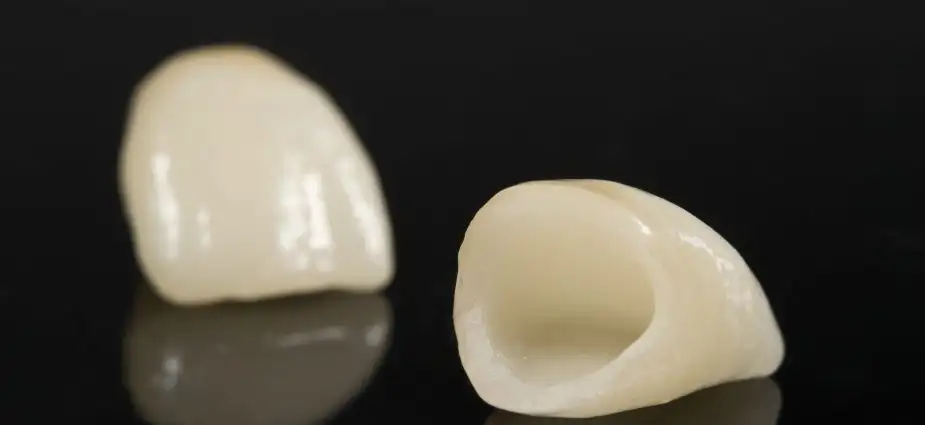
Have you ever been told by your dentist that you need a dental crown? Many people assume that a dental crown, also known as a tooth crown, is only used to improve the appearance of a tooth. In reality, the primary purpose of a dental crown is to protect a weakened tooth—especially after a fractured tooth, a large filling, or root canal treatment—so it can continue functioning properly during chewing.
Today, modern dentistry allows dental crowns to be designed with a color and shape that closely resemble natural teeth, creating a seamless and natural-looking smile. However, not every case requires the same type of crown. The choice of material and design depends on the condition of the tooth, its location, bite force, and each patient's aesthetic goals.
If you're considering getting a dental crown, understanding when it's needed and how the procedure works can help you make an informed decision together with your dentist.
What Is a Dental Crown?
A dental crown, or tooth crown, is a restoration that completely covers the remaining visible portion of a tooth. Its purpose is to restore the tooth's function, strength, shape, and appearance after it has been weakened by decay, infection, or significant loss of tooth structure.
Unlike a filling, which only replaces the missing portion of a tooth, a dental crown covers the entire visible surface, providing additional protection against chewing forces.
Dental crowns can be made from several different materials, including:
Zirconia
All-ceramic
Porcelain-fused-to-metal (PFM)
Metal alloys (less commonly used for aesthetic cases)
Each material has its own advantages and clinical indications depending on the patient's needs.
When Is a Dental Crown Needed?
Dentists do not recommend placing a dental crown without a clear indication. Generally, a crown is advised when the remaining tooth structure is too weak to be restored with a conventional filling alone.
Fractured or Weakened Teeth
Teeth that are cracked, fractured, or have lost a significant amount of their structure are more susceptible to breaking during chewing.
In these situations, a dental crown helps:
Protect the remaining tooth structure
Distribute chewing forces more evenly
Reduce the risk of further fractures
If the cavity is still small or moderate and has not reached the dental pulp, your dentist may recommend a direct filling instead of a dental crown.
Teeth After Root Canal Treatment
Following root canal treatment, the infection inside the tooth has been removed, but the remaining tooth structure is often significantly weakened due to extensive decay or previous restorations.
For back teeth, such as premolars and molars, a dental crown is commonly recommended because:
They are subjected to greater chewing forces.
They have a higher risk of fracture.
A crown helps preserve the remaining healthy tooth structure for as long as possible.
For some front teeth that retain sufficient healthy structure and experience less biting force, a dental crown may not always be necessary. The final decision depends on your dentist's clinical evaluation.
Teeth with Large Fillings
The larger the cavity, the larger the filling required, leaving less natural tooth structure behind. When most of the tooth has been replaced with filling material, the risk of fracture increases under normal chewing pressure.
In these cases, a dental crown often provides better long-term protection than another filling.
Types of Dental Crowns: Zirconia, All-Ceramic, or PFM?
The choice of crown material depends on the tooth's location, functional demands, aesthetic expectations, and individual biting habits.
1. Zirconia Crowns
Zirconia crowns are among the most commonly used restorations today because they combine exceptional strength with excellent aesthetics.
Advantages of zirconia include:
High resistance to chewing forces
Excellent fracture resistance
Biocompatibility with oral tissues
A natural tooth-like appearance
Zirconia crowns are frequently chosen for posterior teeth and selected anterior cases.
2. Porcelain-Fused-to-Metal (PFM)
PFM crowns consist of a metal substructure covered with porcelain.
Their advantages include:
High strength
Decades of proven clinical success
However, over time, the metal margin may become visible near the gumline in some patients, making them slightly less aesthetic than metal-free restorations.
5. All-Ceramic Crowns
All-ceramic crowns contain no metal, allowing them to mimic the translucency of natural enamel.
They are especially suitable for:
Front teeth
Highly aesthetic smile zones
Although all-ceramic crowns provide outstanding aesthetics, your dentist will still evaluate your bite before recommending them, as they may not be the ideal choice for teeth subjected to heavy chewing forces.
The Dental Crown Procedure
In general, getting a dental crown involves several steps.
1. Consultation and Examination
Your dentist will perform a comprehensive clinical examination and may recommend dental X-rays to evaluate:
Root condition
Supporting bone and tissues
Remaining tooth structure
Presence of infection
At Onyx Dental Center, digital technologies may also be used to improve diagnostic accuracy and treatment planning.
2. Tooth Preparation
Before placing a dental crown, the tooth must first be prepared. Any existing decay or infection is removed, and the tooth is conservatively reshaped to create adequate space for the crown.
Modern dentistry emphasizes preserving as much healthy tooth structure as possible during this process.
3. Dental Impression or Digital Scan
Your tooth can be recorded using either a conventional impression or a digital intraoral scanner to ensure a highly accurate crown fit.
4. Crown Fabrication
The impression or digital scan is sent to a dental laboratory, where the crown is custom-made based on your:
Tooth shape
Tooth color
Tooth contour
Bite relationship
5. Try-In and Final Cementation
Once the custom dental crown is completed, your dentist will check its fit, appearance, and bite before permanently bonding it with dental cement.
The dentist will carefully evaluate:
Contacts with adjacent teeth
Bite alignment
Overall comfort
How Can You Achieve a Natural-Looking Front Tooth Crown?
A beautiful dental crown is not simply about making the tooth look white. Your dentist carefully considers several important factors, including:
Harmony with neighboring teeth
Natural tooth anatomy
Proper size and proportion
Smile line
Gum contour
Lip position during smiling
Bite function
The ultimate goal is to create a restoration that looks natural while providing excellent comfort and function.
Caring for Your Dental Crown
Although dental crowns are made from durable materials, proper care remains essential.
To maximize their longevity:
Brush twice daily with fluoride toothpaste.
Clean between teeth using dental floss or interdental brushes.
Avoid biting hard objects such as ice or opening packages with your teeth.
Wear a night guard if you grind or clench your teeth (bruxism).
Visit your dentist regularly every six months or as recommended.
With proper care and regular maintenance, a dental crown can last for many years.
Conclusion
Getting a dental crown is an effective restorative solution for protecting teeth weakened by fractures, large fillings, or root canal treatment. By selecting the appropriate crown material—such as zirconia, all-ceramic, or another suitable option—both chewing function and smile aesthetics can be successfully restored.
The long-term success of a dental crown depends not only on the material used but also on proper diagnosis, precise treatment planning, accurate placement, and consistent oral care. If you have a weakened or fractured tooth or have recently undergone root canal treatment, consult your dentist to determine whether a dental crown is the most appropriate solution for your needs.
Read More:
References
Christensen, G. J. (2007). When is a full-crown restoration indicated? The Journal of the American Dental Association, 138(1), 101–102. https://doi.org/10.14219/jada.archive.2007.0028
McCracken, M. S., Louis, D. R., Litaker, M. S., Minyé, H. M., Mungia, R., Gordan, V. V., Marshall, D. G., Gilbert, G. H., & National Dental Practice-Based Research Network Collaborative Group (2016). Treatment recommendations for single-unit crowns: Findings from The National Dental Practice-Based Research Network. Journal of the American Dental Association (1939), 147(11), 882–890. https://doi.org/10.1016/j.adaj.2016.06.012
Mulya, A., Saraswati, N., Jackson, S., Swastika, M., & Hasan, Z. A. (2023). Influence of preparation design on the fracture resistance of endodontically treated teeth restored with full-coverage crowns in Jakarta, Indonesia. CROWN: Journal of Dentistry and Health Research, 1(2), Article 89. https://doi.org/10.59345/crown.v1i2.89