Uneven, crowded, or misaligned teeth are not only a concern when it comes to appearance. The alignment of your teeth and the way your upper and lower teeth come together can also affect chewing function, oral hygiene, and the health of your teeth and supporting tissues.
One of the most widely used treatments for improving tooth alignment is dental braces, an orthodontic treatment that uses controlled forces to gradually move the teeth into their planned positions.
Today, orthodontic treatment offers more choices than ever. In addition to conventional metal braces, patients can consider ceramic braces, self-ligating systems such as damon braces, and clear orthodontic options such as clear aligners.
However, choosing braces is not simply about selecting the most aesthetic or modern option. Appropriate orthodontic treatment begins with an accurate diagnosis. The condition of your teeth, bite, jaw relationship, supporting tissues, treatment goals, and daily habits should all be considered before selecting the most suitable appliance.
What Are Dental Braces and Who Needs Them?
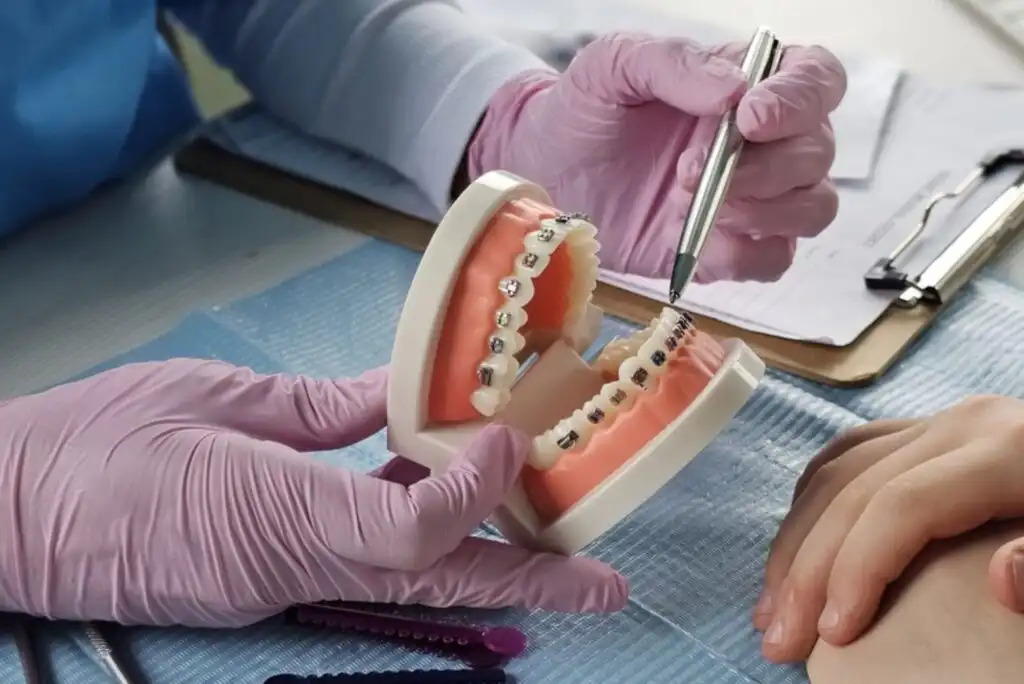
Dental braces are orthodontic appliances used to help correct the position of the teeth and improve certain bite relationships.
With fixed braces, brackets are attached to the surface of the teeth and connected by an orthodontic wire. The wire applies controlled forces that guide tooth movement gradually. Additional components, such as elastics, may be used depending on the individual treatment plan.
Orthodontic treatment may be considered for conditions such as:
Crowded or overlapping teeth (crowding)
Gaps between teeth (spacing)
Misaligned teeth
Deep bite
Reverse bite
Crossbite
Open bite
Certain tooth and jaw relationship problems
Orthodontic treatment can be performed in children, teenagers, and adults as long as the condition of the teeth and supporting tissues allows it. Age is not the only factor that determines whether someone is suitable for orthodontic treatment.
How Do Dental Braces Straighten Teeth?
Braces work by applying light, controlled forces to the teeth. These forces stimulate biological changes in the tissues surrounding the tooth roots, allowing the teeth to gradually move toward their planned positions.
Because tooth movement is a biological process, it cannot happen instantly. Your orthodontist will monitor your progress and make adjustments throughout treatment to keep the movement on track.
This is why the outcome of orthodontic treatment is not determined by the type of braces alone. Accurate diagnosis, treatment planning, the body's biological response, and patient compliance all play an important role.
Types of Dental Braces You Should Know
There is no single type of braces that is automatically the best choice for every patient. Each system has its own characteristics, benefits, limitations, and indications.
1. Metal Braces
Metal braces are one of the most commonly used types of fixed braces. Metal brackets are attached to the teeth and connected with orthodontic wires. In conventional systems, the wire is typically secured to the brackets using ligatures or small elastic bands.
One of their key advantages is their versatility in addressing a wide range of orthodontic needs, including cases that require comprehensive control over tooth movement.
Because the brackets and wires are visible when you smile, metal braces may be less appealing to patients who prefer a more discreet appearance. However, they remain an effective option for many orthodontic treatment needs.
2. Ceramic Braces
Ceramic braces use brackets designed to blend more closely with the natural color of the teeth, making them less noticeable than traditional metal brackets.
They work on the same basic principle as other fixed braces, using brackets and orthodontic wires to guide tooth movement gradually.
Ceramic braces may be a suitable consideration for patients who want the control of fixed braces while maintaining a more discreet appearance. However, ceramic materials have different physical characteristics from metal and require appropriate care to help prevent brackets from becoming damaged or detached.
3. Damon Braces or Self-Ligating Braces
Damon braces are one type of self-ligating orthodontic system. Unlike conventional braces, which use ligatures to secure the wire to the bracket, self-ligating brackets use a built-in clip or sliding mechanism to hold the wire in place.
This system has different mechanical characteristics from conventional braces and can be used for a range of orthodontic treatment needs.
However, self-ligating braces do not automatically mean that treatment will always be faster or better for every patient. The choice of system should still be based on the diagnosis, treatment goals, and type of tooth movement required.
At Onyx Dental Center, fixed appliance treatment is provided by dentists with specific training and certification in orthodontics.
4. Clear Braces or Clear Aligners
The term clear braces can sometimes be used to describe discreet orthodontic options, including clear aligners. Clear aligners consist of a series of transparent trays custom-made for the patient's teeth.
Unlike fixed braces, clear aligners can be removed when eating, drinking anything other than water, brushing, and flossing.
This flexibility also requires a high level of patient commitment. Clear aligners should be worn according to the orthodontist's instructions, generally around 20–22 hours per day depending on the system and individual treatment plan.
Clear aligners can be used for a variety of orthodontic needs, but the predictability of tooth movement may vary depending on the case. Your orthodontist will evaluate your teeth, bite, and required tooth movements before determining whether clear aligners are an appropriate option.
The Dental Braces Treatment Process at Onyx Dental Center
Getting dental braces is not simply about having brackets placed on your teeth. Well-planned orthodontic treatment begins with a comprehensive examination and diagnosis.
1. Consultation and Examination
Your orthodontist will evaluate your teeth, bite, supporting tissues, and treatment goals.
The examination may include photographs, dental models or digital scans, and radiographic imaging when needed. Panoramic and cephalometric X-rays can provide valuable information about the teeth, jaws, and structures that cannot be assessed through a clinical examination alone.
2. Digital Scanning with an Intraoral Scanner
An intraoral scanner can be used to create a digital representation of your teeth.
This digital data can support analysis, documentation, and treatment planning. At Onyx Dental Center, digital technology is incorporated into orthodontic and aligner treatment planning according to each patient's needs.
3. Bracket and Wire Placement
If you choose fixed braces and your teeth are ready for treatment, the brackets are positioned on the teeth according to the treatment plan.
The orthodontic wire is then placed to begin applying the forces required to gradually move the teeth.
After placement, regular follow-up appointments are necessary. At each visit, your orthodontist will assess your progress and make adjustments as needed.
How Long Do You Need to Wear Dental Braces?
The duration of dental braces treatment varies from patient to patient. In general, many patients undergo orthodontic treatment for approximately 12–24 months, although the actual treatment time may be shorter or longer.
Several factors can affect treatment duration, including:
The complexity of the malocclusion
The type and extent of tooth movement required
The condition of the supporting tissues
The patient's biological response
Compliance with scheduled appointments
The use of elastics or additional orthodontic appliances
Damaged or detached brackets during treatment
For this reason, treatment duration should be determined based on each patient's condition and treatment plan rather than simply on the type of braces being used.
Dental Braces or Clear Aligners: Which Is Right for You?
There is no single answer to whether braces or clear aligners are better for everyone.
Both options have different characteristics and treatment requirements.
Consideration | Fixed Braces | Clear Aligners |
Appearance | Brackets and wires are visible | More discreet and transparent |
Removable | No | Yes |
Eating | Hard and sticky foods should be avoided | Removed while eating |
Oral hygiene | Requires extra attention around brackets | Easier to clean because they can be removed |
Compliance | Not dependent on daily wear time | Highly dependent on consistent wear |
Indications | Can be used for a wide range of orthodontic needs | Suitable for cases that can be planned and controlled with aligners |
Aesthetics | Ceramic bracket options are more discreet | Difficult to notice when worn |
Ultimately, the right appliance should be selected based on your dental condition, treatment goals, case complexity, and personal preferences after consultation with your orthodontist.
How to Care for Your Teeth While Wearing Dental Braces
Orthodontic treatment can take several months or longer. During this period, maintaining good oral hygiene requires extra attention because brackets and wires can trap plaque and food particles.
1. Brush and Clean Between Your Teeth
Clean thoroughly around the brackets, wires, and gumline. An orthodontic toothbrush or interdental brush can help reach areas that are more difficult to clean.
Maintaining good oral hygiene throughout treatment can help reduce the risk of tooth decay, gum inflammation, and white spot lesions on the surface of the teeth.
2. Be Mindful of What You Eat
When wearing fixed braces, limit foods that are excessively hard, sticky, or chewy, as they may damage or loosen brackets and other orthodontic components.
Examples include:
Ice cubes
Hard candy
Sticky candy
Very hard nuts
Foods that require significant biting force
Very chewy foods
Cutting food into smaller pieces can also help reduce direct pressure on the brackets.
In addition, limiting foods and drinks that are high in sugar or acidity can help protect the enamel throughout treatment.
Retainers After Braces to Maintain Your Results
Having your braces removed does not mean that orthodontic treatment is completely finished. Once your teeth have reached their planned positions, you will need a retainer to help maintain the results.
Teeth can naturally shift throughout life. Retainers therefore play an important role in helping minimize unwanted tooth movement after orthodontic treatment.
Retainers may include:
Removable retainers, which can be taken in and out
Fixed retainers, consisting of a wire bonded to the back surfaces of the teeth
Clear retainers, which resemble transparent trays
The type of retainer and wearing schedule will depend on your individual condition and your orthodontist's recommendations.
In other words, successful orthodontic treatment is not only about how long you wear your braces, but also how well the results are maintained after they are removed.
Orthodontic Consultation at Onyx Dental Center
Every smile has different needs. That is why choosing dental braces should begin with the question, “What does my smile need?” rather than simply asking, “Which braces are the best?”
At Onyx Dental Center, orthodontic treatment is supported by dentists with specialized training in orthodontics. One of them is drg. Rio Jonas, M.Kes, Sert. Ort, who holds orthodontic certification and has experience providing treatment with both fixed appliances and clear aligners.
Our approach combines clinical evaluation, digital technology, and treatment planning tailored to each patient's needs.
Whether you are considering metal braces, ceramic braces, damon braces, or clear braces, a comprehensive consultation can help ensure that your treatment choice considers more than aesthetics. Function, oral health, and your long-term treatment goals matter too.
Conclusion
Dental braces are more than a tool for creating straighter-looking teeth. Orthodontic treatment aims to improve tooth alignment and, depending on the individual case, address bite relationships so that function, oral health, and aesthetics can work together more harmoniously.
Today, patients have a wider range of options, from conventional metal braces and ceramic braces to self-ligating systems such as damon braces and discreet options such as clear braces and clear aligners.
However, the type of appliance is only one part of the treatment equation. Accurate diagnosis, personalized planning, regular follow-ups, oral hygiene, patient compliance, and proper retention all contribute to the overall treatment journey.
At Onyx Dental Center, treatment selection begins with understanding each patient's individual condition and goals. With digital technology and orthodontic expertise, every treatment plan is designed around the patient's needs rather than following a one-size-fits-all approach.
Because ultimately, a great smile is not only about how your teeth look. It is also about how well they function, how comfortable they feel, and how naturally they become part of who you are.
References
Abass, A. A., Al-Khatib, A. R., & Hassan, S. F. (2022). Orthodontics: Types, properties and their applications. ResearchGate. https://www.researchgate.net/publication/366790433_ORTHODONTICS_TYPES_PROPERTIES_AND_THEIR_APPLICATIONS
Giannini, L., Galbiati, G., Tartaglia, F. C., Grecolini, M. E., Maspero, C., & Biagi, R. (2025). Orthodontic Treatment with Fixed Appliances Versus Aligners: An Experimental Study of Periodontal Aspects. Dentistry Journal, 13(2), 70. https://doi.org/10.3390/dj13020070
Ghodasra, R., & Brizuela, M. (2023). Orthodontics, Malocclusion. StatPearls Publishing. https://www.ncbi.nlm.nih.gov/books/NBK592395/