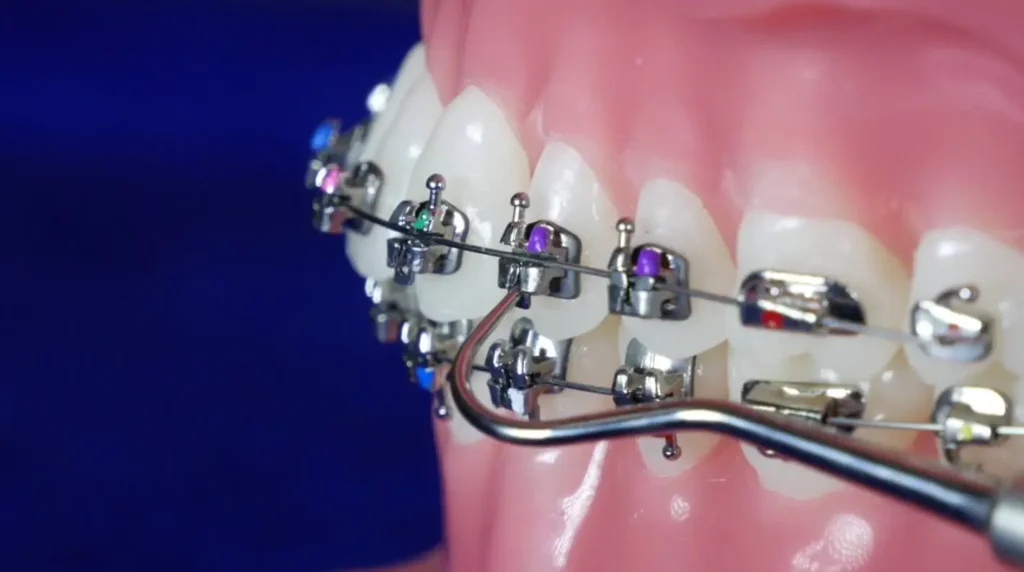
Behel Damon is a modern self-ligating orthodontic system claimed to be more comfortable and efficient. Learn how they work, their advantages, limitations, and how they compare to conventional braces.
Damon Braces: A Growing Trend in Modern Orthodontics
In recent years, Damon braces have become one of the most sought-after orthodontic options for patients who want straighter teeth using more advanced technology. This system is known as the Damon self-ligating system, a type of braces that does not use elastic ligatures like conventional braces.
Many patients are interested in Damon braces because they are claimed to be more comfortable, use lighter forces, and require fewer adjustment visits. But are all of these claims truly supported clinically?
This article discusses the Damon System in detail, including how it works, its advantages, limitations, and comparisons with conventional metal braces and Invisalign.
What Are Damon Braces?
Damon braces are a self-ligating orthodontic system that uses specialized brackets with a sliding door or automatic clip mechanism to hold the orthodontic wire (archwire).
Unlike conventional braces that require elastic ligatures to secure the wire onto the bracket, the Damon System can hold the wire independently without additional elastics. This technology was first introduced by Dr. Dwight Damon and has since evolved into one of the pillars of modern orthodontic treatment worldwide.
Brief History & Types of Damon System
The Damon System became popular because of its low-friction orthodontic concept, which minimizes friction between the wire and the bracket. The goal is to allow tooth movement to occur more efficiently and biologically.
Today, several Damon variants are commonly used:
Damon Metal: Strong and functional metal brackets.
Damon Clear: Semi-transparent brackets made from polycrystalline ceramic for improved aesthetics.
Although the technology is more advanced, the fundamental principle of orthodontics remains the same: gradually moving teeth and modifying periodontal tissues using safe biological forces (light continuous force).
How Do Damon Braces Work?
In the Damon self-ligating system, the orthodontic wire moves more freely within the bracket slot because it is held by a small built-in door mechanism rather than elastic ties.
This mechanism creates several clinical effects:
Reduced friction: Lower friction allows the wire to function more efficiently.
More consistent force: Produces smoother tooth movement during the initial treatment stages.
Time efficiency: During certain phases of treatment, such as leveling and aligning, tooth movement may progress more efficiently.
However, it is important to understand that the total duration of orthodontic treatment is still influenced by complex biological factors, including:
Severity of malocclusion (misaligned teeth)
Bone density and periodontal tissue response
Patient compliance with appliance care and scheduled visits
Accuracy of treatment planning by the orthodontist
Advantages of Damon Braces
Lighter Mechanical Forces
Because the system eliminates elastic ligatures, many patients report experiencing less pressure and discomfort, especially during the early stages after braces placement.
Longer Adjustment Intervals
Elastic ligatures used in conventional braces lose elasticity and accumulate bacteria within 3–4 weeks, requiring frequent replacement. Since Damon braces do not use elastics, adjustment appointments may be spaced further apart, typically every 6–8 weeks depending on the orthodontist’s recommendation.
Potential Time Efficiency
Some clinical studies suggest that the early alignment phase using self-ligating systems may progress more quickly. However, this should be understood as improved efficiency during specific treatment phases rather than a guarantee that all orthodontic cases will finish significantly faster.
Improved Oral Hygiene
Elastic ligatures are porous and tend to trap plaque, food debris, and stains easily. Without elastic ties, Damon braces are generally easier to clean, which may help reduce the risk of gingivitis and dental caries.
Limitations and Drawbacks of Damon Braces
Although Damon braces offer modern technology, they are not a universal solution for every orthodontic problem. Some limitations include:
Aesthetic Considerations for Metal Variants
The Damon Metal version is still visibly noticeable when smiling. Patients who prioritize aesthetics may prefer Damon Clear instead.
Adjustment Period Still Exists
The term “more comfortable” does not mean completely pain-free. During the first few weeks, patients may still experience pressure, irritation, or ulcers caused by friction against the cheeks and lips.
Limitations in Skeletal Cases
For severe skeletal malocclusions involving jaw discrepancies in adult patients, Damon braces alone may not be sufficient. Additional anchorage systems (such as mini screws/TADs) or orthognathic surgery may still be necessary.
Who Is Suitable for Damon Braces?
Damon braces may be considered for patients with:
Mild to severe crowding
Spacing or gaps between teeth
Deep bite
Crossbite
Certain malocclusion cases
Adult patients seeking more practical adjustment schedules also frequently consider the Damon System. However, the best treatment option still depends on a comprehensive clinical examination, radiographic evaluation, and orthodontic analysis by a qualified orthodontist.
At Onyx Dental Center, orthodontic evaluations are supported by digital intraoral scanners to provide more precise analysis before determining the most suitable orthodontic treatment.
Comparison: Damon vs Conventional Metal Braces vs Invisalign
Factor | Damon Braces | Conventional Metal Braces | Invisalign |
System | Self-ligating (automatic clip) | Elastic ligatures | Clear removable aligners |
Appearance | Metal or Clear (semi-transparent) | Metal with visible colored elastics | Nearly invisible |
Comfort | Relatively lighter and more consistent pressure | Stronger pressure after elastic changes | Very comfortable with minimal irritation |
Adjustment Frequency | Less frequent (every 6–8 weeks) | Routine (every 3–4 weeks) | Depends on aligner sets provided |
Oral Hygiene | Relatively easier to clean | More difficult due to plaque around elastics | Easier because aligners are removable |
Patient Compliance | High (fixed appliance) | High (fixed appliance) | Extremely critical (must be worn 20–22 hours/day) |
There is no single orthodontic system that is “perfect” for everyone. The best option depends on the patient’s clinical needs and lifestyle.
Damon Braces Procedure at the Clinic
If you are planning orthodontic treatment at Onyx Dental Center, the process is performed systematically through the following stages:
Consultation & Clinical Examination
Evaluation of dental health, gums, and temporomandibular joint (TMJ).
Radiographic Imaging
Panoramic and cephalometric X-rays to assess bone structure and tooth roots.
Intraoral Scanning / Digital Impressions
Creating a 3D digital model of the patient’s teeth for movement simulation.
Diagnosis & Treatment Planning
Determining whether pre-orthodontic procedures such as scaling, fillings, or tooth extraction are necessary.
Damon Bracket Bonding
Attachment of Damon brackets and placement of the initial orthodontic wire.
Periodic Adjustments
Regular wire activation and replacement as treatment progresses.
Conclusion
Damon braces are an orthodontic innovation that offers improved biomechanical comfort, better oral hygiene, and more efficient adjustment intervals. However, brackets and wires are ultimately just tools. The most important factors determining successful orthodontic treatment remain accurate diagnosis, proper treatment planning, and the expertise of the orthodontist managing the case.
The use of digital intraoral scanners at Onyx Dental Center helps patients better visualize their dental condition and choose the most appropriate treatment option — whether Damon System, conventional braces, or Invisalign — to achieve a healthy, functional, and aesthetic smile.
References
Naveed, N., & Sabapathy, K. (2024). The Damon bracket system: Timeline and evolution from past to present. ResearchGate. https://www.researchgate.net/publication/382531526_The_Damon_Bracket_System_Timeline_and_Evolution_from_Past_to_Present
Siva, S., Kishore, S., Dhanapal, S., Ravi, J., & Suresh, C. (2022). The Value of Self-Ligating Brackets in Orthodontics: About the Damon Protocol. In Dentistry. IntechOpen. https://doi.org/10.5772/intechopen.100536
Wright, N., Modarai, F., & DiBiase, A. T. (2011). Do you do Damon®? What is the current evidence base underlying the philosophy of this appliance system? Journal of Orthodontics, 38(3), 222–230. https://doi.org/10.1179/14653121141479