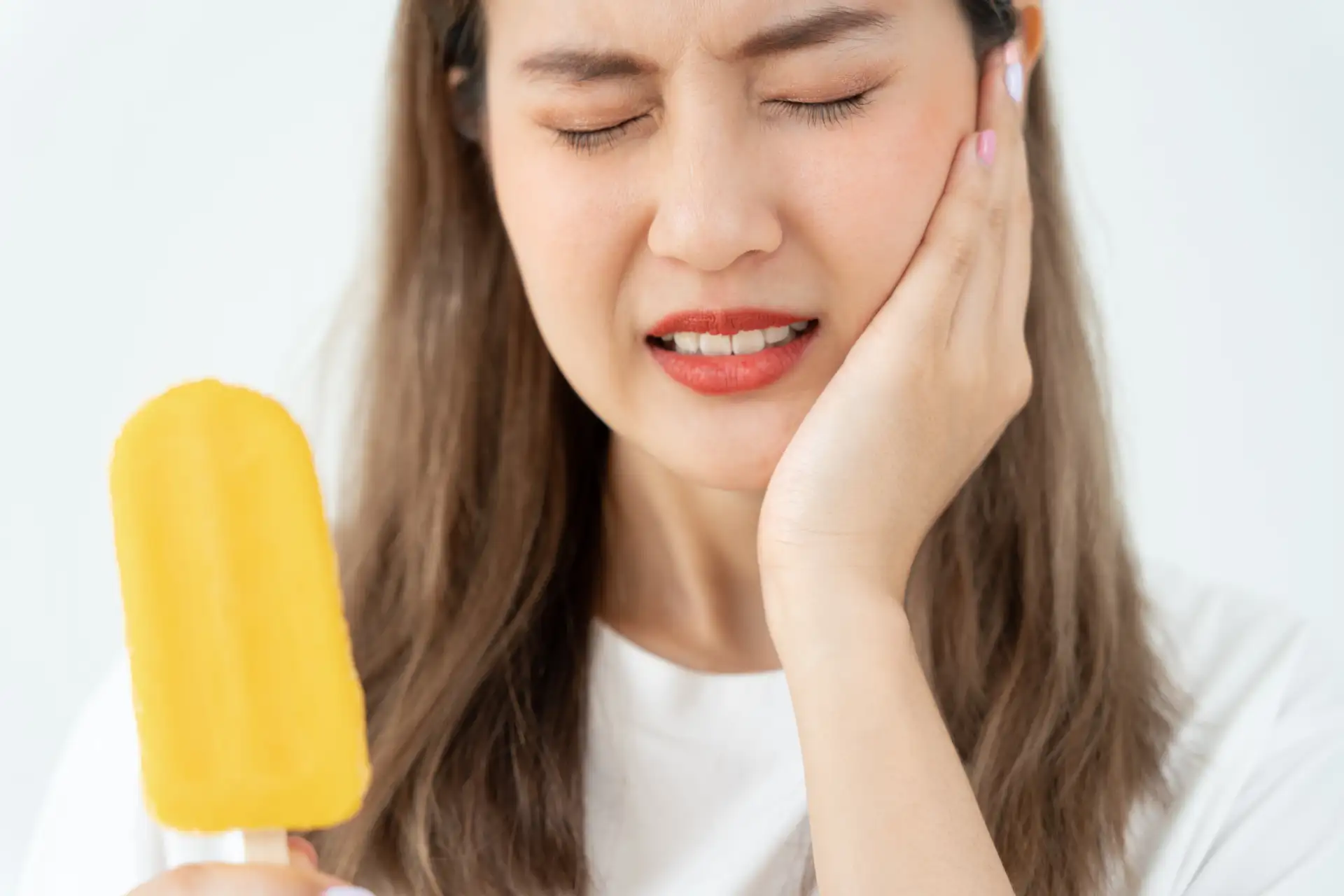
Tooth sensitivity is one of the most common dental complaints that leads people to seek professional dental care. The sensation can occur when consuming cold, hot, sweet, or acidic foods and beverages, or even when breathing in cold air.
Many people consider sensitive teeth a minor issue. However, in some cases, sensitivity may indicate a bacterial infection within the tooth that requires professional treatment from a dentist.
This article discusses the most common causes of tooth sensitivity, how to identify the underlying problem, and when you should seek dental care.
Why Do Teeth Become Sensitive?
In general, a sharp and brief sensitivity occurs when external stimuli reach a deeper layer of the tooth called dentin. Before understanding this biological mechanism, it is important to recognize the three main layers of a tooth:
Enamel: The outermost layer of the tooth, which is highly mineralized, hard, and non-vital (contains no nerve tissue). A cavity limited to enamel typically does not cause pain.
Dentin: The layer beneath enamel that is sensitive and contains millions of microscopic channels.
Pulp: The innermost chamber of the tooth that contains soft tissue, blood vessels, and nerve fibers.
Dentin is composed of tiny channels known as dentinal tubules. Each tubule contains fluid and sensory nerve endings. When enamel becomes thinner due to wear (abrasion or erosion), or when tooth roots become exposed because of gum recession, these dentinal tubules become exposed to the oral environment.
When the tooth is exposed to temperature changes, sweet or acidic foods, or cold air, the fluid inside the dentinal tubules moves rapidly. This fluid movement creates pressure changes that stimulate the nerve receptors, resulting in the characteristic sensation of tooth sensitivity.
This is the scientific explanation for why people with dentin hypersensitivity experience a sudden, sharp sensation when the protective layer of the tooth is compromised.
Most Common Causes of Tooth Sensitivity
1. Sensitive Teeth Due to Enamel Wear
This is one of the most common causes of tooth sensitivity. Enamel may become thinner due to:
Brushing too aggressively
Excessive consumption of acidic foods and beverages
Teeth grinding (bruxism)
Natural aging
When enamel becomes thinner, dentin is more easily exposed, leading to sensitivity. Common signs include:
Brief sensitivity
Triggered by cold, hot, sweet, or acidic foods and beverages
Resolves shortly after the stimulus is removed
2. Gum Recession
Receding gums expose the root surface of the tooth. Unlike the crown of the tooth, the root is not protected by enamel and is therefore more sensitive to temperature changes and other stimuli.
Common causes of gum recession include:
Gum disease
Aggressive brushing
Misaligned teeth
Bruxism
Typical symptoms include:
Teeth appearing longer
Sensitivity when drinking cold beverages
Larger gaps appearing between teeth
3. Tooth Decay or Leaking Fillings
Dental cavities that extend through enamel into dentin can cause tooth sensitivity.
In the early stages, patients often experience:
Sensitivity when eating sweets
Sensitivity when drinking cold beverages
Mild intermittent discomfort
Old fillings that have become worn, cracked, or leaking can also cause sensitivity.
If left untreated, bacterial infection may progress to the pulp and result in severe tooth pain.
4. Cracked Tooth
Small cracks in a tooth may not be visible to the naked eye. However, these cracks can allow external stimuli to reach the dentin and trigger sensitivity.
Common symptoms include:
Pain when biting
Sensitivity when releasing pressure after biting
Difficulty identifying which tooth is causing the problem
In these cases, examination with a dental microscope and dental X-rays may help establish an accurate diagnosis.
5. Bruxism (Teeth Grinding or Clenching)
Bruxism is the habit of clenching or grinding teeth excessively, often during sleep.
This condition may lead to:
Enamel wear
Microscopic cracks in the teeth
Jaw pain
Tooth sensitivity
Many patients are unaware they grind their teeth until a dentist identifies signs of wear during an examination.
6. Side Effects Following Certain Dental Procedures
Some dental treatments may cause temporary sensitivity, such as:
Dental scaling
Teeth whitening (bleaching)
Deep fillings
Certain restorative procedures
Post-treatment sensitivity is usually temporary and improves within a few days to several weeks.
How to Differentiate Mild Tooth Sensitivity from a Serious Dental Problem
Clinical Indicator | Mild Condition (Reversible Pulpitis / Sensitive Teeth) | Serious Condition (Irreversible Pulpitis / Dying Nerve) |
Duration of Sensitivity | Brief and disappears immediately after the stimulus is removed | Persists long after the trigger is gone |
Pain Trigger | Only occurs with specific triggers such as cold, hot, sweet, or acidic foods | Can occur spontaneously without any trigger |
Nature of Pain | Sharp but short-lived | Severe, throbbing, and deep pain |
Pain When Biting | No discomfort when chewing or tapping the tooth | Sharp pain when biting or chewing |
Swelling or Pus | None | Swelling, gum abscess, or facial swelling |
Sleep Disturbance | Does not affect sleep | Frequently disrupts sleep and may wake the patient at night |
Diagnostic Tests That May Be Needed
To accurately determine the cause of tooth sensitivity, a dentist may perform several evaluations.
1. Clinical Examination
The dentist will assess:
Enamel condition
Presence of cavities
Existing restorations or fillings
Gum health
2. Sensitivity Testing
Cold air or other stimuli may be used to evaluate the response of the dental pulp.
3. Dental X-Rays
Dental X-rays help identify:
Hidden cavities
Root infections
Bone abnormalities around the teeth
4. Dental Microscope
In certain cases, a dental microscope can help detect microscopic cracks that are difficult to see visually.
At Onyx Dental Center, advanced diagnostic technology is used to help identify the cause of tooth sensitivity with greater precision.
How to Relieve Tooth Sensitivity Temporarily
Before receiving professional treatment, the following measures may help reduce discomfort:
Use toothpaste designed for sensitive teeth
Use a soft-bristled toothbrush
Avoid very cold foods and beverages
Limit acidic foods and drinks
Avoid brushing too aggressively
Floss regularly
It is important to remember that these measures only help manage symptoms and do not address the underlying cause.
When Should You See a Dentist?
Schedule a dental examination if:
Sensitivity lasts more than a few weeks
The sensitivity becomes more severe
Pain occurs without any obvious trigger
Swelling develops in the gums or face
Chewing becomes difficult
The discomfort interferes with sleep
Persistent tooth sensitivity often indicates an underlying issue that requires professional treatment.
Conclusion
The causes of tooth sensitivity can vary widely, ranging from enamel wear and gum recession to cavities, defective fillings, and cracked teeth. Although sensitivity is often dismissed as a minor issue, discomfort that persists or worsens should not be ignored.
The sooner the underlying cause is identified, the greater the chance of preventing more serious complications. If you experience tooth sensitivity when drinking cold beverages, pain while biting, or symptoms that do not improve after several weeks, schedule a dental examination promptly.
At Onyx Dental Center, evaluation can be performed using clinical examinations, dental X-rays, and dental microscope technology to accurately identify the cause and determine the most appropriate treatment.
References
Abdulahadova, R., & Dehqonboyeva, D. (2026). Primary causes of toothache and their differential diagnosis: A comprehensive clinical review. The Journal of Applied Science and Social Science, 16(1).
Gade, L. P., Khamkar, H. K., Kamble, A., Choudhary, R. G., Patil, P. S., & Rodge, V. M. (2025). A Cross-Sectional Analysis of Toothache Prevalence and Its Contributing Factors in Dental Outpatients. Cureus, 17(7), e87115.
Jouhara, S., Nethaji, R., & Vimal, K. R. (2023). Exploring the Causes, Symptoms and Management of Toothache: A Comprehensive Review. International Journal of Pharmaceutical Research and Applications, 8(5), 73–78.