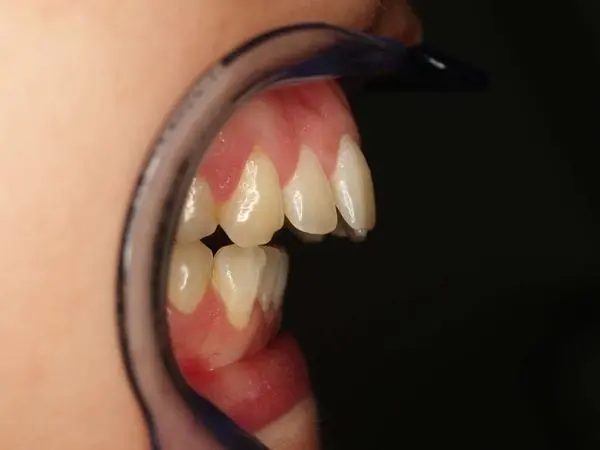
Have you ever noticed that your front teeth look too far forward when you smile or speak?
For some people, buck teeth may simply be a distinctive feature of their smile. However, in certain cases, teeth that protrude too far forward may be associated with the bite, lip position, or an increased risk of trauma to the front teeth.
In orthodontic terms, this condition may be described as tooth protrusion or protruding teeth. Its causes and severity vary from person to person, which means that how to fix buck teeth also depends on the condition of the teeth and jaws.
Through an orthodontic examination, a dentist can evaluate tooth position, jaw relationships, bite patterns, and contributing factors before developing an individualized treatment plan.
What Are Buck Teeth or Tooth Protrusion?
Buck teeth is a common term used to describe teeth, particularly the front teeth, that appear to project too far forward.
In orthodontics, this appearance may be associated with tooth protrusion, referring to teeth positioned too far forward. Protrusion may involve the upper front teeth, both dental arches, or the relationship between the teeth and jaw structures.
The term bunny teeth is also commonly used to describe prominent upper front teeth. However, front teeth that appear large or prominent do not necessarily indicate an orthodontic problem. An examination is needed to determine whether the appearance is simply an anatomical characteristic or is associated with a malocclusion that may require treatment.
What Causes Buck Teeth?
There is no single cause that applies to everyone. Buck teeth may develop from a combination of genetic factors, jaw growth, tooth position, and certain oral habits during development.
1. Genetics and Jaw Development
Jaw shape and size, tooth size, facial growth patterns, and the relationship between the upper and lower jaws can all be influenced by genetic factors.
For some people, the concern is not only the position of the teeth but also the relationship between the teeth and underlying jaw structures. This is why orthodontics for protruding teeth should consider the teeth and overall facial structure.
2. Thumb Sucking or Pacifier Use
Certain oral habits that continue for a prolonged period during childhood may affect bite development.
For example, prolonged thumb sucking may be associated with changes in tooth position and bite patterns such as an anterior open bite or posterior crossbite.
However, not every child with these habits will develop buck teeth. Duration, frequency, intensity, age, and individual growth patterns can all play a role.
3. Tongue Thrust
Tongue thrust refers to a swallowing pattern in which the tongue applies pressure toward the front teeth.
When this pattern continues during growth, it may be associated with changes in tooth position and bite development. However, tongue thrust should not be considered the sole cause of buck teeth.
Evaluating tongue position, swallowing patterns, tooth position, and jaw development is important to understand the contributing factors more comprehensively.
4. Mouth Breathing
Mouth breathing in children may be associated with changes in the development of facial and dental structures. Certain types of malocclusion are also observed more frequently in children who habitually breathe through their mouths.
However, the relationship is complex. Airway issues, jaw growth patterns, and resting tongue position may all contribute.
If a child frequently breathes through their mouth, an evaluation should look beyond tooth position to identify possible underlying factors.
What Are the Effects of Buck Teeth?
Not every tooth that appears prominent requires treatment. However, when tooth protrusion is significant or accompanied by bite problems, several factors may need to be considered.
1. Changes the Appearance of the Smile
The position of the front teeth plays an important role in the appearance of the smile and facial profile.
For some people, teeth that protrude too far forward may make them feel less comfortable when smiling, speaking, or taking photos. Orthodontic treatment can help reposition the teeth to create greater harmony with the overall facial features.
2. Increased Risk of Trauma to the Front Teeth
More protrusive front teeth may be more vulnerable to impact, particularly when the lips do not adequately protect the teeth.
The level of risk varies from person to person and may be influenced by the degree of protrusion, bite relationship, activities, and other factors.
3. Changes in Lip Position
With more significant protrusion, tooth position may influence the position of the lips. Teeth that project too far forward may push the lips outward or require additional effort from the facial muscles to close them.
However, concerns such as dry mouth or difficulty closing the lips can have multiple possible causes and should therefore be evaluated comprehensively.
4. Associated Bite Problems
Teeth that protrude too far forward may be part of a malocclusion, particularly when there is an imbalance between the upper and lower teeth.
This may affect biting and chewing function and can also make certain areas more difficult to clean.
Meanwhile, the relationship between malocclusion and temporomandibular joint disorders is complex. Buck teeth should not automatically be considered the cause of jaw joint pain or dysfunction.
How to Fix Buck Teeth and Treatment Options
The most appropriate approach to how to fix buck teeth depends on the underlying cause, tooth position, jaw relationship, degree of protrusion, and the patient's age.
After an examination, an orthodontist may consider several treatment options, including:
1. Conventional Metal Braces
Conventional metal braces use stainless steel brackets and archwires to apply controlled forces gradually.
This system provides extensive control over tooth movement and can be used to address various levels of orthodontic complexity, from creating or closing space to improving bite relationships.
2. Self-Ligating Braces or Damon Braces
This system uses specialized brackets with a sliding-door mechanism to secure the archwire without traditional elastic ligatures.
The design may help reduce friction and make certain areas easier to clean. At Onyx Dental Center, the choice of bracket system is based on clinical needs rather than simply promising a "faster treatment," as the ideal treatment duration still depends on the complexity of the condition and the biological response of the oral tissues.
3. Clear Aligners
Clear aligners such as Invisalign offer a discreet way to straighten teeth using a series of custom-made transparent trays.
This option is particularly popular among professionals who value aesthetics throughout treatment. A comprehensive examination is needed to determine whether the severity and direction of tooth protrusion are suitable for clear aligner treatment, helping ensure an appropriately predictable treatment plan.
Treating Buck Teeth in Children
For children who are still growing, an orthodontist may consider interceptive orthodontic treatment when there are jaw development concerns, persistent oral habits, or orofacial muscle patterns that may affect the bite.
In certain cases, a myofunctional approach using appliances such as Myobrace may be considered to help guide oral habits and orofacial function, including tongue posture, breathing, and swallowing patterns.
However, Myobrace is not a universal replacement for braces and is not appropriate for every case of buck teeth. Its use should be based on the child's age, growth pattern, clinical condition, and the results of a professional examination and diagnosis.
When Should Buck Teeth Be Treated?
There is no single ideal age for every patient. However, an early orthodontic evaluation can help identify potential concerns involving jaw growth and bite development.
The American Association of Orthodontists (AAO) recommends that children have their first orthodontic check-up around age 7. This does not mean that a child needs braces immediately. Instead, the examination allows the orthodontist to monitor tooth and jaw development and determine whether early intervention may be appropriate.
Orthodontic treatment can also be performed during the teenage and adult years. The condition of the supporting tissues, oral health, bone density, and complexity of the case are among the factors considered when developing a treatment plan.
So, if you are only looking into treating buck teeth as an adult, it does not necessarily mean you are too late.
How Long Does Buck Teeth Treatment Take?
The duration of orthodontic treatment varies from patient to patient. In general, the AAO notes that many patients undergo braces treatment for approximately 12–24 months, although some cases may require less or more time.
Factors that may affect treatment duration include:
The amount of tooth movement required
The relationship between the upper and lower teeth
Bone and periodontal health
Available space
The biological response to tooth movement
The type of orthodontic appliance
Compliance with appointments and the orthodontist's instructions
For this reason, an estimated treatment duration should ideally be provided after an examination rather than based solely on how the teeth appear in a photograph.
Retainers After Treatment to Maintain Your Results
Orthodontic treatment does not end when braces or aligners are removed. Once the desired tooth position has been achieved, patients enter the retention phase and use retainers.
Retainers help maintain tooth position and reduce the risk of relapse, which refers to teeth shifting toward their previous positions.
Retainer options may be selected according to each patient's needs, including:
Removable retainers, such as Hawley or clear retainers
Fixed retainers, consisting of a wire bonded to the back of the teeth
The duration and schedule of retainer use vary between patients. Because teeth can naturally shift throughout life, long-term retention is often considered an important part of orthodontic treatment.
Buck Teeth Treatment at Onyx Dental Center
Treating buck teeth is not simply about making the front teeth look straighter or less prominent. The right treatment begins with understanding why the teeth appear protruded.
Is it primarily related to tooth position? Is there an issue with the relationship between the jaws? Are there persistent oral habits? How do the upper and lower teeth come together when biting? And how does the smile balance with the overall facial profile?
At Onyx Dental Center, orthodontic treatment begins with a thorough examination and diagnosis to understand each patient's individual condition before selecting a treatment approach.
Onyx Dental Center offers orthodontic treatments including fixed appliances and clear aligners, with drg. Rio Jonas, M.Kes, Sert. Ort, a certified orthodontic dentist who handles fixed appliance treatment, complex cases, and clear aligner treatment.
Conclusion
Buck teeth can be influenced by genetics, jaw development, tooth position, and oral habits. Because the causes and degree of tooth protrusion vary between individuals, the appropriate approach to how to fix buck teeth should be determined through an orthodontic examination.
From conventional braces and self-ligating braces to clear aligners, each treatment option has its own indications and considerations. For children who are still growing, interceptive treatment may also be considered when appropriate for their clinical condition.
Ultimately, orthodontic treatment is not simply about making protruding teeth look straighter. It is about creating a more harmonious relationship between the teeth, bite, facial features, and functional needs of each patient.
References
Guo, D., Wang, Y., Chen, S., Song, L., Dai, J., & Wang, M. (2024). Bimaxillary dentoalveolar protrusion associates with labially angulated mandibular canine and mesial inclined mandibular first premolars—Based on CBCT image measurements. Archives of Oral Biology, 165, 105990. https://doi.org/10.1016/j.archoralbio.2024.105990
Jatol-Tekade, S., Tekade, S., Pathak, K., & Tikekar, S. (2018). Orthodontic Treatment of Bimaxillary Protrusion - A Case with Extracted Maxillary Lateral Incisor. Indian Journal of Dental Sciences, 10(3), 176–179. https://doi.org/10.4103/IJDS.IJDS_29_18
Lin, Y.-H., & Huang, C.-S. (2022). Orthodontic treatment of severe bimaxillary dentoalveolar protrusion with skeletal Class II malocclusion without using miniscrews. Taiwanese Journal of Orthodontics, 34(1), 47–57. https://doi.org/10.38209/2708-2636.1121